Patience Challenges Every Parent Will Face This Decade
19 August 2026
Parenting has never been a job for the impatient. But the next ten years are shaping up to be a unique stress test for mothers and fathers everywhere. The combination of rapid technological change, shifting social norms, and a lingering sense of post-pandemic instability means that the old rules of thumb no longer apply. You cannot just tell a child to "go play outside" and expect the same result you got in 2005. You cannot rely on the same disciplinary scripts your parents used, because your kids are growing up in a completely different emotional and digital ecosystem.
This article is not about toxic positivity or the myth of the perfect parent. It is about the specific, grinding, daily patience challenges that will define this decade. We will look at why they happen, what makes them harder than they used to be, and most importantly, what you can actually do about them without losing your mind.

The Attention Economy Versus Your Child's Brain
The single biggest patience killer for parents right now is the war for attention. Your child's brain is being pulled in a dozen directions at once. School notifications, friend group chats, short-form video algorithms, and the endless scroll of social media all compete with the slow, boring, necessary work of being a family. When you ask your child to put down the phone and come to dinner, you are not just asking them to stop a task. You are asking them to break a dopamine loop that has been engineered by some of the smartest people in the world.This is not a willpower issue on your part or theirs. It is a structural mismatch between human biology and the digital environment. The patience challenge here is that you cannot win a direct fight against an algorithm. You will lose. The algorithm has infinite time and infinite variations of content. You have one tired brain and a finite amount of emotional energy.
What works instead is building a different default environment. That means charging phones outside the bedroom at night. That means having a family docking station in the kitchen where devices live during meals and homework time. It means being willing to be the boring parent who enforces these rules even when your child screams that everyone else's parents let them do whatever they want.
The trade-off is real. You will have to endure more whining, more negotiation, and more outright anger in the short term. The payoff is that your child's brain gets a chance to reset its reward thresholds. They will rediscover that reading a book or building a fort actually produces a slower but more satisfying kind of joy. You will need patience for the transition period, which can last weeks. Do not expect instant results.

The Vanishing Art of Waiting
Children today are growing up in a world where everything is on demand. Movies stream instantly. Food arrives in thirty minutes. Questions are answered by a voice assistant before they even finish asking. This environment fundamentally changes how children perceive time. A minute feels like an eternity to a child who has never had to wait for anything.The patience challenge for parents is not just about teaching your child to wait. It is about surviving their inability to wait. You will face the grocery store meltdown because you said no to a candy bar. You will face the car ride where your six-year-old asks "are we there yet" forty times in ten minutes. You will face the homework session where your child wants the answer immediately instead of thinking it through.
The common mistake here is to either give in to end the suffering or to lecture the child about patience while you are both frustrated. Neither works. Giving in teaches the child that a big enough tantrum gets results. Lecturing teaches them nothing because their emotional brain has already taken over and they cannot hear you.
A better approach is to create small, deliberate waiting experiences that are not tied to conflict. This is called patience practice. For example, when you cook a meal, have your child help you set the table first, then wait for the food to cool. When you go for a walk, stop and watch a bird or a cloud for two minutes without talking. These tiny moments build a child's tolerance for delay in a low-stakes way. They do not work overnight, but over months they change the baseline.

The Sibling Wars
If you have more than one child, you know that the deepest reservoir of your patience gets drained by sibling conflict. This decade adds an extra layer because siblings are often competing for the same scarce resource: your undivided attention. With parents working from home more often or juggling irregular schedules, kids sense when you are distracted. They will fight louder and more often just to force you to look at them.The instinctive response is to act as judge and jury. You hear a scream, you rush in, you figure out who started it, you punish the guilty party. This approach is exhausting and rarely works because the next fight starts within the hour.
The more effective approach is to stop being the referee and start being the coach. That means you do not solve their problems for them. You say things like "I see you are both upset. I am going to sit here and wait until you two figure out a solution that works for both of you." Then you physically stay but emotionally disengage. You are not ignoring them. You are forcing them to use their own social skills instead of relying on you to be the police.
This is incredibly hard to do. Your body will want to jump in and fix it. Your own frustration will spike because the noise is unpleasant. But every time you resist the urge to adjudicate, you are teaching your children that they are capable of resolving conflict without a parent as a crutch. The patience you show in those ten uncomfortable minutes pays off in a household that slowly becomes calmer.
The Homework Wars
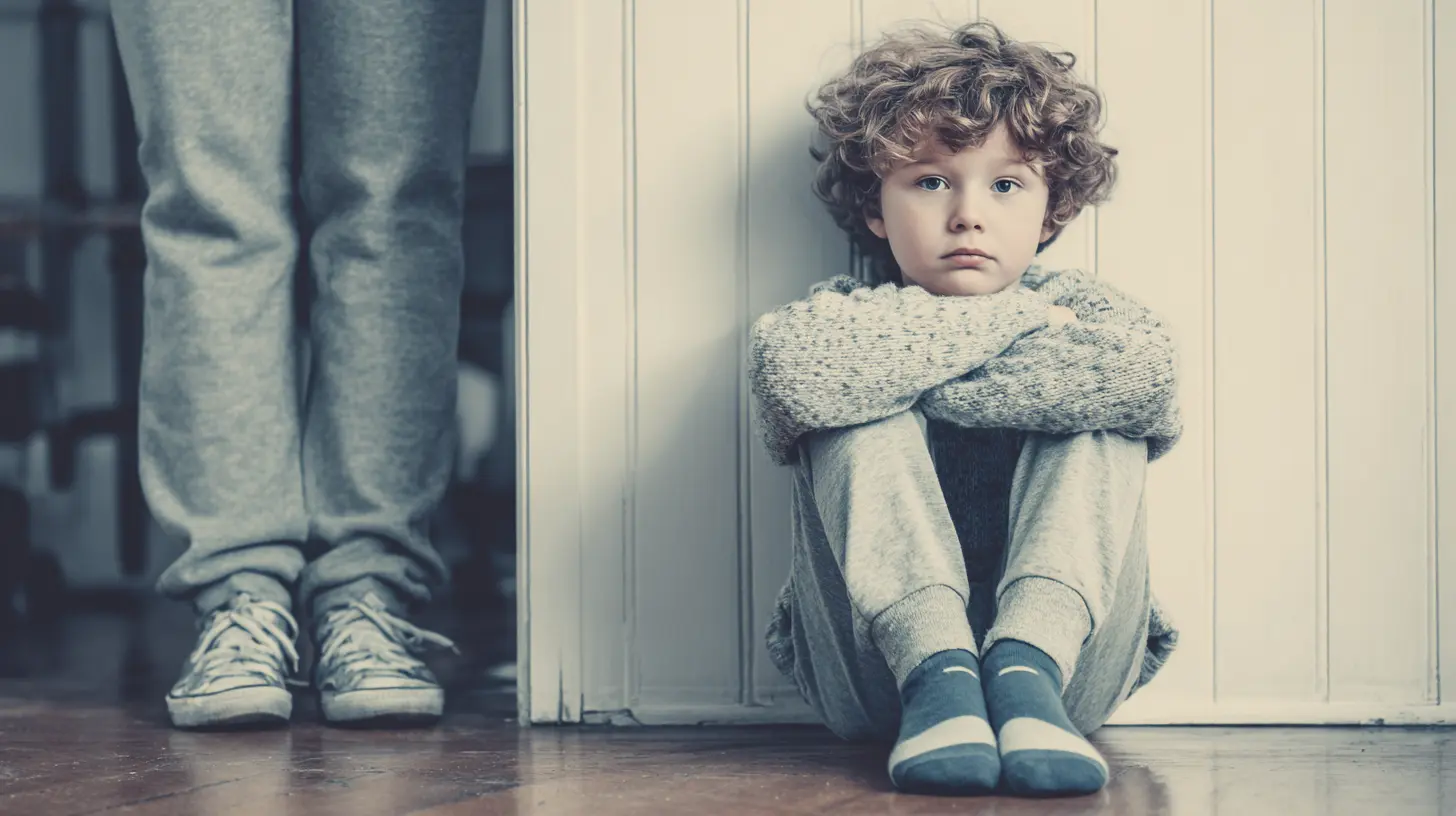
Homework is the nightly battleground that tests every ounce of parental patience. The problem is not the homework itself. It is the emotional baggage that comes with it. Your child is tired. You are tired. The material is often taught differently than when you were in school. And your child has already spent six hours in a classroom, so their executive function is depleted.The biggest mistake parents make is treating homework time as a continuation of school. You become a taskmaster, checking every problem, correcting every mistake, and pushing your child to finish faster. This creates a negative feedback loop. The child resists more, you push harder, and soon you are both miserable.
What works better is to separate the roles. You are not the teacher. You are the facility manager. Your job is to make sure the environment is conducive to work. That means a quiet space, the right supplies, and a clear schedule. Then you step back. Let your child make mistakes. Let them turn in a slightly messy assignment. Let them feel the natural consequence of not finishing on time.
This requires enormous patience because you will watch your child struggle with something you know how to solve. You will want to just tell them the answer to end the suffering. But every time you do that, you rob them of the struggle that builds their own problem-solving skills. The patience is not about tolerating bad work. It is about tolerating the discomfort of watching your child fail a little bit, so they can succeed a lot later.
The Screens and the Silence
This decade will force every parent to confront the reality that screens are not going away. They are part of life, school, and social connection. The patience challenge is not about banning screens. It is about managing the transition between screen time and non-screen time.The worst moments for parental patience are always the transitions. When you say "time is up" and the child is mid-game or mid-video, you are essentially asking their brain to switch from a high-stimulation state to a low-stimulation state instantly. That is neurologically impossible for a child. The result is a meltdown, sullenness, or outright defiance.
The solution is to build in a warning system and a buffer. Ten minutes before the end, say "you have ten more minutes." Then five minutes. Then two minutes. Do not just yank the device away. This feels like a waste of time, but it actually saves time because it prevents the twenty-minute tantrum that follows a sudden cutoff.
Also, consider what comes after the screen. If you say "turn off the tablet and go do your chores," you are setting up a fight. Instead, say "turn off the tablet and come help me make a snack." The transition to a pleasant physical activity is much smoother than a transition to another demand.
The Public Meltdown
Every parent knows the horror of the public meltdown. It happens in the supermarket, at the airport, in the middle of a restaurant. The child is screaming, people are staring, and your face is burning with embarrassment. The patience challenge here is twofold: you must manage your own shame and your child's dysregulation at the same time.The common mistake is to try to reason with a child who is in the middle of a meltdown. Their amygdala is in charge. They cannot process logic. You might as well be speaking a foreign language. Another mistake is to threaten punishment. "If you do not stop crying, we are going straight home" only escalates the situation because the child now feels both out of control and afraid.
What works is to lower your own voice, get down to their eye level, and use a calm, almost boring tone. Say something like "I can see you are really upset. I am going to stand here with you until you feel better." Do not try to fix it. Do not try to bribe them. Just be a calm presence. This is excruciatingly difficult because you want to escape the judgment of strangers. But the strangers do not matter. Your child's nervous system does.
If you can stay calm for those five terrible minutes, you teach your child that big feelings are survivable and that you are a safe harbor. That is a lesson that will serve them for life.
The Teenage Silence
The toddler years test your patience with noise. The teenage years test your patience with silence. Around age thirteen or fourteen, many children stop talking to their parents. They answer in monosyllables. They retreat to their rooms. They act like you are an inconvenience.This is not a rejection of you, even though it feels like one. It is a developmental stage where the child is building an identity separate from the family. They are becoming more peer-oriented and more private. The patience challenge is to resist the urge to force them to talk.
The mistake is to interrogate them. "How was school?" "Fine." "What did you do?" "Nothing." "Who did you sit with?" "No one." This line of questioning only makes them retreat further because it feels like an interrogation.
What works is to be available without being demanding. Spend time in the same room doing parallel activities. Drive them to activities without filling the silence with questions. Sometimes the most profound conversations happen when you are not looking at each other, like in the car at night or while cooking side by side.
You also need patience for the fact that they will share more with their friends than with you. That is normal. Your job is not to be their best friend. Your job is to be the steady, reliable adult who is there when they need you. That means you have to wait, sometimes for months, for them to come back around. It is a long game, and it is one of the hardest things you will do.
The Comparison Trap
This decade has made it easier than ever to see how other parents are doing. Social media feeds you perfectly curated images of children who are always smiling, bedrooms that are always tidy, and family dinners that look like magazine spreads. The patience challenge here is internal. You start to feel like you are failing because your house is messy and your child just threw a tantrum over a broken crayon.The reality is that those images are lies. They are staged, filtered, and taken at the one good moment in a day of chaos. Comparing your behind-the-scenes to someone else's highlight reel is a recipe for resentment and impatience with your own kids.
The antidote is to deliberately limit your exposure. Unfollow accounts that make you feel inadequate. Focus on your own family's rhythm rather than an idealized version of someone else's. Remind yourself that the parent who looks perfect on Instagram is probably yelling at their kids right after they post that photo.
You also need to extend patience to yourself. You will lose your temper. You will say the wrong thing. You will have days where you feel like a terrible parent. That is not a sign of failure. It is a sign that you are human. The goal is not to be patient all the time. The goal is to be patient more often than you were last year, and to repair the relationship quickly when you do snap.
The Over-Scheduled Child
Another patience drain of this decade is the pressure to keep your child busy with activities. Soccer, piano, coding, swimming, art class. The list is endless. Parents fear that if their child is not in every activity, they will fall behind. The result is a family that is constantly rushing, eating in the car, and never having a quiet afternoon at home.The patience challenge here is twofold. First, you have to endure the logistics of shuttling kids around, which is exhausting. Second, you have to deal with a child who is overstimulated and overtired, which leads to more meltdowns and more resistance.
The counterintuitive solution is to do less. Schedule in nothing. Have weekends where you stay home and do absolutely nothing. This sounds like a waste of potential, but it is actually essential for your child's emotional regulation and your own sanity. Boredom is not a problem to be solved. It is the soil in which creativity and self-directed play grow.
You will face pressure from other parents who ask why your child is not in travel soccer. You will face your own guilt. But if you can tolerate the discomfort of an empty calendar, you will find that your child is calmer, your house is quieter, and your patience reserves are much deeper.
The Partner Dynamic
Finally, this decade will test your patience not just with your children, but with your partner. Parenting is a two-person job, but it rarely feels balanced. One person usually ends up doing more of the emotional labor, the scheduling, the nagging, and the discipline. This breeds resentment, and resentment destroys patience.The challenge is to have honest conversations about the division of labor without turning it into a blame game. The mistake is to keep score and then explode in a passive-aggressive outburst. Instead, schedule a regular check-in where you both can talk about what is working and what is not, without the kids present.
You also need to give each other grace. You are both tired. You are both doing your best. The enemy is not each other. The enemy is the system of modern parenting that expects you to do everything perfectly with no village and no support.
If you are a single parent, this challenge is even harder. You do not have a partner to share the load. In that case, you must be ruthless about outsourcing. Hire a babysitter for a few hours a week. Trade childcare with a friend. Do whatever it takes to get a break, because a burned-out parent has no patience left to give.
The Long View
The most important thing to remember is that patience is not a fixed trait. It is a muscle. It gets stronger with practice and weaker with neglect. This decade will give you plenty of opportunities to build it, whether you want to or not.The good news is that the effort is worth it. Children who grow up with patient parents tend to be more emotionally stable, better at problem-solving, and more resilient. They learn that big feelings are manageable and that adults can be trusted to stay calm in a storm.
So when you feel yourself about to lose it, take a breath. Step into another room for thirty seconds. Remind yourself that this moment is temporary and that your child is not giving you a hard time. They are having a hard time.
The next ten years will not be easy. But they will be meaningful. And if you can hold on to even a little bit of patience, you will not just survive this decade. You will help your child thrive through it.
all images in this post were generated using AI tools
Category:
Parenting And PatienceAuthor:

Maya Underwood
Discussion
rate this article
1 comments
Azriel McTigue
Ah, the decade of patience. It's like trying to teach a cat to fetch while balancing a plate of spaghetti on your head. Who knew parenting could be such a circus act?
August 20, 2026 at 5:02 AM
Maya Underwood
Parenting really is a wild ride. Navigating those challenges can feel like juggling spaghetti sometimes, but we all grow through the chaos.