The Future of Parental Burnout and How to Prevent It
24 October 2026
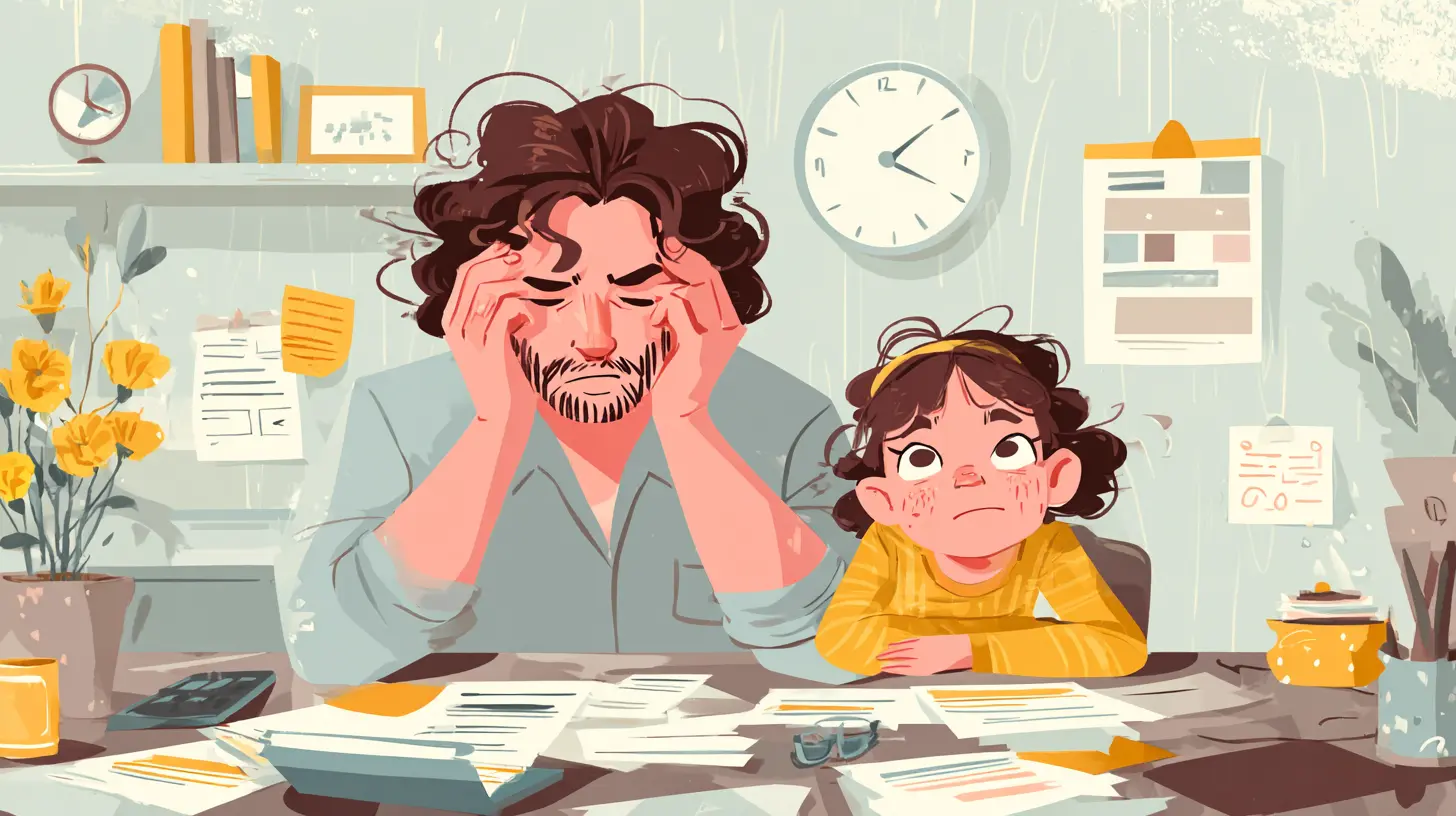
Parental burnout is not a badge of honor, a phase that passes on its own, or a failure of love. It is a recognized psychological condition with measurable consequences for parents, children, and the wider family system. And it is getting worse, not better, for reasons that have less to do with individual parenting choices than most people realize.
If you are reading this as a tired parent, you already know the feeling. If you are reading it as a professional who supports families, you have seen it in the room. Either way, the useful question is not whether parental burnout is real. The useful question is where it is heading, why the usual advice fails, and what actually protects parents over the long run.

What Parental Burnout Actually Is
Parental burnout is a syndrome that emerges when the demands of parenting chronically outweigh the resources a parent has to meet them. Researchers generally describe it through three dimensions: overwhelming exhaustion tied specifically to the parental role, emotional distance from one's children, and a sense of parental inefficacy, the feeling that you are no longer doing this well and nothing you try makes a difference.That third dimension is what separates burnout from ordinary tiredness. Every parent is exhausted sometimes. Burnout is when exhaustion fuses with detachment and self-doubt, and the whole role starts to feel like a trap.
It is also distinct from depression, though the two overlap and can feed each other. Depression is global. Parental burnout is role-specific. A parent with burnout may function well at work and feel hollow at home, or the reverse. That specificity matters because it points to specific solutions.
One more distinction is worth making. Parental burnout is not the same as being busy. Plenty of parents with demanding schedules are not burned out, because they have adequate support, realistic expectations, and a sense of competence. Plenty of parents with relatively light schedules are burned out, because they are carrying invisible loads alone.
Why the Future Points Toward More Burnout, Not Less
The forces driving parental burnout are structural, and most of them are intensifying. Understanding them is the first step toward resisting them.The Load Is Becoming More Complex, Not Just Larger
Modern parenting involves a volume of logistical, emotional, and administrative labor that previous generations simply did not face in the same form. School communication platforms, appointment scheduling, activity coordination, screen-time negotiation, online safety monitoring, and the emotional coaching that contemporary parenting culture expects all add layers. The problem is not any single task. It is the cumulative cognitive load of holding dozens of open loops at once.This is why a parent can spend a day "doing things" and still feel depleted. The exhaustion comes less from physical effort than from constant mental switching and the sense that something is always being neglected.
The Comparison Engine Never Switches Off
Social media did not invent parental insecurity, but it industrialized it. Parents now see curated versions of other families daily, often at the exact moments when their own household feels most chaotic. The effect is not just envy. It is the quiet erosion of the sense that you are doing enough.Researchers who study parental burnout consistently find that social comparison and the pressure to meet intensive parenting norms are among the strongest contributors. The future risk is that these norms keep tightening while the visible evidence of other people's struggles keeps disappearing.
Support Networks Have Thinned
Many parents today live far from extended family, in neighborhoods with weaker informal ties, and in work cultures that treat caregiving as a private inconvenience. The "village" is often invoked but rarely available. When support is thin, every small crisis lands on one or two adults with no buffer.This is a structural problem, and it is likely to worsen in places where housing costs push families away from their support systems and where work flexibility is nominal rather than real.
The Emotional Job Description Keeps Expanding
Parents are now expected to be attachment figures, emotion coaches, educational advocates, digital safety experts, and conflict mediators, often while working paid jobs. Each role is legitimate. Together, they exceed what any single adult can sustain without help.The future of parental burnout, then, is not mainly about parents becoming weaker. It is about role expectations expanding faster than support systems.

The Warning Signs Most Parents Miss
Burnout rarely announces itself. It accumulates through small adaptations that feel reasonable in the moment.Watch for these patterns:
- You feel relief when plans with your children fall through.
- You go through the motions of care but feel little warmth in the moment.
- Small requests from your children irritate you disproportionately.
- You fantasize about illness or minor emergencies as acceptable reasons to stop.
- You feel guilty almost constantly, but the guilt does not change your behavior.
- You stop asking for help because explaining what you need feels harder than doing it yourself.
That last pattern is especially dangerous. It is the point where a parent's support system quietly stops functioning, because asking for help has become its own burden.

The Common Advice That Fails, and Why
Most burnout advice for parents falls into a few categories, and much of it fails for predictable reasons."Just Practice Self-Care"
A bubble bath does not fix a structural problem. Self-care advice assumes the parent has spare capacity and simply needs to allocate it better. Burned-out parents usually have no spare capacity. Worse, framing rest as a personal responsibility adds guilt when the rest does not happen.Self-care is not useless, but it works best as maintenance, not rescue. When a parent is already depleted, the priority is reducing load and restoring support, not adding another task to the list.
"Set Boundaries"
Boundaries are essential, but the advice is often given without acknowledging the cost. Saying no to a school request, a family obligation, or an extracurricular activity can carry real social and practical consequences. Parents who are told to set boundaries without help managing those consequences often end up feeling like they failed at boundaries too.Effective boundary-setting requires two things the advice usually omits: clarity about what matters most, and a plan for the pushback.
"Treasure Every Moment"
This one is quietly corrosive. It reframes legitimate exhaustion as ingratitude. The pressure to feel grateful for every moment makes it harder for parents to admit when they are struggling, which delays the help they need.What Actually Prevents Burnout
Prevention works at three levels: the household, the support network, and the parent's internal operating system. Most parents focus only on the third, which is the least powerful on its own.Level One: Reduce the Load Before Optimizing It
The instinct when overwhelmed is to become more efficient. That is often the wrong move. Efficiency helps you carry more, and carrying more is the problem.Start by listing the recurring demands of your week and sorting them into three categories: things only you can do, things someone else could do, and things that could stop happening entirely. The third category is usually bigger than parents expect.
Questions worth asking honestly:
- Which activities exist because the child loves them, and which exist because stopping feels like admitting something?
- Which commitments are inherited obligations that no one would actually object to renegotiating?
- Which standards are you maintaining for an audience that is not watching as closely as you think?
This is not about lowering standards across the board. It is about noticing where the standard is doing real work and where it is just noise.
Level Two: Build Redundant Support, Not Just Backup
A single support person is a fragile system. If your only relief is one grandparent, one friend, or one babysitter, a single scheduling conflict can collapse your week.Redundancy means having more than one path to relief. That might look like a regular childcare arrangement plus a neighbor who can do school pickup in a pinch plus a standing weekend arrangement with a partner. The point is not to use all of it every week. The point is that no single failure takes down the whole system.
This is where many parents make a costly mistake: they wait until they are desperate to build support, then accept whatever is available. Building support during calmer periods, even when it feels unnecessary, is what makes it reliable during hard ones.
Level Three: Recalibrate the Internal Standard
The most durable protection is a shift in how you measure whether you are doing enough. Parents with lower burnout tend to share a few internal habits.They separate their child's outcomes from their own performance. A child's difficult day is information, not a verdict on the parent.
They accept "good enough" as a genuine standard rather than a consolation prize. Good enough parenting, consistently delivered, outperforms sporadic perfection every time.
They treat their own depletion as data. When they feel empty, they ask what changed in the load and support, rather than what is wrong with them.
They keep a realistic picture of their child's actual needs, which are usually simpler than the cultural script suggests. Children need safety, attention, consistency, and repair after conflict. They do not need a perfectly optimized childhood.
The Partner Question
In two-parent households, burnout is rarely distributed evenly, and the imbalance is often invisible because it lives in the mental load rather than the visible tasks. One parent manages the calendar, remembers the appointments, anticipates the needs, and delegates the tasks. The other executes what is assigned.This arrangement can look fair on paper and feel crushing in practice. The parent carrying the mental load never fully disengages, because the planning never stops.
Prevention requires redistributing ownership, not just tasks. That means one parent fully owns a domain, including the planning, the remembering, and the consequences of forgetting. Partial handovers, where one parent "helps" but the other still tracks everything, do not reduce load. They add coordination work.
Expect a period of lower standards during any real handover. That is normal and usually temporary. The alternative is that the load never actually moves.
What Workplaces and Communities Could Do
Individual solutions have limits, and it is honest to say so. Parental burnout is partly a policy problem.Workplaces that genuinely reduce burnout tend to share certain features: predictable schedules, real flexibility that does not penalize advancement, and norms that allow parents to leave without explanation. The key word is norms. A flexible policy that no one uses because of cultural pressure is not flexibility.
Communities matter too. Schools that consolidate communication instead of multiplying channels, neighborhoods with informal mutual aid, and extended family arrangements that share caregiving all reduce the baseline load. These are not sentimental extras. They are load-bearing structures.
Parents cannot build all of this alone, but they can advocate for it, and they can choose, where they have options, environments that already work this way.
How to Tell If Prevention Is Working
Prevention is hard to measure because the goal is the absence of a crisis. A few practical indicators help.You recover from a hard week within a few days rather than weeks. You can imagine a difficult month without dread. You still enjoy some time with your children, not just endure it. You ask for help without a lengthy internal debate. You can name what you would drop if something had to go.
If those indicators are missing, the response is not more effort. It is a closer look at load and support.
A Realistic Closing
The future of parental burnout will be shaped by forces larger than any one family: the complexity of modern parenting, the thinning of support networks, the persistence of intensive parenting norms, and the slow pace of workplace and policy change. Pretending otherwise would be dishonest.But within that reality, parents are not powerless. The most effective prevention is unglamorous. Reduce what does not need to be done. Build more than one path to relief. Share ownership rather than tasks. Measure yourself against a standard that a human being can actually sustain.
None of this guarantees an easy season. It does mean that when the hard weeks come, and they will, you are carrying less alone.
all images in this post were generated using AI tools
Category:
Parenting Self CareAuthor:

Maya Underwood