The Connection Between Sleep and Emotional Regulation
28 September 2026
At 2:17 in the morning, a six year old is screaming because her sock feels wrong. Not because the house is on fire. Not because she is in pain. Because the seam on her left sock is sitting a millimeter too far to the right, and to her exhausted brain, this is an emergency of the highest order.
Her father, running on four hours of broken sleep himself, feels his own patience shredding. He snaps. She cries harder. He feels terrible. The whole house is awake now, and everyone will pay for it tomorrow.
Most parents have lived some version of this scene. And most of them walk away believing they have a difficult child, or that they are a bad parent, or that bedtime is simply a war that cannot be won. What almost none of them realize in the moment is that they are not watching a discipline problem or a personality flaw. They are watching a nervous system that has run out of fuel.
That is the mystery at the center of this article. Sleep and emotional regulation are not two separate things that happen to influence each other. They are the same system, running on the same circuits, and when one fails, the other collapses in ways that look like something else entirely.
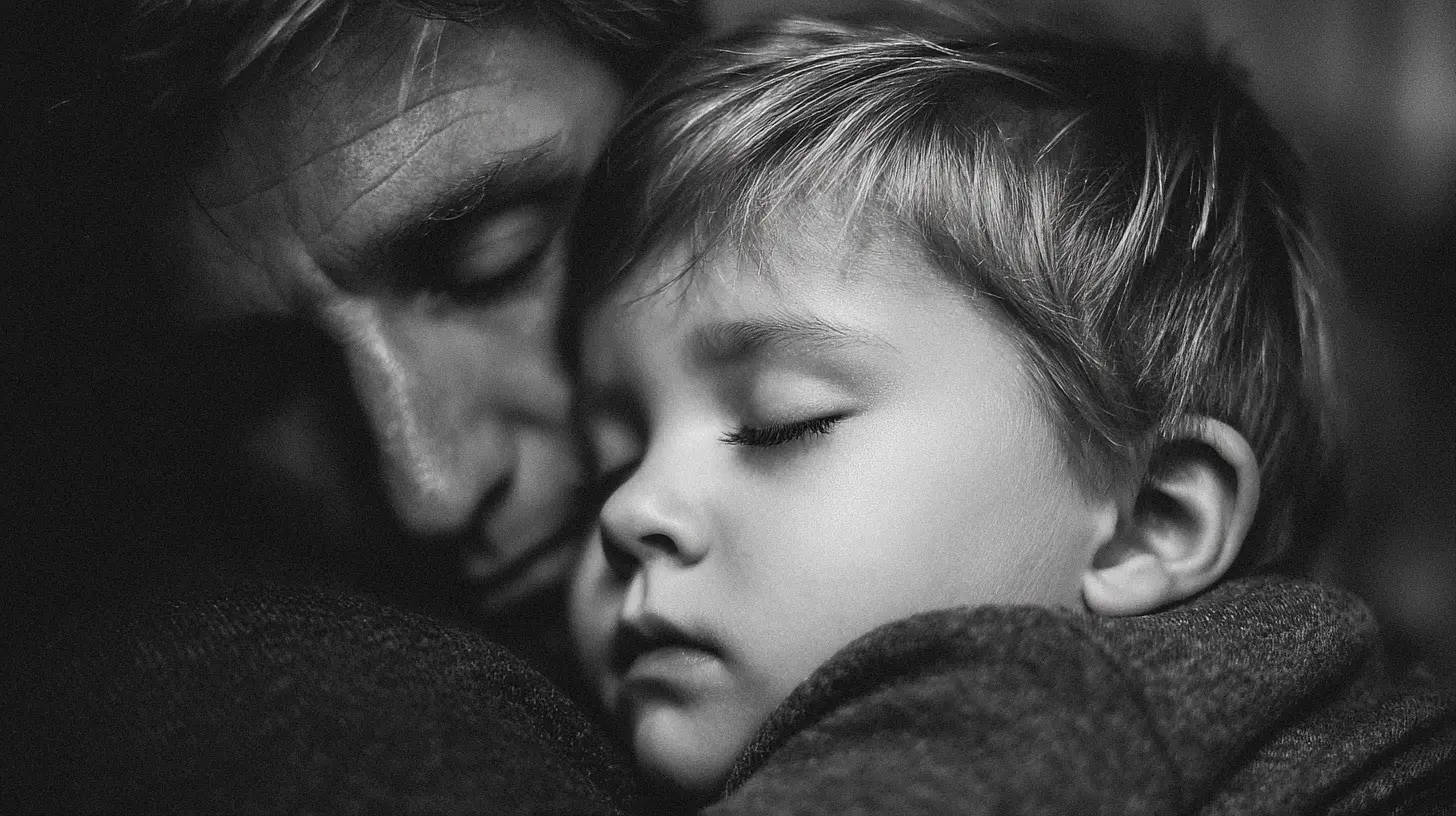
Why Sleep and Emotions Are the Same System
To understand this, you have to start with a piece of anatomy that rarely gets mentioned at the pediatrician's office: the prefrontal cortex.The prefrontal cortex sits right behind the forehead. It is the newest part of the human brain in evolutionary terms, and it is responsible for what researchers call executive function. Planning. Inhibiting impulses. Shifting attention. Regulating emotion. When your child shares a toy instead of snatching it, when they walk away from a frustrating puzzle instead of throwing it, when they use words instead of screams, the prefrontal cortex is doing the work.
Here is the critical part. The prefrontal cortex is also the most sleep dependent region of the entire brain. It is the first to suffer when sleep is short, fragmented, or poorly timed. It is the last to recover when sleep improves.
Meanwhile, deep in the middle of the brain, sits the amygdala. The amygdala is the alarm system. Its job is to detect threat and mobilize the body for action. It does not care about nuance. It does not care that the sock seam is trivial. It just sounds the alarm.
In a well rested brain, the prefrontal cortex and the amygdala are in constant conversation. The prefrontal cortex acts like a calm supervisor, receiving signals from the amygdala and deciding which ones deserve a response. When sleep is adequate, that supervisor is on duty, alert, and effective.
When sleep is inadequate, two things happen at once. The prefrontal cortex goes offline, losing its grip on the controls. And the amygdala becomes hyper reactive, firing at the slightest provocation. The supervisor has left the building, and the alarm system is running the show.
This is not a metaphor. It is a measurable shift in how the brain responds to the world. A tired child is not choosing to overreact. Their brain has literally changed the way it processes emotion.
The Overtired Paradox
Here is where things get strange, and where most parents get trapped.When a young child becomes overtired, the body releases stress hormones, including cortisol and adrenaline. These are the same chemicals that surge during a genuine threat. In small doses, they help a child push through fatigue. In larger doses, they create a wired, agitated, hyperactive state that looks nothing like sleepiness.
So the child who is bouncing off the walls at 9 p.m., laughing too loud, crashing into furniture, and refusing to lie down is often not under stimulated. They are severely overtired. Their body has flipped into survival mode, and sleep has become chemically difficult to access.
Parents see this and think: this child is not tired. So they keep the child up later, hoping fatigue will eventually win. It never does. It only deepens the hole.
The same paradox appears in the morning. A child who slept badly may wake up groggy, then become irritable and hyper within an hour. Parents read this as a mood problem. It is almost always a sleep debt problem.
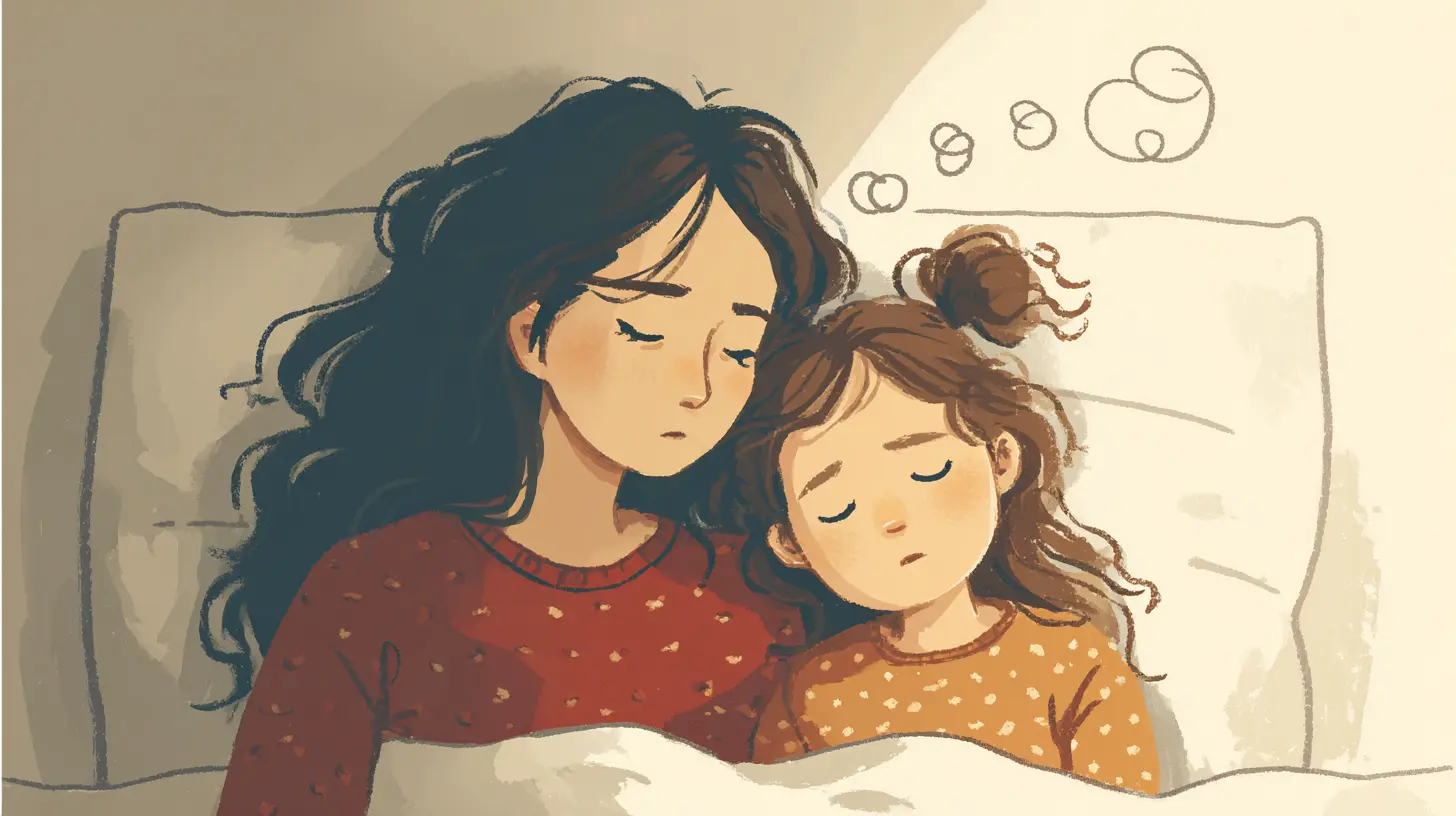
What a Sleep Deprived Brain Actually Does
To make this concrete, picture two children on the same afternoon. Both are five years old. Both are building towers with blocks.Child A slept eleven hours the night before. When her tower falls, she pauses, looks at the blocks, and rebuilds. She may feel frustrated, but the frustration stays within a range she can manage. She might ask for help. She might try a different design. The prefrontal cortex is doing its job.
Child B slept eight hours, woke twice, and had a twenty minute bedtime battle. When his tower falls, the same event produces a different reaction. He sweeps the blocks off the table. He cries. He may hit the table, or himself, or a nearby sibling. He cannot access the skills he demonstrably has on a good day. The amygdala has taken over, and there is no supervisor to intervene.
Same child, different sleep. Same event, different outcome.
This is why parents often say their child is "a different person" after a bad night. They are not exaggerating. The child's brain is operating in a different mode.
The Emotional Bank Account
A useful way to think about this is an emotional bank account.Every child has a certain capacity to handle frustration, disappointment, sharing, waiting, and transitions. That capacity is not fixed. It is replenished by sleep and drained by everything else.
A well rested child starts the day with a full account. They can absorb a spilled drink, a lost turn, a change in plans, and still have reserves left. A sleep deprived child starts the day overdrawn. The first small stressor, the sock seam, the wrong cup, the tag on the shirt, triggers a withdrawal the account cannot cover.
This explains why the same child who handles a birthday party beautifully on Saturday falls apart over dinner on Monday. The variable is not the child. It is the balance in the account.
It also explains why punishment so often backfires in these moments. You cannot discipline a child into having reserves they do not have. You can only help them rebuild the account, and the fastest way to do that is sleep.

The Two Way Street Nobody Talks About
Most conversations about sleep and emotions run in one direction. Poor sleep leads to poor emotional regulation. That is true, and it is the headline.But the relationship is bidirectional, and the reverse direction is where many families get stuck.
Emotional dysregulation destroys sleep. A child who is anxious at bedtime will resist sleep. A child who had a frightening experience will wake repeatedly. A child who is angry at a parent will lie awake replaying the conflict. A child who is over scheduled and over stimulated will have trouble settling. A child who is dysregulated during the day will often be dysregulated at night.
This creates a loop. Poor sleep produces poor regulation. Poor regulation produces poor sleep. The loop tightens over time, and eventually it looks like a permanent trait rather than a temporary state.
Breaking the loop requires intervention on both sides. You cannot fix the sleep without addressing the emotional environment, and you cannot fix the emotional environment without addressing the sleep. Parents who only attack one side of the loop often find that progress stalls.
How Sleep Debt Accumulates Quietly
One of the most dangerous features of sleep debt is that it hides.A single bad night is obvious. Everyone is cranky the next day, and everyone knows why. But sleep debt rarely arrives as a single bad night. It arrives as a series of slightly short nights, each one unremarkable on its own.
Thirty minutes less than needed, night after night, for two weeks, produces a child who is functioning at a significantly reduced capacity without anyone noticing the cause. The child is not falling asleep at the dinner table. They are just a little more irritable, a little more clingy, a little less able to bounce back. Parents adjust their expectations downward without realizing they are doing it. The child's baseline shifts.
This is why so many families are surprised when a vacation or a long weekend produces a dramatically different child. Given the chance to sleep without alarms, without activities, and without the usual schedule pressure, the child's true baseline reemerges. The "difficult" child was a tired child all along.
The Weekend Catch Up Myth
Many parents try to repay sleep debt on weekends. This helps, but only partially, and it comes with trade-offs.Sleeping in on Saturday and Sunday can restore some of what was lost during the week. But it also shifts the body's internal clock later, which makes Monday morning harder and can delay Sunday night sleep. The result is a weekly cycle of debt and partial repayment that never fully resolves.
A more effective approach is to protect a consistent wake time every day, including weekends, and to add sleep through earlier bedtimes rather than later mornings. This keeps the internal clock stable while still allowing for extra rest. It is less convenient for parents, but it works better for the child's brain.
The Ages and Stages Problem
Sleep needs and sleep patterns change dramatically across childhood, and the emotional consequences of sleep loss change with them.Infants and Toddlers
In the first three years, sleep is the primary engine of brain development. Emotional regulation is not yet a skill the child possesses. It is a skill that is being built, largely during sleep. A toddler who is chronically short on sleep is not just cranky. They are missing critical windows for building the neural circuits that will later support self control.Toddlers are also uniquely vulnerable to the overtired paradox. Their sleep pressure builds quickly, and once they cross the threshold into overtiredness, they can be nearly impossible to settle. This is why bedtime battles in toddlerhood are so often a sign that bedtime is too late, not too early.
Preschoolers
Preschoolers are developing the ability to use language to manage emotion. This is a fragile skill, and it depends heavily on sleep. A preschooler who is well rested can often talk through a frustration. The same child, short on sleep, will dissolve into a tantrum that no amount of reasoning can touch.Preschoolers also begin to experience more vivid dreams and nighttime fears. These can fragment sleep, which then worsens daytime regulation, which then increases anxiety at bedtime. The loop is very easy to enter at this age.
School Age Children
By the time a child enters school, sleep loss starts to look different. It often shows up as inattention, forgetfulness, or social difficulty rather than obvious crankiness. Teachers may describe the child as distracted or unmotivated. Parents may see meltdowns at home that never happen at school, because the child is holding it together all day and collapsing in their safe space.This is a common and frequently misread pattern. The child is not "saving it for you" out of manipulation. They are spending every ounce of their regulatory capacity at school and arriving home with nothing left.
Teenagers
Teenagers have a biologically delayed sleep clock. Their bodies naturally want to fall asleep later and wake later. School start times, however, have not adjusted to this reality in most places. The result is a chronic mismatch between what teenagers need and what their schedules allow.The emotional consequences are significant. Sleep deprived teenagers show higher rates of irritability, mood instability, and risk taking behavior. They are also more vulnerable to anxiety and depression. This is not because teenagers are inherently difficult. It is because their brains are being asked to regulate emotion on a chronically inadequate sleep supply.
What Parents Get Wrong
Several common mistakes make the sleep and emotion problem worse, and they are worth naming directly.Mistaking Overtiredness for Not Being Tired
This is the most common error. A wired, hyperactive child at bedtime is almost always an overtired child. Parents who respond by keeping the child up later are pushing the child further into the paradox. The fix is usually an earlier bedtime, not a later one.Using Sleep as a Reward or Punishment
Some parents threaten to take away bedtime stories or send a child to bed early as a consequence. This backfires. Sleep is not a privilege. It is a biological need. When it becomes a battleground, children learn to associate bedtime with conflict, which makes sleep harder to achieve.Relying on Screen Time to Wind Down
Screens are stimulating, not soothing. The light, the content, and the interactivity all work against the physiological wind down that sleep requires. A child who watches a show before bed may appear calm, but their brain is still activated. The result is often a longer time to fall asleep and more fragmented sleep.Ignoring the Sleep Environment
Temperature, light, noise, and comfort all matter more than most parents realize. A room that is too warm, too bright, or too noisy will fragment sleep even if the child does not fully wake. Over time, this erodes sleep quality in ways that show up as daytime dysregulation.Assuming the Child Will "Grow Out of It"
Some sleep problems do resolve with age. Many do not. A child who learns to associate bedtime with anxiety, or who never develops independent sleep skills, often carries those patterns forward. Early intervention is almost always easier than late intervention.What Actually Works
The good news is that the sleep and emotion loop responds to intervention. Here is what the evidence and clinical experience suggest.Protect the Wake Time
A consistent wake time, seven days a week, is the single most powerful lever parents have. It anchors the internal clock, making it easier to fall asleep at night and easier to wake in the morning. It is also the hardest thing to maintain, because it requires sacrifice on weekends. But it works.Move Bedtime Earlier, Not Later
When a child is overtired, the instinct is to keep them up so they will be "more tired." This is backwards. An earlier bedtime, even by thirty minutes, often produces faster sleep onset and better sleep quality. For severely overtired children, temporary bedtimes as early as 6:00 or 6:30 p.m. can reset the system within a week.Build a Predictable Wind Down
The brain needs time to shift from alert to sleepy. A consistent routine of twenty to forty minutes, with the same steps in the same order, signals to the nervous system that sleep is coming. The specific steps matter less than the consistency. A bath, pajamas, teeth, story, song, lights out. The predictability is the point.Separate the Emotional and the Practical
When a child is dysregulated at bedtime, it is tempting to solve the emotion and the sleep at the same time. This rarely works. Address the emotion first, with connection and calm, and then return to the sleep routine. Trying to do both at once usually produces neither.Rebuild the Emotional Bank Account During the Day
Sleep is the primary way to refill the account, but it is not the only way. Predictable routines, physical affection, one on one attention, and opportunities for autonomy all add deposits. A child who feels connected and secure during the day has more capacity to handle stress, which in turn makes sleep easier.Watch for Underlying Issues
Sometimes sleep problems are not behavioral. They are physical. Enlarged tonsils, allergies, asthma, reflux, and restless legs can all fragment sleep in ways that look like emotional problems. If sleep does not improve with consistent effort, it is worth talking to a pediatrician about whether something medical is interfering.
When to Get Help
Most sleep and emotion struggles respond to consistent, patient intervention at home. But there are situations where professional help is warranted.If a child is snoring heavily, pauses in breathing during sleep, or wakes gasping, that is a red flag for sleep disordered breathing and should be evaluated promptly. If a child is showing signs of anxiety or depression that persist even after sleep improves, that deserves professional attention. If a child's sleep problems are severe enough to affect the whole family's functioning, a pediatric sleep specialist or a behavioral sleep medicine provider can help.
The key is not to wait too long. Sleep problems that become entrenched are harder to resolve, and the emotional consequences compound over time.
The Bottom Line
The connection between sleep and emotional regulation is not a soft, feel good idea. It is a hard wired feature of how the brain works. The same circuits that govern sleep govern emotion, and when sleep fails, those circuits fail with it.This means that many of the behaviors parents find most challenging, the meltdowns, the defiance, the tears over tiny things, are not character flaws. They are symptoms. They are the brain of a tired child doing its best with the resources it has.
That reframe is not an excuse. It is a starting point. When parents understand that sleep is not separate from behavior but foundational to it, they stop fighting the wrong battle. They stop trying to discipline a nervous system that needs rest. They start protecting sleep with the same seriousness they would protect any other health need.
And often, within a week or two of consistent, earlier, calmer bedtimes, the child who seemed impossible becomes the child they always were. The sock seam stops being an emergency. The meltdowns become manageable. The house gets quieter.
Not because the child changed. Because the child finally slept.
all images in this post were generated using AI tools
Category:
Parenting And EmotionsAuthor:

Maya Underwood