Simple Ways to Foster Empathy in Children
8 October 2026
Empathy is one of those qualities most parents say they want to nurture, yet few can define with precision. We tend to treat it as a single trait, like height or eye color, something a child either has or does not. That framing gets in the way of the actual work. Empathy is not a fixed personality feature. It is a collection of skills that develop over time, shaped by relationships, practice, and the everyday moments a child witnesses and participates in.
If you want to raise a child who notices when someone is struggling, who can imagine a perspective different from their own, and who feels moved to act, the good news is that this is teachable. The less good news is that it is not teachable through lectures, posters, or one-off conversations. It grows through repetition, modeling, and the way you handle the messy moments when empathy fails.
This article looks at what empathy actually consists of, why some common approaches backfire, and how to build it into daily family life without turning it into a chore.

What Empathy Actually Is, and Why the Distinction Matters
Before you can foster something, you need to know what you are fostering. Empathy is usually broken into three related but distinct parts.Affective empathy is the automatic emotional response. You see someone cry and your own chest tightens. This appears early in life. Even infants react to the distress of other babies.
Cognitive empathy is the ability to understand what another person is thinking or feeling, even when you do not share that feeling. This develops more slowly and depends on language, memory, and perspective-taking skills.
Compassionate empathy, sometimes called empathic concern, is the bridge to action. It is the impulse to help, comfort, or intervene.
Here is why the distinction matters. A child can have strong affective empathy and still behave cruelly. They feel the other child's pain, but they lack the cognitive piece to understand it accurately or the regulatory skills to manage their own discomfort. Some children who hurt others are not lacking feeling at all. They are overwhelmed by it and shut it down.
When parents conflate these three, they often focus on the emotional piece alone. They say things like, "You should feel bad about what you did." But feeling bad is not the goal. Understanding and repairing are the goals. A child who feels terrible but has no idea what to do next has not learned empathy. They have learned shame.
Why Modeling Beats Instruction Every Time
Children learn far more from what they observe than from what they are told. This is not a platitude. It reflects how social learning works. From infancy, children watch the faces and reactions of caregivers to figure out how to interpret ambiguous situations. Psychologists call this social referencing. If a toddler sees a dog and looks to a parent, the parent's calm or fearful expression shapes the child's response.That same mechanism operates with empathy. When your child sees you respond to a distressed person, they are collecting data about what empathy looks like in practice. Do you notice? Do you ask questions? Do you get annoyed? Do you change your behavior?
Consider two parents in the same situation. A delivery driver arrives late and flustered. The first parent sighs and mutters about incompetence. The second says, "Rough day? Traffic must be a nightmare out there." The child in the first scenario learns that inconvenience justifies contempt. The child in the second learns that a person's circumstances matter.
Neither lesson is delivered as a lecture. Both are absorbed.
This is why the single most effective thing you can do is narrate your own empathic thinking out loud. Not constantly, and not performatively, but often enough that your child hears the inner machinery. "She looked upset when she left. I wonder if something happened at home." "He cut me off, but I do not know what kind of morning he is having." This gives your child a template for how to process other people's behavior.

The Trap of Forced Apologies
One of the most common mistakes in empathy education is the forced apology. A child snatches a toy. A parent demands, "Say sorry." The child mumbles it. Everyone moves on.The problem is that this teaches the performance of remorse without the substance. The child learns that the words are a way to end adult displeasure, not a way to repair a relationship. Over time, this can produce a child who is skilled at saying the right thing while feeling nothing, which is arguably worse than a child who is openly selfish.
A more effective sequence is slower but stickier. Instead of demanding an apology, guide the child toward understanding.
"You took the truck while she was using it. Look at her face. What do you think she is feeling?"
Wait for an answer. If the child shrugs, offer a guess without lecturing. "I think she is sad and maybe a little angry. That was her turn."
Then move to repair. "What could you do to make this better?"
Sometimes the child will offer the toy back. Sometimes they will need a suggestion. The key is that the repair comes from them, even if prompted, rather than being a scripted word they do not mean.
There is a trade-off here. This approach takes longer and can feel awkward in public, especially when other adults expect a quick apology. You may get looks. But the short-term discomfort buys long-term internalization. The child who understands why they are apologizing is more likely to genuinely consider others when no one is watching.

Reading Faces, Stories, and Silence
Cognitive empathy depends on the ability to read cues. Some children pick this up naturally. Others need explicit practice. Both groups benefit from deliberate exposure to the inner lives of others.Books are one of the best tools available. When you read a story, pause and ask what a character might be feeling and why. Not every page, and not as a quiz. Just enough to make the inner world of the character a topic of conversation. "She said she was fine, but look at her hands. What do you think is really going on?" This teaches children that words and feelings do not always match, which is one of the most important social skills a person can have.
Real life offers endless material. At the park, a child is sitting alone. You do not need to march your child over to play with them. You can simply observe together. "He has been on that bench a while. I wonder if he is new here." This plants a seed. Over time, your child starts noticing these things on their own.
Silence matters too. Some children are overwhelmed by too much emotional talk. They shut down. With these kids, the better approach is often quieter. A brief comment, then space. You are not trying to produce a reaction. You are trying to build a habit of attention.
When Empathy Looks Like Inaction
There is a misconception that empathy always means rushing in to fix things. Sometimes it means the opposite.Imagine a child who is struggling to build a tower and getting frustrated. An empathic response is not to grab the blocks and build it for them. It is to recognize the frustration and offer support without taking over. "That is really tricky. Do you want help, or do you want to keep trying?"
This distinction matters because empathy without respect for another person's autonomy becomes control. Children who are constantly rescued from difficulty learn that they are incapable, and they also learn that helping means doing things for people rather than with them.
The same principle applies to friendships. A child whose friend is sad does not need to solve the problem. They need to sit with them. Teaching your child that presence is a form of help is a gift that will serve them in every relationship they have.
The Role of Boundaries and Self-Empathy
Here is a nuance that gets overlooked. Empathy without boundaries leads to burnout. Children who are highly attuned to others and never taught to protect their own needs can become anxious, resentful, or prone to overextending themselves.You can model this. "I can see you are upset, and I want to help. I also need to finish this call first. I will come find you in ten minutes." This communicates two things at once. Your child's feelings matter, and so do yours.
Self-empathy is not selfishness. It is the foundation for sustainable caring. A child who can recognize their own emotions and treat themselves with some kindness is far better equipped to do the same for others. When you catch yourself being harsh with yourself in front of your child, consider softening it out loud. "I made a mistake. I am going to take a breath and try again." That is a lesson in how to treat a person who is struggling, and your child is watching.
What About Children Who Seem to Lack Empathy Entirely?
Some children genuinely struggle. They may have developmental conditions that affect perspective-taking, or they may have experienced trauma that makes emotional closeness feel unsafe. In these cases, the strategies above still apply, but they need to be adapted and often supported by professionals.It is also worth questioning the assumption that a child who does not show empathy does not feel it. Some children express care through action rather than words. Some are overwhelmed by emotional content and need it delivered in smaller doses. Some are simply developmentally younger than their peers in this domain. Empathy has a long runway. It continues developing into the mid-twenties.
If you are concerned, the most useful step is to observe patterns rather than isolated incidents. A single unkind moment does not define a child. A consistent inability to recognize or care about others' distress, especially across settings and over time, is worth discussing with a pediatrician or child psychologist.
Practical Habits That Build Empathy Over Years
The following habits are not a program. They are small, repeatable practices that accumulate.Name emotions accurately. Not just happy, sad, and mad. Include frustrated, disappointed, relieved, embarrassed, hopeful. A richer emotional vocabulary gives your child better tools for understanding both themselves and others.
Ask before advising. When your child comes to you with a problem, resist the urge to solve it immediately. "Do you want ideas, or do you want me to just listen?" This models respect and teaches them to do the same for others.
Repair your own mistakes. When you lose your temper, come back and own it. "I yelled. That was not fair. I am sorry." This shows that empathy includes accountability.
Notice kindness out loud. Not in a performative way, but as a running commentary. "That was thoughtful of your sister to save you a seat." What gets noticed gets repeated.
Expose your child to a range of people and experiences. Empathy grows through contact, not isolation. This does not require grand gestures. It can mean a diverse neighborhood, books with characters from different backgrounds, or volunteering together.
Let them see you be inconvenienced by caring. If you always protect your child from the cost of empathy, they will learn that caring is free. It is not. Sometimes it costs time, comfort, or convenience. Letting them see you pay that cost, willingly, is one of the most powerful lessons you can offer.
Conclusion
Fostering empathy is not about producing a child who never hurts anyone. That child does not exist. It is about raising a person who notices, who wonders, who is willing to be uncomfortable in the service of understanding someone else. That capacity is built slowly, in kitchens and cars and checkout lines, through the small decisions you make when no one is grading you.The work is quiet. It rarely produces immediate results. But over years, it shapes a person who can move through the world with their eyes open, and that is worth the patience it requires.
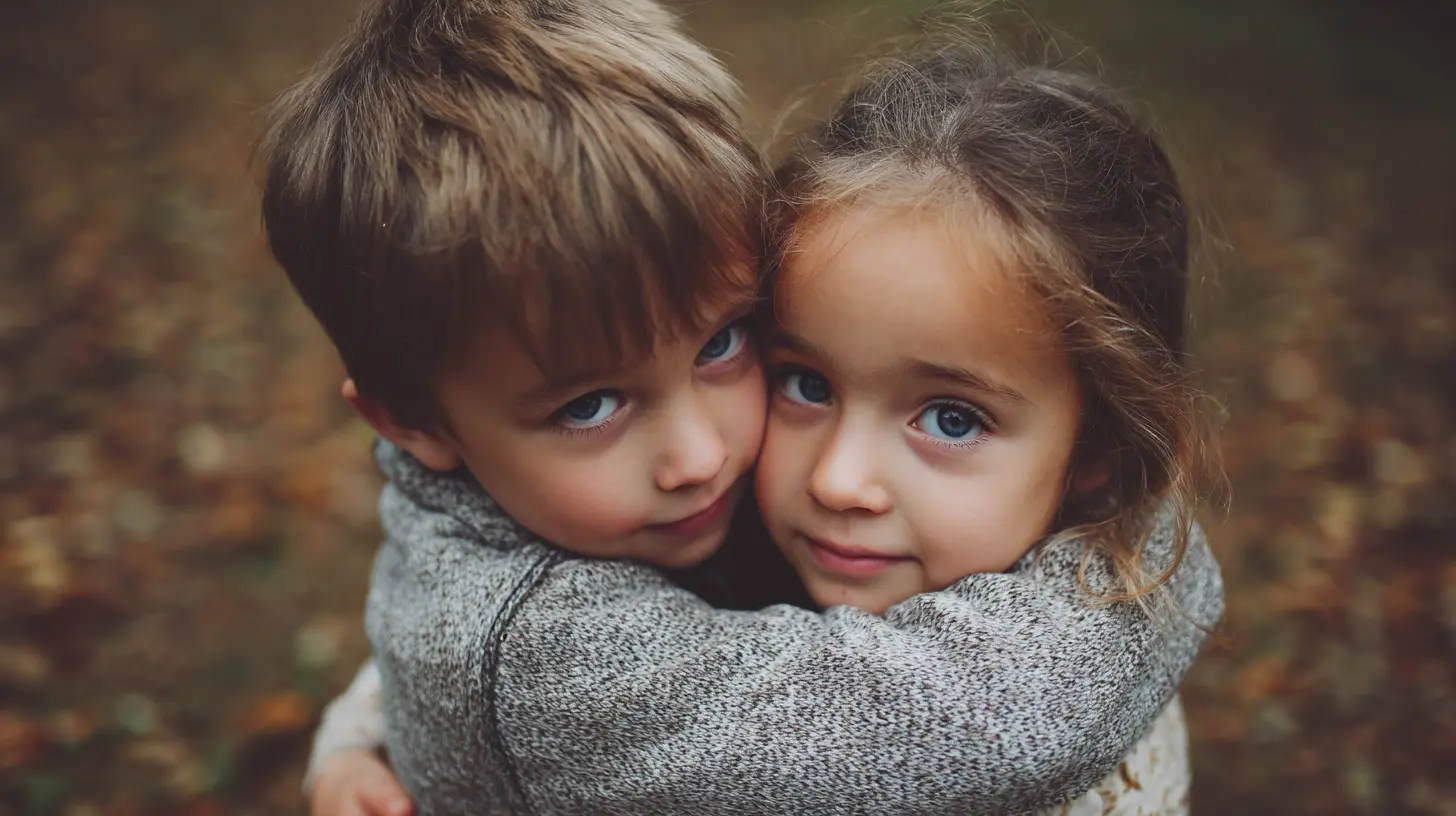
all images in this post were generated using AI tools
Category:
Parenting And EmotionsAuthor:

Maya Underwood