Raising a Child Who Can Self-Soothe by the Year 2027
3 September 2026
So, you want a child who can fall asleep without you performing a 45-minute interpretive dance routine at 2 a.m. You want a toddler who, upon waking at 3 a.m., rolls over, sighs, and goes back to sleep instead of screaming like a fire alarm with lungs. You want a preschooler who can handle a scraped knee without requiring a full emotional debrief and a government-issued snack.
Congratulations. You have set a goal that every parenting book promises but almost no one delivers.
The year 2027 gives you a nice, arbitrary deadline. That is about 24 to 36 months from now, depending on when you are reading this. That is plenty of time for your child to develop the skill, and plenty of time for you to completely sabotage it in at least four different ways. Let us be honest about that from the start.
Self-soothing is not a switch you flip. It is not a milestone like walking or talking where one day it just happens. It is a gradual, messy, two-steps-forward-three-steps-back process that will test your patience more than your child's. And the worst part? The harder you try to force it, the more likely your child will sense your desperation and double down on needing you.
This guide is not about gentle parenting platitudes or military-style sleep training. It is about the messy middle. The trade-offs. The nights when you will question every decision you have ever made. And the practical, sometimes uncomfortable, strategies that actually move the needle.
Why 2027? The Real Timeline for Emotional Regulation
First, let us recalibrate your expectations. A newborn cannot self-soothe. An infant under four months has no circadian rhythm, no object permanence, and a nervous system that fires at full volume with no off switch. Anyone who tells you otherwise is selling something, usually a sleep consultant package.By six months, some babies can learn to fall asleep independently. Many do not. By twelve months, most can, but they will still wake up and cry for reasons that have nothing to do with being unable to sleep. Teething, separation anxiety, illness, developmental leaps. All of these will blow up your progress like a toddler with a tower of blocks.
The true skill of self-soothing, meaning the ability to recognize a stressor, process it internally, and return to a calm baseline without external help, does not fully emerge until age three to five. That is the 2027 window for a child born in 2022 or 2023. If your child is already five, you have missed the easy window and are now in the remediation phase, which is harder but not impossible.
So your deadline is realistic, provided you understand that the goal is not a child who never needs you. The goal is a child who can distinguish between a genuine need and a preference for your presence. That distinction is the entire ballgame.
The Fundamental Paradox: You Must Be Present to Teach Absence
Here is the first uncomfortable truth. Children learn to self-soothe by internalizing the experience of being soothed. That means you have to do a lot of soothing before they can do it themselves. You cannot skip the attachment phase and jump straight to independence. That is not how mammalian brains work.Think of it like teaching someone to ride a bike. You do not hand them the bike, push them down a hill, and shout "Good luck!" and call that teaching. You run alongside them. You hold the seat. You let them wobble. You catch them when they fall. Then, gradually, you let go for a few seconds at a time, always ready to grab the handlebars again.
The mistake most parents make is letting go too early or too late. Too early, and the child learns that crying does not bring comfort, so they give up and go numb. That is not self-soothing. That is learned helplessness with a side of emotional shutdown. Too late, and the child learns that crying always brings comfort, so why would they ever stop?
The sweet spot is a gradual, responsive withdrawal. You are not ignoring their distress. You are calibrating your response to match their actual capacity, not their current demand.
As a real-world example, consider the bedtime routine. If your two-year-old cries when you leave the room, you have options. Option A: Stay until they fall asleep, every night, for a year. Option B: Leave and let them cry it out. Option C: The middle path. You leave. You wait three minutes. You go back, reassure them briefly, leave again. Then five minutes. Then eight. Each night, you stretch the interval. You are present enough that they never feel abandoned, but you are also teaching them that your presence is not required for sleep to happen.
This is not a novel technique. It has existed for decades under various names. But the reason it works is not the specific timing. It is the message you send. You are saying, "I know you are upset. I also know you are safe. I trust you to handle this, and I am close by if you truly need me." That trust is the foundation of self-soothing.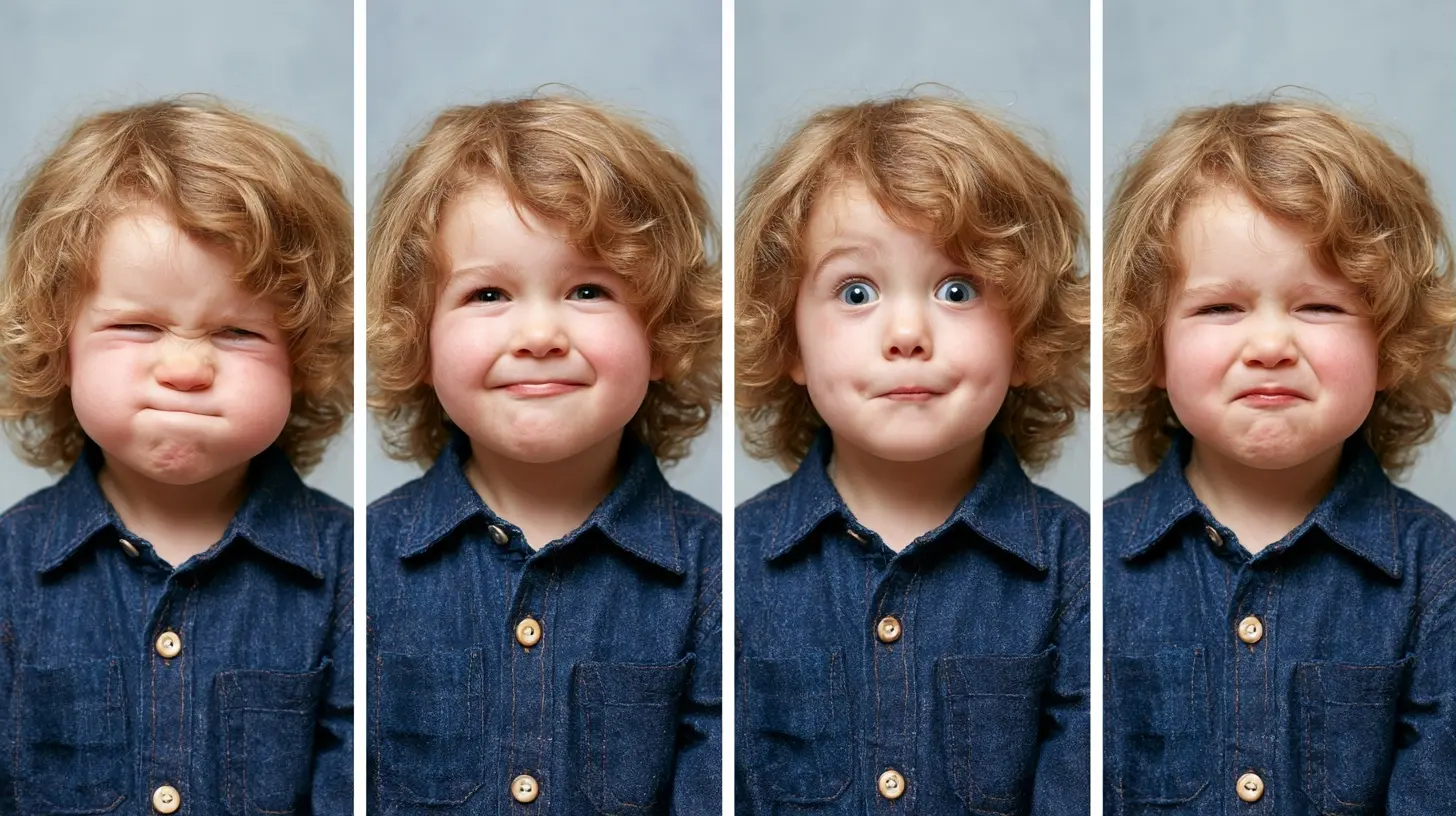
The Difference Between Self-Soothing and Emotional Suppression
Now we get to the part that most parenting advice completely misses. There is a huge difference between a child who has learned to calm themselves and a child who has learned to shut down because no one responds to them.The first is healthy. The second is tragic.
A self-soothing child might still cry for a minute or two before settling. They might whimper, shift positions, suck their thumb, or hug a stuffed animal. Then they fall asleep. That is regulation. They processed the distress and moved through it.
A suppressed child goes silent immediately. They stare at the ceiling. They do not cry because they have learned it is pointless. They have given up on seeking comfort entirely. This looks like good behavior from the outside, but inside, their cortisol levels are elevated, and they are not learning any skills. They are just surviving.
How do you tell the difference? Watch what happens during the day. A child who is learning to self-soothe will still come to you for comfort when they are hurt or scared. They will seek you out for hugs, for reassurance, for connection. A child who has been over-trained to be independent will not. They will handle everything alone, even when they clearly need help.
This is why the "cry it out" method has such a bad reputation. Not because crying is harmful, but because it is too easy to do wrong. The line between "letting them cry for a few minutes to learn" and "ignoring them until they stop crying" is dangerously thin. If you cross it, you are not raising a self-soother. You are raising a child who has learned that their needs do not matter.
The best practice is to always respond to genuine distress, but not to every protest. A tired child who is fighting sleep will often cry in a rhythmic, almost performative way. That is protest, not distress. A sick child, a frightened child, or a child in pain has a different cry. You will learn to tell them apart. Trust that instinct. If you are unsure, respond. It costs you nothing, and it preserves the attachment bond that makes self-soothing possible in the long run.
The 2027 Toolbox: What Actually Works
Let us get practical. Here are the tools that have the best evidence and the most real-world success behind them. None of them are magic. All of them require consistency and a tolerance for short-term failure.The Sleep Environment as a Third Parent
Your child's bedroom is not just a room. It is a sensory environment that either supports or undermines their ability to calm down. Think about what happens when you walk into a spa. Low light, quiet, consistent temperature. Your body relaxes without you thinking about it. The same principle applies to a child's room.Darkness matters. Not just dim light, but actual darkness. A blackout shade is worth its weight in gold. If your child can see their toys, their books, or the hallway light under the door, their brain will stay in "explore" mode instead of "sleep" mode.
White noise is another tool. Not music, not lullabies, but steady, unchanging white noise. It masks the random sounds of the house that would otherwise wake them and gives their auditory system something stable to anchor to. Some parents worry that white noise becomes a crutch. But that is fine. You can wean them off it later. For now, you want every possible advantage.
Temperature is the overlooked factor. A child who is too warm will wake up. A child who is too cold will wake up. The ideal is around 68 to 72 degrees Fahrenheit, but you should adjust based on your child's body heat. Check the back of their neck. If it is sweaty, they are too warm. If it is cool, they are too cold.
The environment is not a substitute for emotional regulation. But it removes the physical barriers to sleep so that the emotional work can happen. Think of it as clearing the road before you teach someone to drive.
The Bedtime Routine as a Ritual of Separation
A bedtime routine is not about brushing teeth and putting on pajamas. Those are just the mechanical steps. The real purpose of the routine is to create a predictable, repeatable sequence of events that signals to your child's brain, "We are now transitioning from awake to asleep, and here is the order of operations."The key is consistency, not content. It does not matter if the routine is bath, book, song, or book, song, bath. What matters is that it is the same every night, in the same order, with the same level of energy. If you vary the routine, you introduce novelty, and novelty wakes up the brain.
But here is the subtle part that most parents miss. The routine should end with you leaving while your child is still awake. If you stay until they are completely asleep, then you become part of the sleep association. When they wake up at 3 a.m., they will look for you because you are part of the "falling asleep" equation. If you leave while they are drowsy but still conscious, they learn to make the final transition themselves.
This is hard. It feels cruel to walk out while your child is blinking at you, clearly on the edge of sleep. But it is the single most important step in the entire process. The last two minutes of the routine are where the magic happens.
The Gradual Withdrawal Method for Older Children
If your child is already two or three and has never slept independently, you need a slower approach. The gradual withdrawal method is exactly what it sounds like. You start by sitting in a chair next to the bed. Each night, you move the chair a little farther away. Eventually, you are sitting in the doorway. Then you are in the hallway. Then you are gone.The key is to be boring. Do not talk, do not sing, do not make eye contact. You are not there to entertain. You are there as a calm, silent presence. Your child may protest. They may ask you to come closer. You can respond with a brief, "I am right here. You are safe. Go to sleep." Then you stay put.
This method takes longer than cold-turkey extinction. It can take two to three weeks of nightly progress and occasional regressions. But it is gentler, and it works well for children who are old enough to understand the concept of "I am moving my chair a little bit because you are getting better at this."
A real-world example: A mother of a three-year-old told me that she spent two weeks sitting in the hallway with her laptop, answering work emails, while her daughter slowly learned to fall asleep without physical contact. The first three nights were awful. The fourth night, her daughter fell asleep in eight minutes. The fifth night, she cried for twenty. The mother almost gave up. But she held the line, and by the end of week two, her daughter was asking her to leave the room because she wanted to "do it myself." That is the goal. The child owns the skill.
Common Mistakes That Will Set You Back
You will make mistakes. Everyone does. The key is to recognize them early and correct course before they become entrenched habits.Mistake One: Inconsistent Responses
If you let your child cry it out on Monday, then rush in on Tuesday because you feel guilty, then let them cry on Wednesday, you are teaching them that crying sometimes works and sometimes does not. That is a slot machine, not a lesson. They will keep crying longer and harder because they are hoping for the payout.Consistency does not mean you have to use the same method every night. It means you have to be predictable. If you decide that you will wait five minutes before responding, then you wait five minutes every time. If you decide that you will respond immediately to a certain type of cry, then you respond immediately every time. The child needs to know what to expect.
Mistake Two: Introducing New Sleep Associations During a Regression
When your child gets sick or goes through a developmental leap, they will often start waking up more. Your instinct will be to do whatever it takes to get them back to sleep, which usually means rocking, nursing, or bringing them into your bed. That is fine for a night or two. But if you do it for a week, you have just installed a new sleep association that you will have to break later.The better approach is to do the minimum necessary to get through the crisis. If they are sick, comfort them, but try to put them back in their crib or bed while they are still awake. If they are scared, reassure them, but stay in their room instead of taking them to yours. You want to be a comfort, not a sleep aid.
Mistake Three: Expecting a Linear Progression
Self-soothing is not a straight line. It is a series of plateaus and cliffs. Your child will sleep through the night for a week, and you will celebrate, and then they will wake up five times in one night for no apparent reason. This is normal. It does not mean you failed. It means they are human.The danger is overreacting to a bad night. If you panic and revert to old habits, you teach your child that their occasional regression will be rewarded with your full attention. Instead, treat a bad night as an anomaly. Stick to your routine. Do not change the rules just because one night was rough.
The Trade-Off: What You Give Up to Get There
Let us be honest about the costs. Raising a child who can self-soothe by 2027 will require you to tolerate some things that feel wrong.You will have to listen to your child cry, sometimes for longer than you think is acceptable. You will have to fight the urge to rescue them from every moment of discomfort. You will have to accept that your presence is not always the best thing for them, even though it feels like it is.
You will also have to give up the idea of being the perfect parent who never lets their child struggle. That parent does not exist. Every child struggles. The question is whether they struggle in a supportive environment where they are learning skills, or in an environment where their struggles are either ignored or immediately erased.
The trade-off is short-term discomfort for long-term competence. A child who can self-soothe is a child who can handle frustration, delay gratification, and regulate their emotions. These are not just sleep skills. They are life skills. They will help your child in school, in friendships, and eventually in romantic relationships and careers.
The alternative is a child who needs someone else to calm them down every time they are upset. That is exhausting for you, and it is crippling for them.
When Self-Soothing Is Not the Right Goal
There are cases where pushing for self-soothing is a mistake. If your child has a medical condition that affects their breathing, like asthma or sleep apnea, or if they have a neurological condition that affects their ability to regulate, then independent sleep may not be achievable or appropriate. Consult your pediatrician before starting any sleep training program.Similarly, if your child has experienced trauma, whether from a hospitalization, a move, a divorce, or any major disruption, they may need extra comfort and closeness for a while. Pushing independence during a period of instability can backfire. The child needs to feel secure before they can learn to self-soothe.
Finally, if you, the parent, are not in a place to handle the crying, then do not do it. Sleep training requires a calm, consistent parent. If you are sleep-deprived, depressed, or at the end of your rope, you will not be able to implement any method well. Get help first. Have your partner do the nights for a week. Hire a night nurse if you can afford one. You cannot pour from an empty cup, and you cannot teach calmness when you are vibrating with anxiety.
The 2027 Reality Check
Here is what success looks like. It is not a child who never wakes up at night. It is a child who wakes up, checks the clock, rolls over, and goes back to sleep. It is a child who has a bad dream and calls for you, but when you get there, they are already settling back down. It is a child who gets upset about something during the day, takes a few deep breaths, and says, "I am okay now."That child will still need you. They will still have bad days. But they will not be dependent on you for every emotional regulation task. They will have an internal toolkit that they can use independently.
Getting there will take months. There will be setbacks. There will be nights when you are certain that your child is the only one in the world who still cannot sleep alone, and every other parent on the internet is lying about their perfect sleepers. Those nights are the test. If you can get through them without giving up, you will get there.
By 2027, your child will be three or four years old. They will be able to tell you what they need. They will be able to understand simple explanations. And if you have done the work, they will be able to calm themselves down when you are not in the room. That is not magic. That is the result of hundreds of small, consistent, boring actions taken over the course of many months.
The deadline is arbitrary, but the skill is not. Start tonight. Not with a grand plan, but with one small change. Move the chair a few inches. Wait an extra minute before going in. Stay silent during the last part of the routine. Do that consistently, and by 2027, you will have a child who can sleep without you.
And then you will have a whole new problem. You will not know what to do with all the free time in the evening. But that, as they say, is a good problem to have.
all images in this post were generated using AI tools
Category:
Parenting And EmotionsAuthor:

Maya Underwood
Discussion
rate this article
2 comments
Layne McEachern
Thank you for this insightful article. Teaching self-soothing skills is so important for our children's emotional growth. I appreciate the practical tips and research you shared to guide us in this process.
September 8, 2026 at 3:52 PM
Maya Underwood
Thank you for your kind words! I'm glad you found the tips helpful for supporting emotional growth.
Giovanna Elliott
Teaching children self-soothing skills empowers their emotional independence and resilience.
September 7, 2026 at 1:50 PM