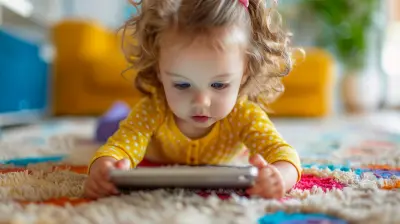
Practicing Gratitude as a Parent Amid Daily Chaos
18 October 2026
It is 7:42 on a Tuesday morning. One child is refusing to wear socks. The other has announced, with the gravity of a Supreme Court ruling, that the oatmeal you made is "the wrong kind of oatmeal." The dog has eaten something he should not have eaten, and you are going to find out what it was later, probably on the carpet. Somewhere in the middle of this, a small voice in your head suggests you should practice gratitude.
And your first thought is: gratitude? Now? For what, exactly? The socks?
Here is the honest answer, from someone who has been in the trenches: yes. Now. For the socks. Or at least for the feet inside them. But not in the way the internet usually tells you to do it, with a scented candle and a journal and a serene smile that suggests you have never once raised your voice at a LEGO brick.
Gratitude, practiced well, is not a personality trait for people whose children sleep through the night. It is a skill. It is a tool. And it is one of the most practical, least sentimental things you can build into your parenting, precisely because your days are chaotic, not in spite of it.
Let us talk about how this actually works.

Why Gratitude Feels Impossible in the Middle of the Mess
Before we get to the how, we should be honest about the why not. Most parents who try gratitude practices quit within a week, and it is rarely because they are ungrateful people. It is because the standard advice is built for a life they do not have.The classic gratitude journal asks you to sit quietly and write three things you are thankful for. That works beautifully if your evening involves a cup of tea and a window. It falls apart if your evening involves a bedtime negotiation that has entered its third hour, a dishwasher that needs unloading, and a child who has just remembered, at 9:15 p.m., that he needs a shoebox for a project due tomorrow.
There is also a subtler problem: gratitude can feel like a betrayal of your own exhaustion. When you are running on four hours of sleep and someone tells you to "count your blessings," it can land as a dismissal. As if the hard parts do not count. As if noticing them is a failure of perspective.
It is not. Gratitude and frustration are not opposites. They are roommates. They can share a house. The goal is not to evict the frustration. The goal is to stop letting it hog the bathroom.

What Gratitude Actually Does (and Does Not Do)
Let us clear up a common misconception. Gratitude is not positive thinking. It is not pretending the socks situation is fine. It is not a mood you force yourself into by sheer willpower.What gratitude actually is, in practical terms, is a deliberate shift in attention. It is the act of noticing something that is going right, or something that is being done for you, or something you have that you would miss if it were gone. That is it. A noticing. A small, repeatable act of attention.
Why does that matter? Because attention is the raw material of your experience. On any given day, a thousand things happen. Your brain, wired for threat detection, will naturally file the spilled juice under "evidence that today is bad" and completely fail to register that your older child quietly helped the younger one with a zipper. Gratitude practice is a corrective. It does not change the events. It changes the ledger.
What gratitude does not do is erase the hard stuff. If you are dealing with genuine hardship, a child's illness, financial strain, a difficult diagnosis, gratitude is not a substitute for support, rest, or professional help. It is a companion to those things, not a replacement. If someone ever tells you to just be grateful instead of getting help, that is not gratitude. That is avoidance wearing a nice sweater.
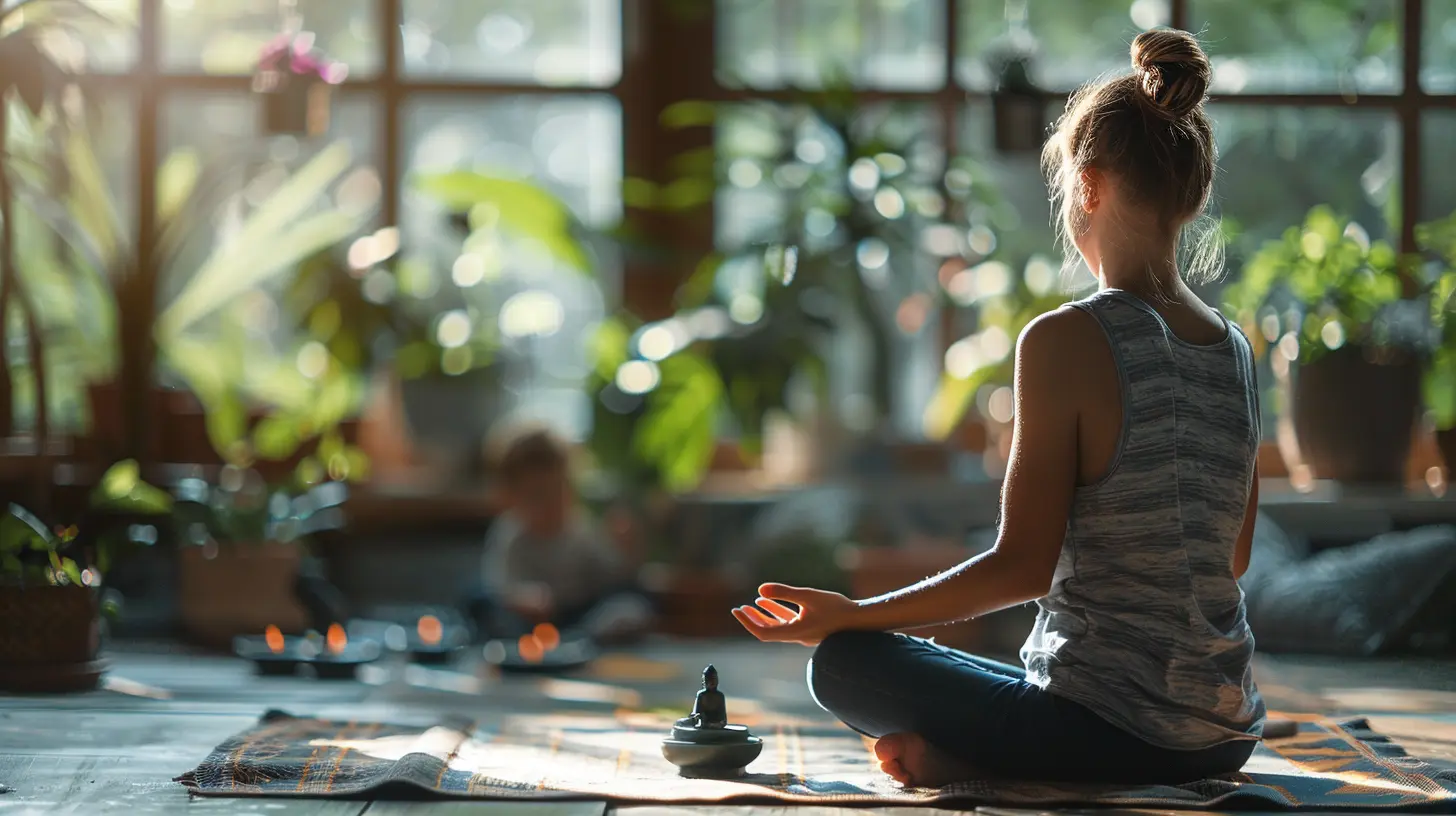
The Gratitude That Survives a Tuesday
The gratitude that works for parents is not the journal-and-candle kind. It is the kind that fits into the cracks of the day, requires no equipment, and does not depend on you being calm. Here are the versions that actually hold up.Micro-Gratitude: Ten Seconds, No Journal Required
Micro-gratitude is the practice of noticing one specific thing, for about ten seconds, without stopping what you are doing. You are not writing it down. You are not making a list. You are just directing your attention for a moment.The key word is specific. "I am grateful for my family" is a greeting card. It bounces off. "I am grateful that the coffee is still hot" lands. "I am grateful that the baby went down without a fight" lands. "I am grateful that my partner took the trash out without being asked" lands, and it lands differently for them too, if you say it out loud.
Why does specificity matter? Because vague gratitude is easy for your brain to dismiss. Specific gratitude has texture. It gives your attention something to grip.
You can do this while washing dishes, while waiting at a red light, while standing in the doorway of a room your child just destroyed, taking one breath before you respond. That last one is worth trying. It does not fix the room. It does buy you a half-second of perspective before you open your mouth, and half-seconds matter more than people think.
The Out-Loud Version: Gratitude as Modeling
Children do not learn gratitude from being told to be grateful. They learn it from watching it happen. This is one of the most robust findings in parenting research, and it lines up with what most of us know intuitively: kids copy what they see, not what they are instructed to do.So say it out loud. Not as a lecture. As a running commentary.
"I am really glad the sun came out. That walk was exactly what I needed."
"That cashier was patient with us. I am going to tell her thank you."
"I was frustrated about the traffic, but honestly, we got to hear that whole album together, and that was fun."
Notice what this does. It shows your child that gratitude is not a special occasion activity. It is a way of narrating a life. It also gives them language for their own experience, which is the real gift. A child who hears "I was frustrated and also grateful" learns that both can be true, which is a lesson many adults are still working on.
The Bedtime Swap: One Good Thing, One Hard Thing
This is a simple ritual that works for a wide range of ages, and it is more useful than the classic "what are you thankful for" question, which tends to produce rehearsed answers ("my family, my dog, pizza").Instead, each person shares one good thing and one hard thing from the day. The good thing builds the noticing muscle. The hard thing gives permission to be honest, which is what keeps the ritual from turning into performance. You go first. Model both.
The reason this works is that it pairs gratitude with reality. A gratitude practice that cannot accommodate the hard thing becomes a lie your child learns to tell. A gratitude practice that makes room for both becomes a conversation they trust.

The Comparison Trap: Gratitude Versus Guilt
There is a version of gratitude that is actually harmful, and it is worth naming so you can avoid it.It goes like this: "You should be grateful. Some children do not have toys." Or, in the internal version: "I should not complain. Some people have it so much harder."
This is not gratitude. It is comparison, and it runs on guilt. It teaches children that their feelings are only valid if they are the worst feelings in the room, which is a terrible thing to teach a person. It also does not work. Guilt is a poor motivator over the long term, and it tends to produce either shame or resentment, sometimes both.
Real gratitude does not require you to rank your suffering against someone else's. You can be grateful for your home and still be frustrated by your mortgage. You can be grateful for your children and still be desperate for a nap. The two coexist. In fact, the ability to hold both is a sign of emotional maturity, not a failure of it.
When you catch yourself using comparison to force gratitude, pause. Ask instead: what is one thing that is genuinely good right now, regardless of how it compares to anyone else's life? That question is kinder, and it actually works.
Gratitude When You Are the One Who Needs It
Parents spend a lot of energy teaching children gratitude. Less attention goes to the question of what gratitude does for the parent, which is a shame, because the benefits are real and they are not abstract.Practicing gratitude as a parent is, in part, a way of protecting your own resilience. Not because it makes the hard parts disappear, but because it keeps you from losing the good parts in the noise. The days are long and the years are short, as the saying goes, and the reason that saying resonates is that it is true. The chaos has a way of crowding out the sweetness, not because the sweetness is not there, but because it is quieter.
Gratitude is how you turn the volume up on the quiet things.
There is a trade-off to be aware of here. Gratitude can become a way of minimizing your own needs. "I should just be grateful" is a sentence that has kept a lot of exhausted parents from asking for help they genuinely needed. So hold the line: gratitude is not a reason to ignore your own limits. You can be grateful for your life and still need a break from it. Those are not contradictory. They are both true, and the healthiest parents are the ones who can say both out loud.
Practical Ways to Build the Habit Without Adding Another Chore
The biggest mistake parents make with gratitude is turning it into a project. A new journal. A chart. A family meeting. These things are fine in theory, but they add load to a system that is already at capacity. The habit dies, and then you feel bad about the habit dying, which is its own small tragedy.Instead, attach gratitude to something you already do. This is the principle of habit stacking, and it works because you are not creating a new slot in your day. You are filling an existing one.
- While the kettle boils. Name one thing. Ten seconds.
- At the red light. One specific thing from the last hour.
- While folding laundry. One thing about each person whose clothes you are folding. It turns a mindless task into a small act of connection.
- In the car after school pickup. Ask for one good thing before the inevitable "fine" response sets in.
- At bedtime. The one good thing, one hard thing swap.
Pick one. Not five. One. Do it for two weeks before adding anything else. The goal is not a comprehensive gratitude system. The goal is a single reliable point of contact with the practice, so that on the worst days, it is still there.
What to Do When It Feels Fake
It will feel fake at first. That is normal and it is not a sign that you are doing it wrong.The reason is simple: you are asking your attention to do something it is not in the habit of doing. The first few times, it will feel like wearing someone else's glasses. Keep going. The practice does not become sincere because you force sincerity. It becomes sincere because repetition changes what you notice, and what you notice changes what you feel. The feeling follows the attention, not the other way around.
If it still feels fake after a couple of weeks, change the format. Some parents find that writing works better than speaking. Some find that saying it to a partner works better than saying it to themselves. Some find that gratitude for other people, a teacher, a neighbor, a coach, is easier to access than gratitude for their own life. Use the door that opens.
Common Mistakes and How to Avoid Them
A few traps are worth flagging, because they are the ones that quietly derail the practice.Mistake one: making it a performance for the kids. If gratitude becomes a quiz ("what are you grateful for? say it nicely"), children will learn to produce the right answer, not to feel the thing. Keep it low-stakes. Share your own noticing more than you solicit theirs.
Mistake two: only doing it on good days. The days you least want to do it are the days it matters most. Not because it will magically fix the day, but because it keeps the muscle from atrophying. A ten-second noticing on a terrible day counts double.
Mistake three: confusing gratitude with complacency. Gratitude for what you have does not mean you stop working for what you want. You can be grateful for your job and still look for a better one. You can be grateful for your child's school and still advocate for change. Gratitude is a lens, not a leash.
Mistake four: keeping it private forever. Gratitude that is expressed does more work than gratitude that is only felt. Tell the person. Thank the cashier out loud. Send the text. The expression is what turns a private mood into a relational habit, and relational habits are the ones that stick.
A Note on the Hard Seasons
There are seasons when gratitude is not the right tool. When you are in the middle of a crisis, when you are grieving, when you are clinically depressed, the instruction to count your blessings can feel like salt in a wound. If that is where you are, give yourself permission to set the practice down. Gratitude will still be there when you are ready. It does not expire.What you can do in those seasons is smaller and gentler: notice one thing that is not terrible. The blanket is warm. The tea is hot. Someone texted to check in. That is enough. That is, in fact, the whole practice, scaled down to fit the day you are actually having.
The Long Game
Here is the thing about gratitude as a parent: it is not really about the gratitude. It is about what gratitude trains you to see.Over months and years, the practice changes the default setting. You start to notice the good stuff without being prompted. The way your child says a word wrong, which you will miss when they say it right. The particular sound of the house when everyone is asleep. The fact that the socks argument, annoying as it was, means there is a small person in your life with opinions and preferences and a self that is slowly coming into focus.
That is the long game. Not a life without chaos, but a life in which the chaos does not get to write the whole story. The socks are still on the floor. The oatmeal is still the wrong kind. And somewhere in the middle of it, you notice the feet, and the small person attached to them, and you think: okay. This is the good part. I almost missed it.
That is gratitude. It is not a mood. It is a habit of looking. And it is available right now, in the middle of the mess, for about ten seconds at a time.
all images in this post were generated using AI tools
Category:
Parenting Self CareAuthor:

Maya Underwood