How to Talk to Kids About Healthy Eating Without Guilt
26 August 2026
There is a moment every parent knows. Your child stares at a plate of broccoli like it is a personal insult. You feel the familiar tension rising. You hear yourself say something you swore you would never say. Something about children starving in other countries, or about how many bites are required before dessert appears. And then you feel the guilt. Not just about the broccoli. About the whole messy business of feeding another human being.
Food has become a battlefield in ways our grandparents never imagined. We have access to more nutrition information than any generation in history, and yet we are more anxious about feeding our children than ever before. The problem is not that we do not care. The problem is that we care so much that we have forgotten how to talk about food without turning every meal into a moral examination.
This article is not about meal plans or portion sizes. It is about the words we use, the tone we take, and the atmosphere we create around the table. Because how we talk about healthy eating matters just as much as what we put on the plate. And when we strip away the guilt, the shame, and the power struggles, something remarkable happens. Children actually learn to eat well.

The Hidden Cost of Good Intentions
Most parents start with the best intentions. They want their children to be healthy, strong, and happy. They read articles, follow nutritionists, and stock the fridge with colorful produce. And then they make a subtle mistake. They turn healthy eating into a rulebook instead of a relationship.When we constantly monitor, correct, and evaluate every bite our child takes, we send a message. We tell them that their body is not to be trusted. We tell them that eating is a test they can pass or fail. We tell them that food is something to be anxious about. Children absorb these messages long before they understand the science of nutrition.
The guilt does not start with the child. It starts with the parent. We feel guilty when we serve chicken nuggets for the third time this week. We feel guilty when our child refuses vegetables. We feel guilty when we see other parents posting pictures of homemade kale smoothies. And then we project that guilt onto our children through our words and our worry.
Here is the truth that changes everything. A child who feels guilty about food does not eat better. They eat worse. Guilt creates stress. Stress shuts down the digestive system. Stress makes children cling to familiar foods even harder. Stress turns meals into power struggles that have nothing to do with hunger or nutrition.
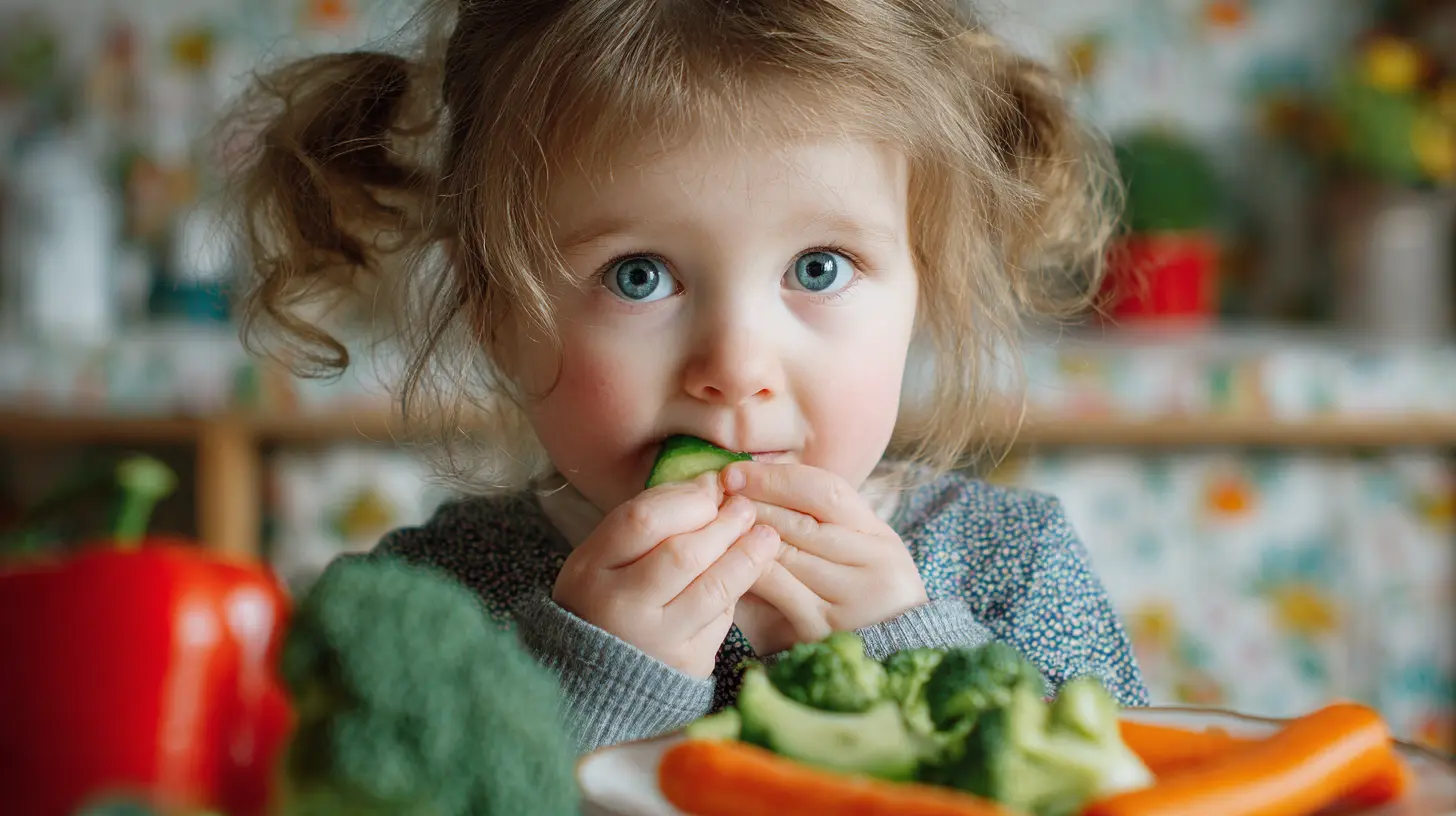
The Language of Neutrality
The single most powerful shift a parent can make is to move from judgment language to neutral language. This sounds simple, but it takes practice. Let us look at what this means in real terms.Instead of saying "That cookie is bad for you," say "Cookies are a sometimes food." Instead of saying "You need to eat your vegetables," say "The carrots are on your plate if you want them." Instead of saying "Stop being picky," say "You are still learning to like new foods."
The difference is not just in the words. It is in the energy behind them. Neutral language removes the emotional charge. It takes food off the moral high ground. It allows your child to approach eating with curiosity instead of defensiveness.
This approach is supported by decades of work in child feeding psychology. The division of responsibility model, developed by feeding therapist Ellyn Satter, is the gold standard in this field. The idea is simple. Parents decide what food is offered, when it is offered, and where it is offered. Children decide whether to eat and how much to eat. When parents respect this boundary, children naturally develop the ability to regulate their own hunger and fullness.
The trade-off here is real. You give up control over how much your child eats. In exchange, you gain a child who trusts their own body. For many parents, this trade feels terrifying at first. We are so conditioned to believe that we must make our children eat that letting go feels like neglect. But the evidence is clear. Children who are allowed to listen to their bodies grow into adults who maintain healthier relationships with food.

Why Shame Backfires Every Time
Let us talk about shame because it is the most destructive force in the conversation about healthy eating. Shame is different from guilt. Guilt says "I did something bad." Shame says "I am bad." When we shame a child about food, we are not correcting behavior. We are attacking their identity.Consider the common phrase "You are such a picky eater." On the surface, this seems like a harmless observation. But to a child, it sounds like a verdict. It tells them that their preferences are wrong, that their body is broken, that they are difficult to love. Children internalize these labels. They start to believe that picky eating is who they are, not just what they are going through.
The same applies to weight. When we comment on a child's body, even with positive intentions, we teach them that their worth is tied to their appearance. Saying "You are getting so big and strong" might seem encouraging, but it still focuses on the body as something to be evaluated. Children need to hear that their bodies are capable, not that their bodies are projects.
Shame also shows up in comparison. "Your brother eats his broccoli, why do not you?" This sentence does not make broccoli more appealing. It makes the child feel inadequate. It pits siblings against each other. It creates resentment around food that can last for years.
The alternative is to separate the behavior from the child. Instead of "You are picky," say "You are still figuring out what you like." Instead of "Why can you not eat like your sister?" say "Everyone has different tastes, and that is okay." This small shift preserves the child's dignity while still acknowledging the challenge.
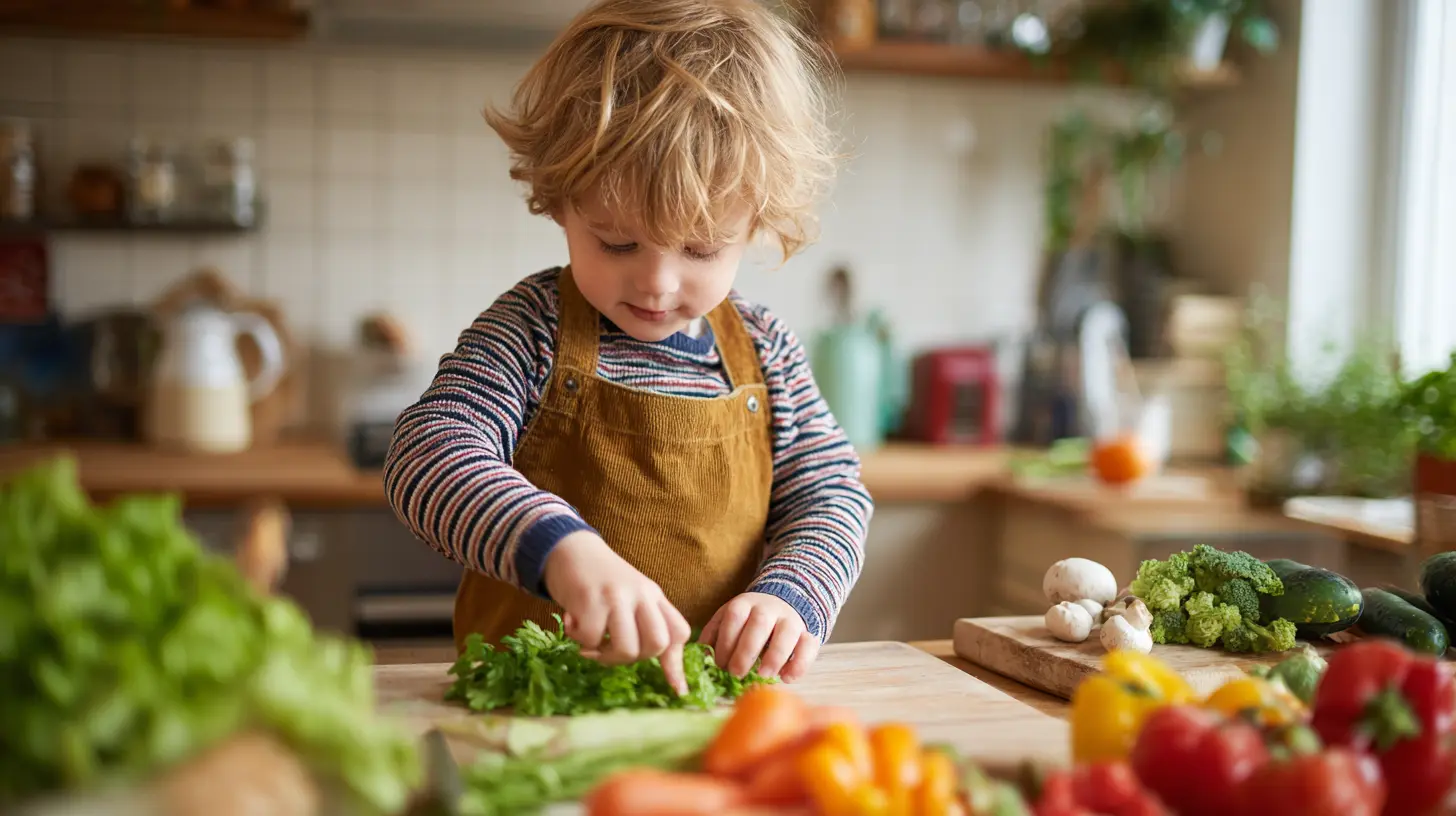
The Power of Repeated Exposure
One of the biggest misconceptions about children and food is that they will eat something if they are hungry enough. This is simply not true. Children are biologically wired to be wary of new foods. This is an evolutionary survival mechanism. In the ancestral environment, a child who eagerly ate unfamiliar berries might not survive. Pickiness kept children alive.Understanding this changes how we respond to rejection. When your child pushes away a new food, they are not being difficult. They are being cautious. And the only way through that caution is repeated, low-pressure exposure.
Research on food neophobia, the fear of new foods, shows that children may need to be exposed to a new food ten to fifteen times before they accept it. But here is the catch. The exposure must be neutral. If you are pleading, bargaining, or demanding, the exposure counts against you. The child associates the food with stress, and they reject it even more strongly.
The practical application is simple. Put a small amount of the new food on the plate. Do not mention it. Do not encourage eating it. Let it sit there. The child may touch it, smell it, lick it, or ignore it entirely. All of these count as progress. Over time, the food becomes familiar. Familiarity breeds acceptance.
This works because it takes the pressure off. The child is in control of their own exploration. They are not being forced to do anything. They are simply being given the opportunity to get comfortable with something new. And when they finally take a bite, they do it because they chose to, not because they were coerced.
Modeling Without Words
Children learn more from what we do than from what we say. This is both a relief and a responsibility. The relief is that we do not have to be perfect. The responsibility is that we cannot fake it.If you want your child to eat vegetables, eat vegetables yourself. Not because you are trying to set an example, but because you genuinely enjoy them. Children have an uncanny ability to detect when we are performing. If you choke down salad while making a face, your child learns that salad is something to endure, not enjoy.
The same applies to treats. If you secretly eat ice cream after the children go to bed, but tell them that ice cream is a treat for special occasions, they will sense the hypocrisy. They will learn that treats are something to sneak, something to feel guilty about, something to hide. Instead, eat treats openly and without apology. Enjoy them. Show your child that all foods can fit into a healthy life.
This is where many parents struggle. They grew up with diet culture. They learned to categorize foods as good and bad. They learned to feel guilty about pleasure. And now they are trying to raise children with a healthier relationship to food, but they are still carrying their own baggage.
The answer is not to hide your struggles. It is to be honest in an age-appropriate way. You can say "I am still learning to enjoy vegetables, but I am trying." You can say "Sometimes I eat too much dessert and my tummy hurts, so I am going to listen to my body tonight." This honesty teaches children that eating is a lifelong learning process, not a test they can pass.
The Problem with Reward and Punishment
Using food as a reward is one of the most common parenting strategies, and one of the most damaging. "If you eat your peas, you can have cake." This phrase seems harmless, but it teaches children a dangerous lesson. It tells them that vegetables are the price you pay for dessert. It tells them that dessert is the real prize. It tells them that healthy food is inherently unpleasant.The same applies to punishment. "No dessert because you did not eat your dinner" turns dessert into a weapon. It creates a power dynamic where food is used to control behavior. Children learn to see meals as negotiations, not as nourishment.
The alternative is to treat all foods with equal respect. Serve dessert alongside the meal, not as a reward for eating the meal. This sounds radical, but it works. When children see that dessert is not a prize, they lose interest in it as a forbidden fruit. They learn to eat dessert when they are hungry for it and stop when they are full.
This approach has a name. It is called the feeding relationship, and it is built on trust. You trust your child to eat what they need. Your child trusts you to provide food without judgment. When this trust is established, children naturally gravitate toward a balanced diet. They do not overeat dessert because dessert is not special. They do not refuse vegetables because vegetables are not a punishment.
Handling the Picky Eater Phase
Every child goes through a picky phase. It usually peaks around age two and can last until age five or six. Some children are more extreme than others. Some children seem to survive on air and crackers. Parents worry. They wonder if their child is getting enough nutrients. They wonder if they are failing.The first thing to understand is that picky eating is normal. It is not a reflection of your parenting. It is a developmental stage. Children at this age are asserting their independence. They are learning that they can say no. Food is one of the few areas where they have control, and they will use it.
The second thing to understand is that most children do not starve themselves. If you offer a variety of foods over time, your child will get what they need. They may not eat vegetables today, but they might eat them next week. They may eat nothing but bread for three days, and then suddenly eat everything in sight. This is normal. This is how children regulate.
The mistake parents make is to panic and start offering only safe foods. This creates a spiral. The child learns that if they hold out, they will get what they want. The menu shrinks. The pickiness gets worse.
The better approach is to keep offering a variety of foods, including the ones your child rejects. Do not make a separate meal. Do not become a short-order cook. Offer the family meal and let your child decide what to eat from what is available. This is not cruel. It is respectful. It tells your child that you trust them to make good choices.
There is a caveat here. If your child is losing weight, showing signs of nutritional deficiency, or has a very limited diet of fewer than ten foods, you should consult a pediatrician or a feeding specialist. Picky eating can cross the line into avoidant restrictive food intake disorder, which requires professional help. But for the vast majority of children, picky eating is a phase that passes with patience.
The Role of Family Meals
The family meal is one of the most powerful tools we have for raising healthy eaters, and it has nothing to do with the food itself. When families eat together, children learn to associate food with connection. They learn conversation skills. They learn to listen and be heard. And they learn that eating is a social experience, not just a biological necessity.The research on family meals is consistent. Children who eat regularly with their families have better nutrition, lower rates of obesity, and fewer eating disorders. They also have better mental health and stronger family bonds. The benefits are not limited to any particular type of family. They apply across cultures, income levels, and family structures.
But here is the challenge. Family meals are hard. Parents work. Children have activities. Everyone is tired. The idea of a perfect family dinner every night is a fantasy. And when we cannot live up to that fantasy, we feel guilty. We feel like we are failing our children.
The solution is to let go of perfection. A family meal does not have to be a home-cooked gourmet dinner. It can be a frozen pizza eaten together at the kitchen counter. It can be breakfast on a busy school morning. It can be a weekend lunch. What matters is the connection, not the cuisine.
The key is to make family meals a priority without making them a burden. Aim for a few times a week. Turn off the screens. Put away the phones. Ask questions that go beyond "How was school?" Tell stories about your day. Laugh. Argue. Connect. The food will take care of itself.
When to Step Back and When to Step In
There is a fine line between supporting your child's eating and controlling it. Knowing where that line is can be difficult. Here is a guide.Step back when your child is eating a variety of foods, even if the variety is not what you would choose. Step back when your child is gaining weight appropriately and has energy. Step back when your child is willing to try new foods occasionally, even if they reject them most of the time. In these cases, your job is to provide food and let your child do the rest.
Step in when your child is losing weight or not growing. Step in when your child is eating so little that you are worried about their health. Step in when your child is showing signs of an eating disorder, such as extreme restriction, bingeing, or purging. Step in when your child's eating is causing significant distress for them or your family.
In these cases, professional help is warranted. A pediatrician can rule out medical causes. A registered dietitian can provide individualized guidance. A child therapist can help with the emotional aspects of eating difficulties. There is no shame in asking for help. In fact, asking for help is a sign of strength.
The Long Game
Raising a child with a healthy relationship to food is a long game. It is not about winning every meal. It is not about having a child who eats kale and quinoa with enthusiasm. It is about raising an adult who can eat without anxiety, who can enjoy a birthday cake without guilt, who can listen to their body and trust what it says.This means accepting that there will be bad days. There will be meals where your child eats nothing. There will be weeks where they only want mac and cheese. There will be birthday parties where they eat too much cake and then feel sick. All of this is part of the learning process.
The most important thing you can do is to keep your own emotions in check. When your child refuses food, do not take it personally. When your child overeats, do not panic. When your child gains weight, do not comment on it. Your child is not giving you a report card on your parenting. They are just eating.
If you can maintain a calm, neutral, loving presence around food, your child will eventually find their way. They will learn to eat because they are hungry and stop because they are full. They will learn to enjoy a wide variety of foods because they were given the freedom to explore. They will learn that food is not a moral issue. It is just food.
A Final Word on the Table
The table is where we nourish our bodies and our relationships. It is where we pass on traditions and create memories. It is where we teach our children, not through lectures, but through the quiet example of how we show up.When you sit down to eat with your child, you are doing more than feeding them. You are telling them that they matter. You are telling them that their body is their own. You are telling them that they can trust themselves. And you are telling them that food is a gift, not a test.
Let go of the guilt. Let go of the pressure. Let go of the idea that you have to be perfect. Your child does not need a perfect parent. They need a present parent. They need you to be there, at the table, ready to listen and ready to love.
The rest will follow.
all images in this post were generated using AI tools
Category:
Nutrition For KidsAuthor:

Maya Underwood
Discussion
rate this article
1 comments
Jude McConnell
Talking to kids about healthy eating is like teaching a cat to fetch. You need patience, creativity, and maybe a bribe with dessert on the side!
August 27, 2026 at 3:30 AM