How to Build a Balanced Plate for Your Child at Every Meal
10 October 2026
Most parents know what a balanced plate looks like in theory. Vegetables, protein, grains, fruit, dairy. The problem is that knowing the theory and getting a tired four-year-old to eat a single green bean are two very different skills. And somewhere between the food pyramid poster in a doctor's office and the reality of a Tuesday night dinner table, the whole concept starts to feel like a setup for failure.
Here is the truth I have landed on after years of feeding children, watching other people feed children, and reading the actual research on pediatric nutrition: a balanced plate is not a formula. It is a pattern. And patterns can be taught, adjusted, and made to survive real life. This article is about building that pattern, meal by meal, without turning your kitchen into a battlefield.

What "Balanced" Actually Means for a Child
A balanced plate means the meal delivers a reasonable mix of macronutrients (protein, fat, carbohydrates), micronutrients (vitamins and minerals), fiber, and enough calories to fuel growth and activity. That is the clinical definition. The practical definition is simpler: a balanced plate is one that gives your child what their body needs today and teaches them what their body will need for the next fifty years.Children are not small adults. Their nutritional needs shift constantly because their bodies are actively building bone, muscle, brain tissue, and immune function. A toddler needs proportionally more fat than a school-age child. A child in a growth spurt needs more calories and protein than one who is not. A child who just ran a mile at recess has different immediate needs than one who spent the afternoon reading.
This is why rigid plate ratios, like the popular half-plate-of-vegetables rule, can be misleading. That guideline is a useful starting point, not a law. A child who barely touched lunch may need a plate heavier in calories at dinner. A child going through a picky phase may need a plate that looks unbalanced for a few weeks while you rebuild trust around food.
Balance is a long game measured over days and weeks, not a single meal.
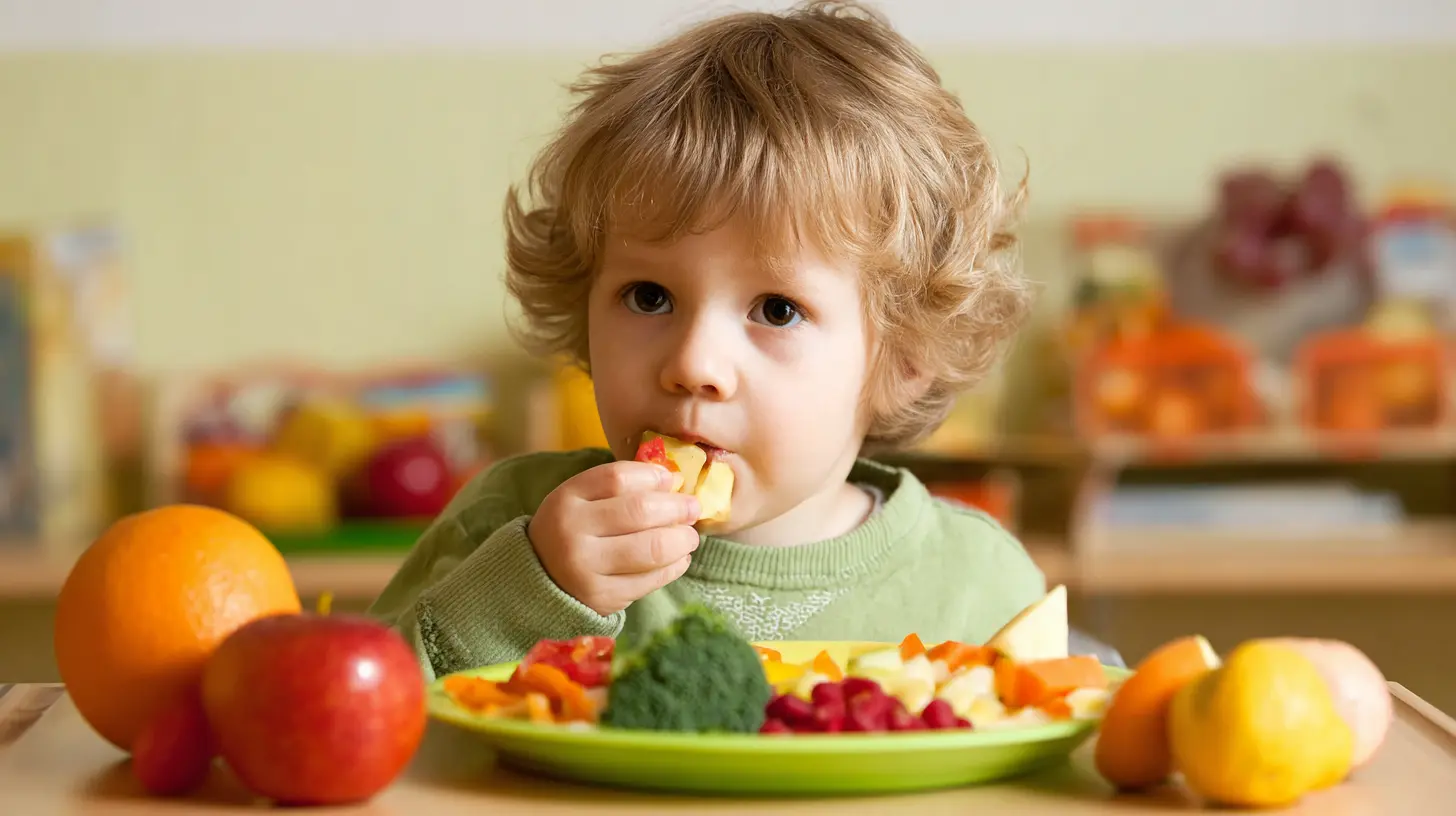
The Core Components of a Child's Plate
Every meal does not need to hit every category perfectly, but across a day, most children benefit from these five components.Protein
Protein supplies amino acids for growth, immune function, and satiety. Children need it at every meal, not just dinner. A breakfast of plain toast and juice spikes blood sugar and leaves a child hungry by mid-morning. Add an egg, some yogurt, or a spoon of nut butter and the whole morning changes.Good sources include eggs, poultry, fish, beef, beans, lentils, tofu, yogurt, cheese, and milk. Variety matters because different proteins carry different micronutrients. Red meat delivers iron and zinc. Fish delivers omega-3 fats. Beans deliver fiber along with protein.
Fat
Fat is where a lot of parents accidentally undershoot. Young children, especially under age two, need fat for brain development. Even older children need it for hormone production, vitamin absorption, and sustained energy. Fat also makes food taste good, which matters more than most nutrition advice admits.Think olive oil, avocado, full-fat dairy, nuts, seeds, and fatty fish. A plate with no fat is often a plate a child will not finish, because fat is what signals fullness and satisfaction.
Carbohydrates
Carbohydrates are the body's preferred quick energy source, and children burn through them fast. The goal is not to avoid carbs but to choose ones that come with fiber and micronutrients attached. Oats, whole grain bread, rice, pasta, potatoes, corn, and fruit all work.Refined carbs are not poison. A white roll at a restaurant is fine. The issue is when refined carbs crowd out everything else, meal after meal.
Vegetables and Fruit
These deliver fiber, vitamins, minerals, and phytochemicals that support long-term health. They are also the category most likely to trigger conflict.A useful mental shift: stop counting servings and start counting exposures. A child who tastes a vegetable twenty times is more likely to eventually eat it than one who is pressured to finish a portion. The plate should offer vegetables without demanding they disappear.
Dairy or a Fortified Alternative
Calcium and vitamin D matter for bone development, especially during growth spurts. Milk, yogurt, cheese, and fortified plant milks all work. If your child cannot tolerate dairy, choose alternatives that are actually fortified with calcium and vitamin D, not just marketed as "plant-based."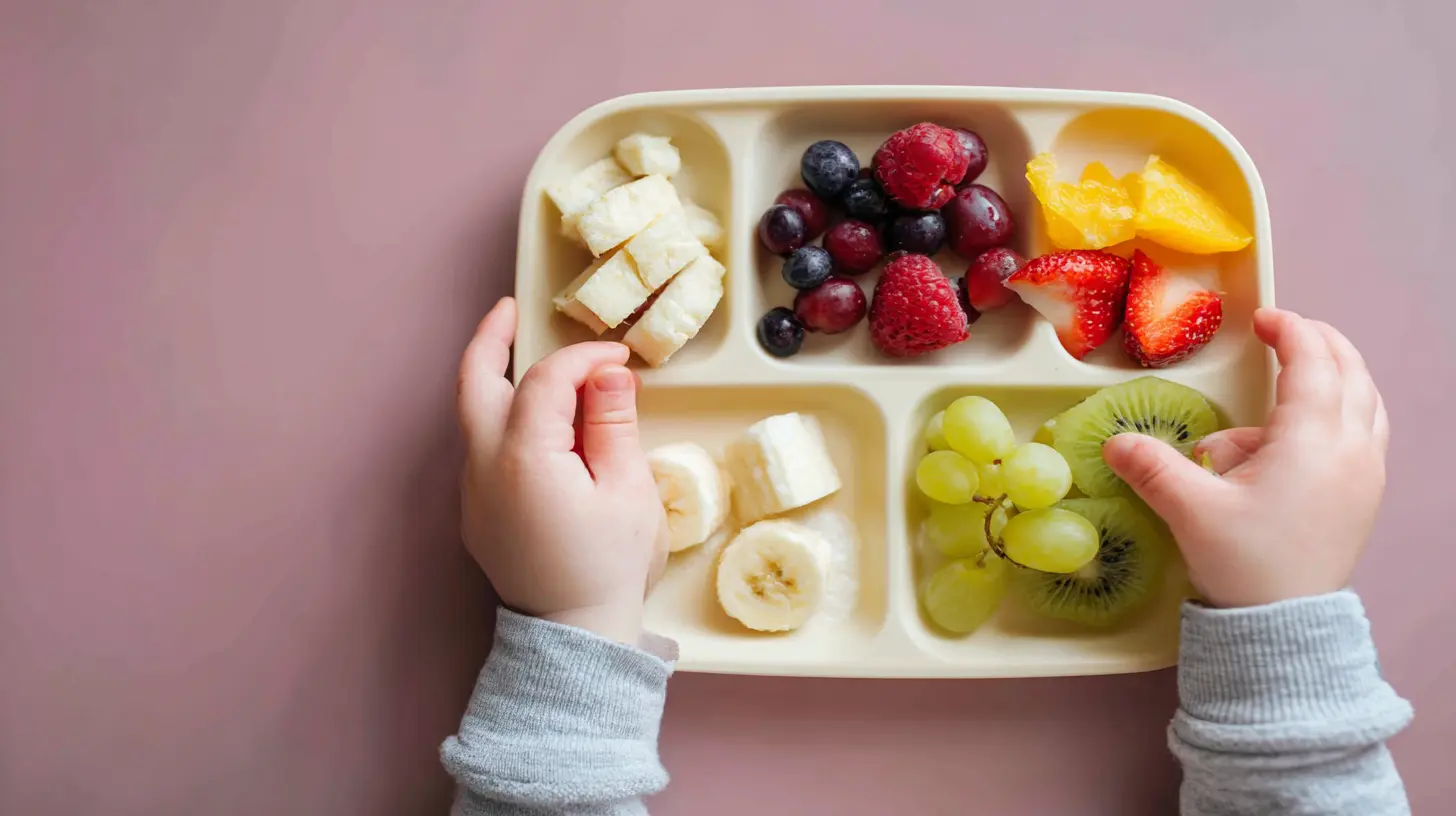
How the Plate Changes by Age
The same plate does not work for a two-year-old and a ten-year-old.Toddlers (1 to 3 years)
Toddlers have small stomachs and high energy needs relative to their size. They often eat well at one meal and barely touch the next. This is normal. Offer three meals and two to three snacks, keep fat content reasonable, and avoid restricting calories unless a doctor has advised it.Portion sizes should be small. A tablespoon of each food per year of age is a rough starting point, but let hunger guide the rest.
Preschool and Early School Age (4 to 8 years)
Appetite becomes more predictable, but picky eating often peaks here. Structure helps. A consistent meal and snack schedule reduces grazing and makes real hunger more likely at mealtimes. Keep offering variety without forcing bites.Older Children and Tweens (9 to 12 years)
Calorie and protein needs rise, especially before and during puberty. This is when breakfast quality starts to matter enormously, because skipping it often leads to poor concentration and overeating later. Iron and calcium needs also climb, particularly for girls approaching menstruation.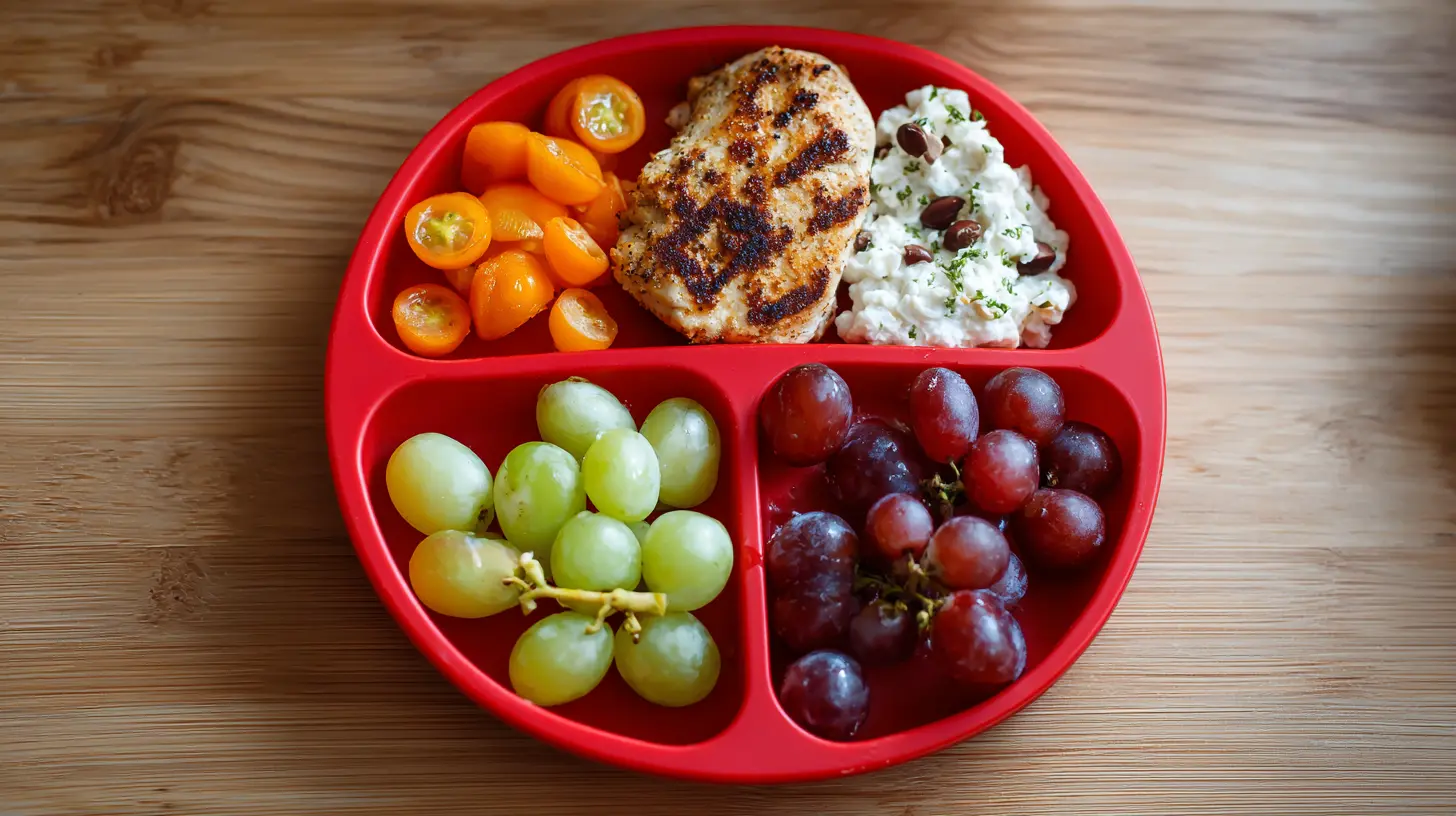
A Practical Template You Can Actually Use
A balanced plate does not require measuring. It requires a rough visual pattern you can apply in seconds.- One quarter of the plate: protein
- One quarter: carbohydrate (grain or starch)
- One half: vegetables and fruit combined
- A source of fat somewhere on the plate
- A drink, usually water or milk
This is a starting point. Adjust based on the child, the meal, and what happened earlier in the day.
If your child ate a protein-heavy lunch, dinner can lean more on grains and vegetables. If they had a carb-heavy breakfast, lunch can compensate. The plate flexes.
Breakfast: The Meal Most Often Done Wrong
Breakfast sets the tone for blood sugar, mood, and concentration for the next four hours. A plate of cereal and juice is technically food, but it is mostly sugar and refined starch. It will not hold a child until lunch.A better breakfast pattern includes protein, fat, and fiber.
Examples:
- Scrambled eggs with whole grain toast and fruit
- Greek yogurt with nuts, seeds, and berries
- Oatmeal made with milk, topped with peanut butter and banana
- A breakfast burrito with eggs, beans, and cheese
If your child refuses breakfast, start smaller. Half a banana and a few nuts is better than nothing. The goal is to establish the habit before optimizing the content.
Lunch: Balancing Portability and Nutrition
School lunch introduces a new problem: you are not there to see what gets eaten. A balanced packed lunch has to survive a backpack, taste good cold, and be easy to eat in fifteen minutes.A reliable pattern:
- A protein (turkey roll-ups, hard-boiled egg, hummus, bean salad)
- A carb (whole grain wrap, crackers, pasta salad)
- A vegetable (cherry tomatoes, cucumber slices, carrot sticks)
- A fruit (apple slices, grapes, orange segments)
- A fat (cheese, avocado, nuts if allowed)
- Water or milk
If your child buys lunch at school, ask what they actually choose. Many schools offer a balanced tray, but children self-select. A child who always picks the pizza and skips the salad is not getting the balance the menu promises. This is worth a conversation, not a lecture.
Dinner: The Meal With the Most Pressure
Dinner carries emotional weight in most households. It is the meal where parents try to make up for everything the child did not eat earlier, and children sense that pressure immediately.The best dinner strategy is to serve the same meal to everyone, include at least one food you know your child will eat, and then let them decide how much and what to eat from what is offered. This is often called the division of responsibility, and it works because it removes the power struggle.
You decide what, when, and where. Your child decides whether and how much.
This does not mean becoming a short-order cook. It means making sure there is always something on the table that is not a battle.
Snacks: The Hidden Lever
Snacks are where balance is most often lost. A snack of crackers and juice every two hours keeps a child's blood sugar elevated and their appetite suppressed at meals, which then makes meals look like failures.A better approach: treat snacks as mini-meals with at least two food groups.
- Apple slices with peanut butter
- Cheese and whole grain crackers
- Yogurt with granola
- Carrot sticks with hummus
- A boiled egg and a few grapes
Timing matters as much as content. Aim for snacks at least ninety minutes before the next meal so hunger has a chance to build.
Common Mistakes and Misconceptions
Mistake 1: Assuming a rejected food is a hated food
Children often reject food based on texture, temperature, or mood, not taste. A broccoli floret that was refused on Monday may be eaten on Friday. Keep offering without commentary.Mistake 2: Hiding vegetables
Hiding pureed vegetables in sauces can increase intake in the short term, but it does not teach a child to eat vegetables. Use it as a supplement, not a strategy.Mistake 3: Rewarding with dessert
Using dessert as a reward for eating vegetables teaches children that vegetables are the price of admission and dessert is the prize. It backfires over time. Serve dessert alongside the meal occasionally, or not at all, and let it lose its power.Mistake 4: Worrying about one meal
A child who eats poorly at dinner but well at breakfast and lunch is fine. Look at the week, not the plate.Mistake 5: Comparing siblings
Children have different appetites, metabolisms, and preferences. A child who eats half of what their sibling eats may be perfectly healthy.
When to Get Professional Help
Most picky eating resolves with time and consistent exposure. Seek guidance from a pediatrician or a registered dietitian if:- Your child is losing weight or not growing as expected
- They eat fewer than ten to fifteen foods total
- They refuse entire food groups for months
- Mealtimes consistently end in tears or vomiting
- You suspect a sensory or feeding disorder
Early intervention matters. Feeding difficulties that persist past age five are harder to shift than ones addressed earlier.
Final Thoughts
A balanced plate is not a picture you replicate. It is a habit you build, one meal at a time, with flexibility for real life. Some days will look great. Some days will look like crackers and cheese in the car. Both are survivable.Focus on the pattern, not the plate. Offer variety without pressure. Trust your child's appetite more than you trust the clock. And remember that the goal is not a perfect meal tonight. It is a child who grows up knowing how to feed themselves well for the rest of their life.
all images in this post were generated using AI tools
Category:
Nutrition For KidsAuthor:

Maya Underwood