Family Sleep Dynamics: How to Maintain Routine When Sleep Training Multiple Children
25 February 2026
Let’s face it: sleep training one child can feel like running a marathon in flip-flops with a banana peel taped to your forehead. Throw in another kid—or two or three—and suddenly, you’re juggling flaming swords on a unicycle... while sleep-deprived. If this sounds a tad dramatic, you’re probably not a parent. Welcome to the ultimate guide on Family Sleep Dynamics, where chaos meets bedtime, and sanity hangs by a thread (but don’t worry, it’s a strong thread).
In this gloriously honest, laugh-through-the-tears guide, we’ll chat about how to maintain some semblance of routine when you're trying to sleep train multiple children. We’ll cover what works, what’s totally going to backfire, and how to keep your cool when the toddler is screaming, the baby won’t stop farting, and you just want to drink your coffee while it’s still hot.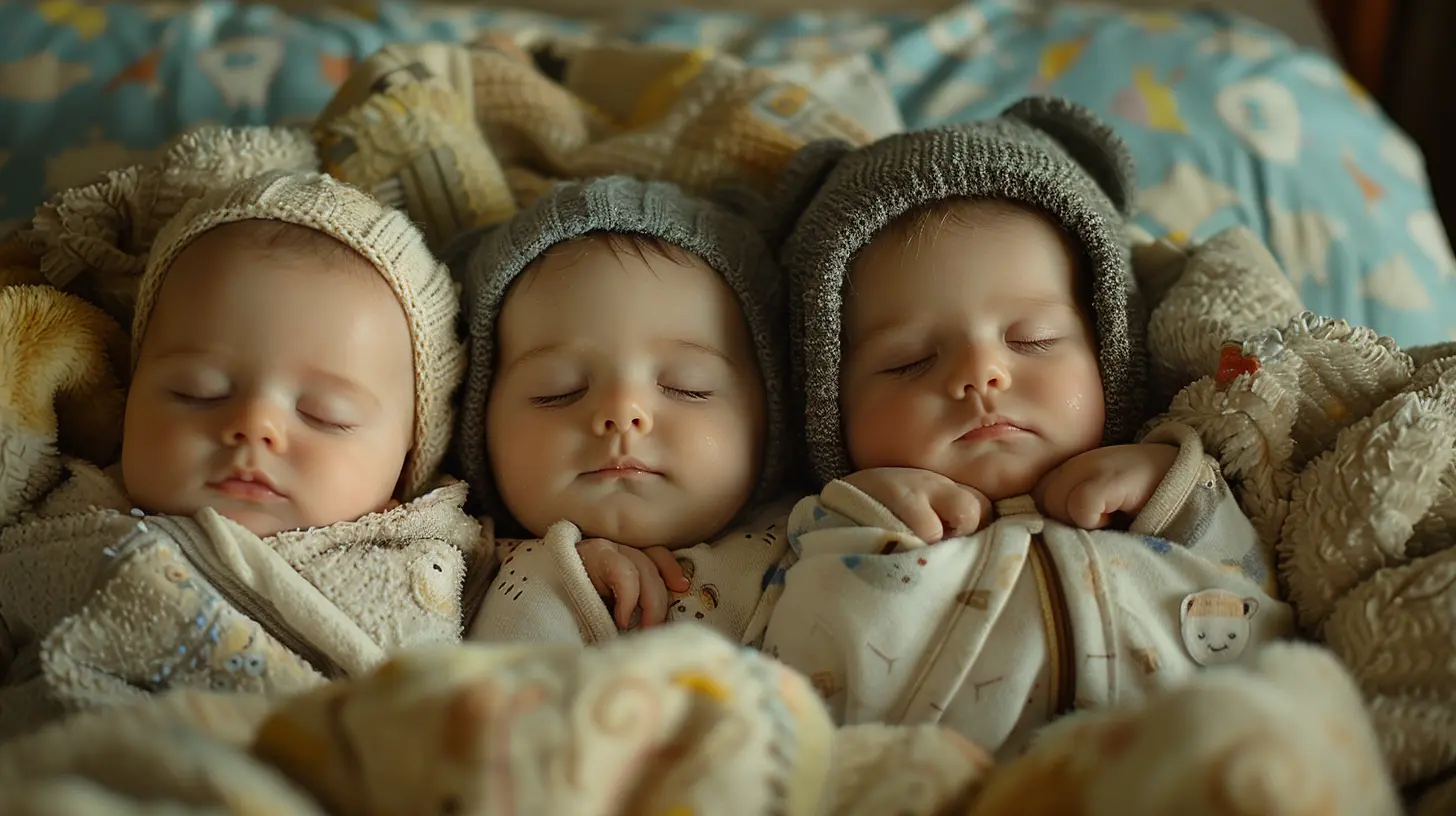
The Madness of Multi-Kid Sleep Training
Let’s start by saying: there’s no such thing as a universal method that works for every child—especially when you’ve got a crew of tiny humans. Each kid comes with their own quirks, preferences, and that weird sixth sense that tells them exactly when you’re finally about to sit down and relax.Different Ages, Different Needs
Got a newborn and a toddler? Or maybe twins sharing a room while your preschooler insists on sleeping with a flashlight and one sock on? Managing sleep training across age ranges is like playing bedtime Tetris—but the blocks are crying, hungry, and pooping.Here’s the deal: each child might need a different sleep training approach. Yep. No cheating off one kid’s plan and copy-pasting it to the next. It’s like Netflix profiles—what works for one makes absolutely zero sense for another.
Set the Stage: Bedtime Begins Before Bedtime
Let’s back up a bit. If you’re trying to get all the kids into some magical sleep groove, you need a solid pre-bedtime routine—aka the sacred wind-down hour (or chaos hour, depending on the day).Step 1: Sync the Schedules (Sort of)
You can’t force all your kids into the same sleep schedule, especially if they vary widely in age. But you can create overlapping bedtime routines that streamline the process and save your sanity.Pro tip: Start with the youngest and work your way up. Babies are finicky, and if they fall asleep late, things get real ugly, real fast. Toddlers can flex a bit more (read: stall tactics at expert level), so save their routine for last.
Step 2: Establish a Wind-Down Routine That Works Across Ages
You don’t need to reinvent the wheel for each kid. Create a universal wind-down activity that works for the whole crew.Here’s a three-step example that doesn’t involve you losing your mind:
- Bath Time – One giant steamy splash fest. Supervision required unless you like mopping an indoor swimming pool.
- PJs and Teeth – Bonus: toddlers LOVE brushing their teeth like it’s an Olympic sport.
- Story Time – Pick a book that’s not gonna drive you insane after reading it twenty times. (Looking at you, Goodnight Moon.)
Tips for Keeping the Routine When Sleep Training Multiple Kids
Alright, buckle up. This is where the real magic (and trial by fire) begins.1. Stick to the Script—Even When It’s a Hot Mess
When kids smell inconsistency, they exploit it like little bedtime pirates. If the routine is bath, book, bed—they’re going to test every loose boundary. Be firm. Be consistent. Be prepared to repeat yourself a thousand times like a broken lullaby.2. Use Visual Schedules for Toddlers and Preschoolers
Visual charts are like bedtime checklists with pictures. They help older kids understand what’s coming and give them a false sense of control. Win-win.Example:
- 🛁 Bath
- 😬 Toothbrush time
- 📚 Read book
- 😴 Sleep like a champ
Stick it on the wall and let them tick off each step like little bedtime bosses.
3. Separate Sleep Spaces When Necessary
If your kids share a room and you’re trying to sleep train one of them (or both), it can get messy. Sometimes, it’s just easier to separate them temporarily during sleep training. Don’t worry—it’s not a forever thing. Just until the one who’s training stops wailing at 2 AM like a tiny banshee.Throw a mattress on the floor in your room for the more adaptable kid (you know which one it is). Or set up a slumber party-style arrangement in the living room if needed. Desperate times. Creative solutions.
4. White Noise Is Your Friend
You’d be amazed what a little white noise can do. Not only does it help lull the kids to sleep, but it also blocks out the baby crying next door or your neighbor mowing the lawn at 9 PM. White noise = sanity in a speaker.
When One Wakes Up the Other: The Domino Effect
Here’s the kicker: Just when one child starts sleeping sweetly through the night, the other decides to schedule a 3 AM dance party. It’s like they take turns in a secret pact to prevent you from ever sleeping again.Strategies for Minimizing Cross-Wake-Ups
- Use fans or white noise machines in each room.- Invest in blackout curtains (because sunrises are the enemy).
- Keep overnight intervention minimal (low lights, no talking, ninja-level stealth).
- If one kid wakes, don't make a big dramatic rescue scene that wakes the whole neighborhood.
Navigating Common Pitfalls
Look, you’re going to mess up. It’s okay. We’ve all let the toddler sleep in our bed "just this once" and suddenly it’s been six months and they now own the pillow you used to love.Here are a few classic traps to avoid:
Pitfall #1: Giving in to Bedtime Negotiations
If your toddler asks for a glass of water, one more story, or to count the stars on their ceiling—again—it’s a trap. Bedtime is not a hostage situation. Lay down the law with love.Pitfall #2: Comparing Your Kids’ Progress
Every kid is different. Don’t beat yourself up because one child was sleep trained by 8 months and the other still thinks 2 AM is party time at age three.Parents are not graded on how fast their kids sleep train (thank goodness, or we’d all be flunking).
Pitfall #3: Expecting Perfection
Listen, if you're managing to sleep train two, three, or more kids and still have the ability to form complete sentences during the day, you're winning. Some nights it'll go smoothly, and others will resemble a Zombie Apocalypse—but without the cool makeup.Self-Care for Sleep-Training Parents (Yes, You Deserve It)
Let’s take a moment to talk about you. Yes, you—the exhausted adult currently Googling “how to sleep train 3 kids without crying.” You matter too.Tag-Team It
If you have a partner, take turns. Seriously. One night you get the baby, one night they do. That way, someone’s at least slightly functional the next day. If you’re doing it solo—you are a superhero in yoga pants, and don’t let anyone tell you otherwise.Go to Bed Early (Even When You Don’t Want To)
Netflix will be there tomorrow. Sleep while the tiny ones sleep. You can catch up on your shows once they all graduate high school.Laugh When You Can
Because if you don’t laugh about the night your baby pooped on your pajama top and your toddler snuck a banana into bed, you’ll cry. And hey, we’re a community—we’ve ALL been there.When to Call in Reinforcements
Sometimes, despite your best efforts, bedtime turns into a nightly war zone. If that’s the case, it’s okay to seek help. Talk to your pediatrician, your mom squad, or a certified sleep consultant. You’re not failing—you’re just smart enough to call for backup.Final Thoughts: You’ve Got This!
Sleep training multiple children is not for the faint of heart. It takes patience, a decent sense of humor, and the ability to function on caffeine and broken dreams. But you’re doing something incredible—raising tiny humans and teaching them how to sleep. Eventually, they’ll all get it (and you’ll get your evenings back).Until then, keep the bedtime routine simple, stay consistent, and always celebrate the little wins—like when no one cried for more than five minutes. That, my friend, is parenting gold.
all images in this post were generated using AI tools
Category:
Sleep TrainingAuthor:

Maya Underwood
Discussion
rate this article
2 comments
Sable Henson
Who knew sleep training felt like orchestrating a circus? Just remember, juggling bedtime routines for multiple kiddos is all about timing, laughter, and maybe a little dance party in pajamas. Here’s to sleep, sweet dreams, and sanity!
March 8, 2026 at 5:18 AM
Maya Underwood
Thank you! Balancing bedtime can definitely feel like a circus, but with humor and creativity, we can make it a fun and manageable experience for everyone. Here's to sweet dreams!
Zoey Fuller
Great tips! Consistency and teamwork are essential for successful sleep training with multiple kids.
February 26, 2026 at 3:26 AM
Maya Underwood
Thank you! Absolutely, consistency and teamwork are key to navigating sleep training with multiple children effectively.