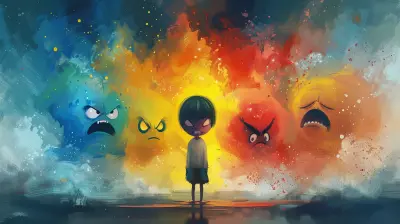
Empowering Your Child with Emotional Regulation Skills
18 February 2026
Emotions are powerful. They shape our reactions, influence our relationships, and guide our decisions. For children, emotions can feel like a rollercoaster—one minute, they're laughing, and the next, they’re in a full-blown meltdown. Without the right tools, these overwhelming emotions can lead to frustration, tantrums, and anxiety.
As parents, our goal isn’t to suppress emotions but to help our kids understand and manage them in a healthy way. This is where emotional regulation comes in. Teaching children how to navigate their feelings can build resilience, improve communication, and set them up for lifelong success.
But how do you do that? Let’s dive into the strategies you can use to help your child develop strong emotional regulation skills. 
Why Emotional Regulation Matters
Imagine trying to drive a car without brakes—you’d feel out of control, right? That’s exactly how children feel when they don’t know how to regulate their emotions. Emotional regulation helps kids:✅ Handle stressful situations better
✅ Develop stronger relationships
✅ Improve focus and learning in school
✅ Boost their self-confidence
✅ Reduce anxiety and frustration
When children learn to manage their emotions early on, they’re more likely to grow into well-adjusted and emotionally intelligent adults. 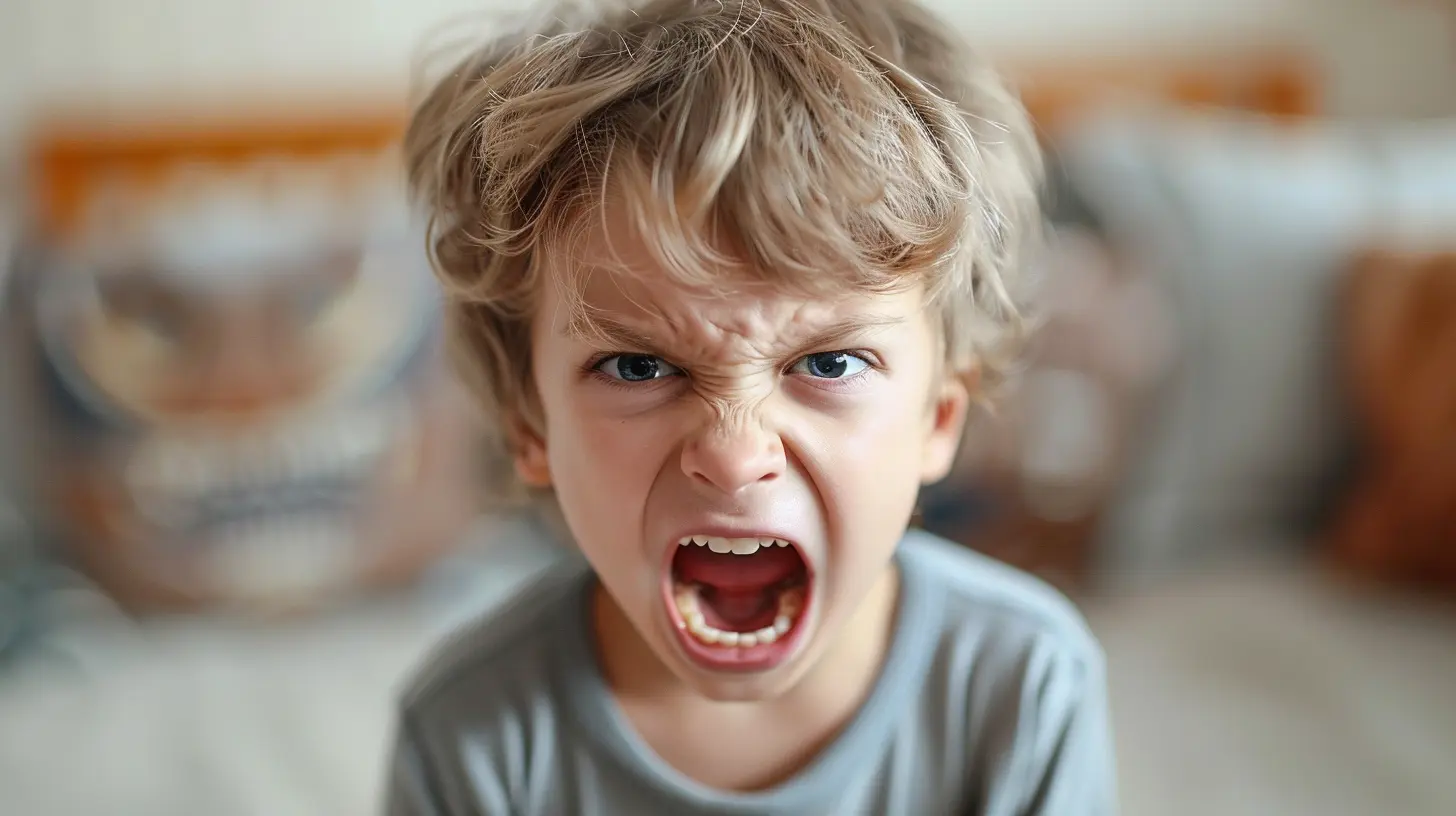
Understanding Emotional Regulation
Emotional regulation isn’t about ignoring feelings—it’s about recognizing them, understanding them, and responding appropriately.It involves three key steps:
1. Recognizing Emotions: Helping kids identify what they’re feeling.
2. Understanding Triggers: Figuring out what causes those emotions.
3. Responding Effectively: Choosing a healthy way to react instead of melting down.
Just like any other skill, emotional regulation needs practice. And guess what? You, as a parent, play the biggest role in guiding your child through this journey. 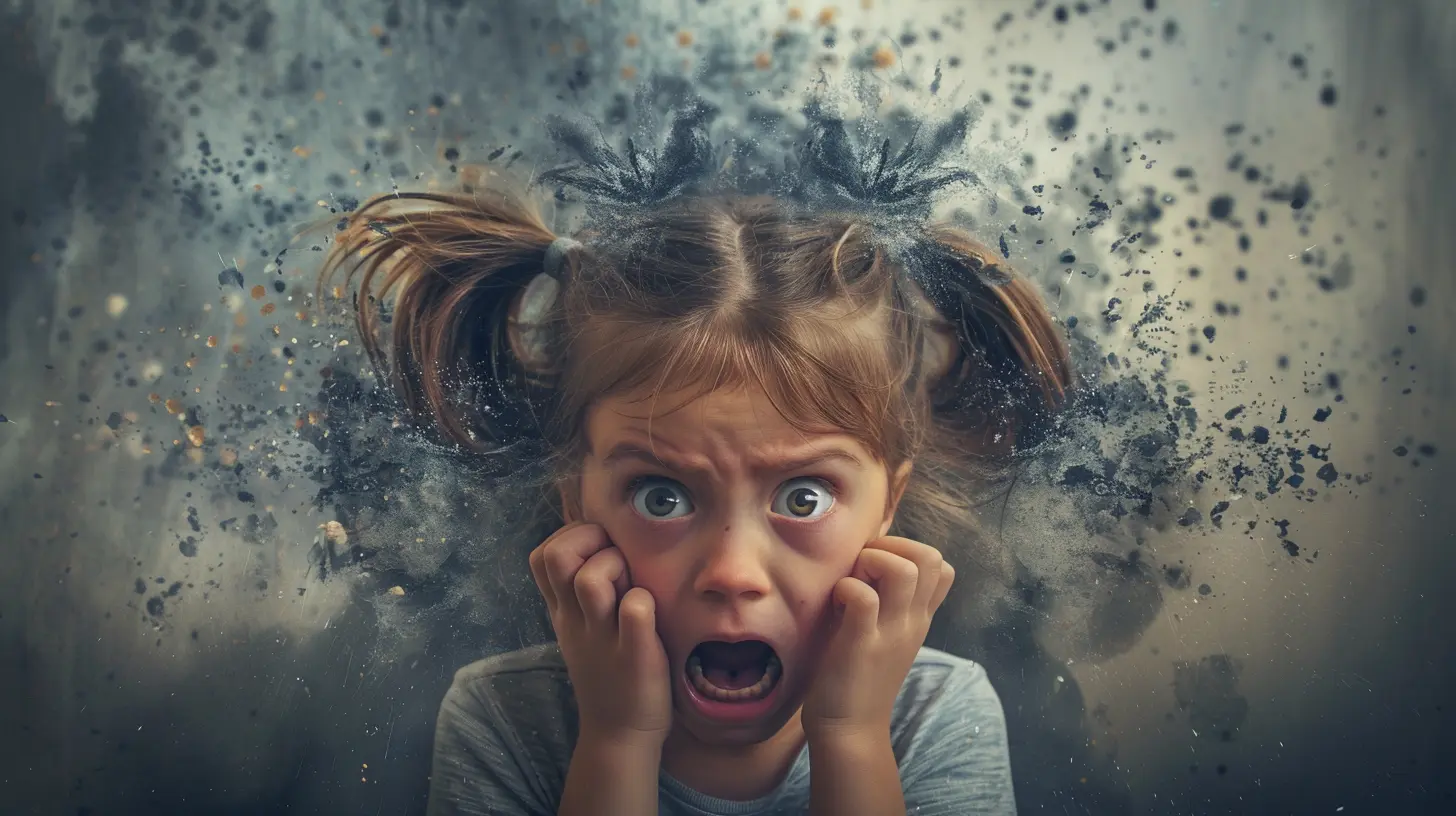
How to Teach Emotional Regulation to Your Child
1. Be the Calm in Their Storm
Children learn emotional regulation by watching how we handle our own emotions. If we react with frustration, they absorb that energy. But if we practice patience and calmness, they’ll mirror those behaviors.Next time your child is overwhelmed, instead of saying, “Stop crying,” try:
👉 "I can see you're really upset. Want to talk about it?"
This simple shift validates their feelings and teaches them how to process emotions instead of suppressing them.
2. Help Them Name Their Emotions
Kids often struggle to express their feelings because they don’t have the words for them. Giving emotions names helps normalize them.Try using an "Emotion Chart" with pictures of happy, angry, sad, scared, and frustrated faces. When your child is upset, encourage them to point to the matching feeling and say,
👉 "It looks like you're feeling frustrated. Do you want to tell me why?"
Labeling emotions makes them less intimidating and helps kids understand that feelings are a normal part of life.
3. Teach Them to Pause and Breathe
When emotions run high, logic takes a backseat. One of the simplest and most effective emotional regulation tools is deep breathing.Teach your child the "Balloon Breathing" technique:
🎈 Inhale deeply like you’re blowing up a balloon.
🎈 Hold it for a few seconds.
🎈 Slowly exhale as if letting the air out of the balloon.
Doing this 3–5 times helps calm the nervous system and allows them to think clearly before reacting.
4. Create a “Calm Down” Corner
A calm-down corner is a safe space where your child can regulate their emotions. It could include:✅ Soft pillows and blankets
✅ A stress ball or fidget toy
✅ A journal for drawing emotions
✅ Relaxing music or storybooks
Instead of using time-outs as punishment, encourage them to take a break in the calm-down corner whenever they feel overwhelmed.
5. Encourage Healthy Outlets for Emotions
Sometimes, kids just need an outlet to release big emotions.- For anger? Try ripping paper, hitting a pillow, or squeezing a stress ball.
- For sadness? Encourage journaling, cuddling a stuffed toy, or talking about their feelings.
- For anxiety? Deep breathing, drawing, or physical activity can help calm their nerves.
Let your child experiment with different coping mechanisms until they find what works best for them.
6. Use Books and Stories to Teach Emotional Regulation
Stories have a magical way of helping kids relate to emotions. Reading books about feelings can help them understand that everyone experiences emotions and that it’s okay to talk about them.Some great options include:
📖 The Color Monster by Anna Llenas
📖 When Sophie Gets Angry—Really, Really Angry by Molly Bang
📖 Breathe Like a Bear by Kira Willey
After reading, ask questions like:
👉 "How do you think the character felt?"
👉 "What would you do in this situation?"
This encourages emotional awareness and problem-solving skills.
7. Role-Play Different Scenarios
Kids love to pretend play, so why not use it to teach emotional regulation?Create scenarios like:
- “What would you do if a friend took your toy?”
- “How do you feel when someone wins a game instead of you?”
Discuss different ways to handle these emotions and act them out together. When emotions arise in real life, they’ll have a better idea of how to handle them.
8. Praise Positive Emotional Responses
Catch your child in the act of handling emotions well and praise them!👏 “Wow! I love how you took deep breaths before speaking when you were upset.”
👏 “I noticed how you shared your feelings calmly. That was amazing!”
Positive reinforcement boosts their confidence and encourages them to repeat these behaviors.
9. Teach Problem-Solving Skills
Not all emotions need to lead to outbursts. Teach your child to problem-solve by asking:❓ "What can we do to fix this?”
❓ "What’s another way to look at this situation?"
Encouraging problem-solving helps children think critically and approach emotional challenges with a solution-based mindset.
10. Be Patient and Consistent
Emotional regulation doesn’t happen overnight. It takes years of practice and a lot of patience. Some days, they’ll handle their emotions well, and other days, they’ll struggle. That’s okay!Stay consistent with your guidance, and over time, they’ll develop the skills to manage their emotions effectively. 
Final Thoughts
Empowering your child with emotional regulation skills is one of the greatest gifts you can give them. It sets them up for a lifetime of resilience, confidence, and strong relationships.By modeling calm behavior, naming emotions, teaching coping strategies, and using positive reinforcement, you’ll equip your child with the tools they need to handle life’s ups and downs with confidence.
Every meltdown, every frustration, every outburst—it’s all part of the learning process. The key is to stay patient, stay consistent, and keep empowering them to understand and manage their emotions in a healthy way.
And hey, if today feels hard, remember: progress is better than perfection.
all images in this post were generated using AI tools
Category:
Tantrum TipsAuthor:

Maya Underwood
Discussion
rate this article
2 comments
Melissa Nelson
This article provides valuable insights into teaching children emotional regulation. By fostering these skills, we empower them to navigate their feelings, leading to healthier relationships and greater resilience.
March 1, 2026 at 4:58 AM
Maya Underwood
Thank you for your thoughtful comment. I'm glad you found the insights valuable for fostering emotional regulation in children. It's essential for their growth and resilience.
Holly McGlynn
Teaching emotional regulation? Just remember: a calm kid is less likely to throw a tantrum... or your phone! 🎉📱
February 18, 2026 at 4:34 PM
Maya Underwood
Absolutely! A calm environment fosters better emotional regulation and reduces the likelihood of outbursts. Thank you for the reminder! 🎉