The Science Behind Those Endless Why? Questions
31 October 2026
Your four year old asks why the sky is blue. You explain sunlight scattering off air molecules. They ask why the light scatters. You simplify. They ask why air is there at all. Twenty minutes later you are staring at the ceiling, somewhere between exhaustion and awe, wondering how a person who cannot yet tie their shoes has managed to back you into a corner about the nature of existence.
This is one of the most common and most misunderstood parts of parenting. Adults tend to frame it as a behavior problem, a stalling tactic, or a sign of defiance. The research tells a different story. Those questions are the visible output of some of the most intense cognitive construction that happens in a human life. Understanding what is actually going on changes how you respond, and it changes how you feel about the tenth "why" in a row.
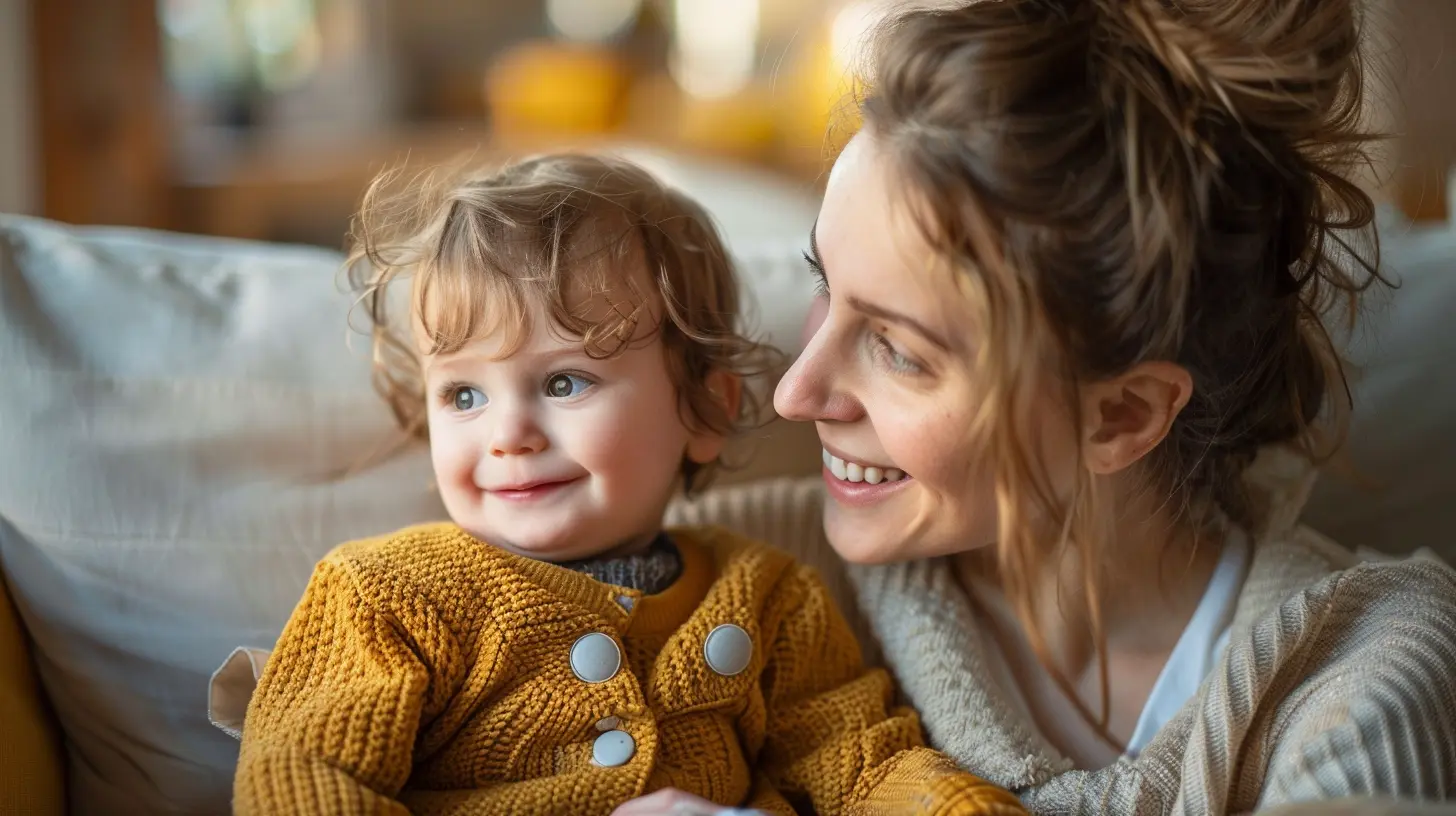
What Is Really Happening in a Child's Brain
Between roughly ages two and five, a child's brain is building the architecture for causal reasoning. They are not simply collecting facts. They are testing a model of how the world works, and every question is a probe against that model.A useful comparison is the way a scientist approaches an unfamiliar system. You poke it, change one variable, observe what happens, and revise your theory. A child asking "why" is doing the same thing socially. The adult is the system under test. Each answer produces new information, and the child immediately checks whether the new information opens a new branch. That branching is not random. It is the child mapping the structure of cause and effect itself.
There is also a language component. Around age three, children begin producing genuine "why" questions, and the frequency climbs sharply through the preschool years. This timing lines up with a broader burst in vocabulary and sentence complexity. Asking why requires holding a concept in mind, recognizing a gap in understanding, and formulating a question that points at the gap. That sequence is cognitively expensive, and the fact that children do it dozens of times a day tells you how much value their brains place on it.
One more piece matters. Young children are still developing the ability to distinguish between what they know and what others know. When a child asks why for the fifth time, they may genuinely not have absorbed the answer, or they may be checking whether your answer is stable. Consistency across repetitions is one of the ways children build trust in information. A child who asks the same question repeatedly is often running a reliability check, not trying to annoy you.

The Explosion Phase and Why It Peaks When It Does
Parents often notice the questions intensify somewhere between three and five. This is not a coincidence, and it is not a sign that something has gone wrong.At this stage, children have enough language to ask, enough memory to retain the previous answer, and enough curiosity to notice that answers connect to other answers. They have also started to grasp that adults hold knowledge they do not. That combination produces a feedback loop. The more they learn, the more gaps they can see, and the more gaps they see, the more questions they generate.
The peak also coincides with a period when children are working out social rules and the reasons behind them. "Why do I have to hold your hand?" is not just about traffic. It is about understanding that rules have purposes, that purposes can be inferred, and that adults can be sources of justification. Children who get real reasons tend to internalize rules better than children who only get commands. The question is doing developmental work.
By the early school years, the raw volume usually drops, but the questions get sharper. A six year old asks fewer questions but the ones they ask are more targeted. They are no longer mapping the whole territory. They are filling in specific holes. This shift is a sign that the earlier phase did its job.

Not All Why Questions Are the Same
Treating every "why" as a request for information is one of the most common mistakes. In practice, the questions fall into several distinct categories, and each one calls for a different response.Genuine information seeking. The child has hit a real gap and wants it filled. "Why does ice melt?" belongs here. These questions deserve real answers, scaled to the child's level.
Connection seeking. Sometimes the question is really "are you still paying attention to me?" This shows up most when a parent is distracted, on the phone, or trying to leave the room. The content of the answer matters less than the fact that you turned toward the child.
Testing and boundary probing. "Why can't I have candy now?" is often not a request for nutritional science. It is a negotiation opening. Answering it as if it were a pure information question can invite a debate the child did not actually want.
Attention maintenance. Children learn early that questions keep adults engaged. A child who is tired, bored, or winding down may ask why simply because it keeps the interaction going. This is not manipulation in any sinister sense. It is a social strategy, and it is worth recognizing so you do not mistake it for intellectual hunger when what the child needs is a story and a hug.
Ritual and repetition. Some children ask the same question every night at bedtime. The answer is not the point. The repetition is part of the routine, and the predictable answer is comforting.
Knowing which category you are in changes everything. It tells you whether to explain, to connect, to hold a boundary, or to redirect.
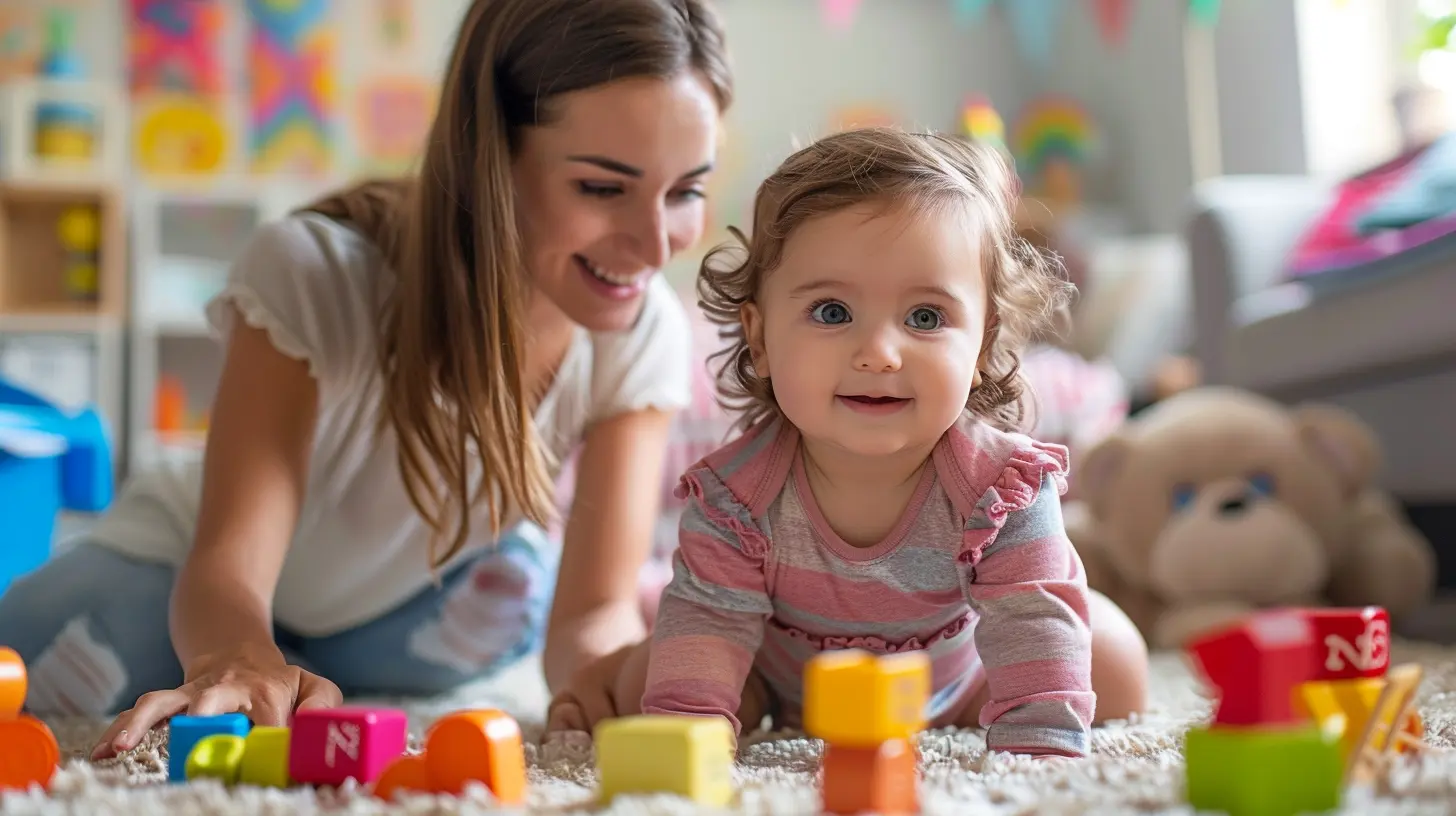
Why Simple Answers Often Fail
A well-meaning parent who gives a technically correct but abstract answer often watches the child ask why again within seconds. This is not because the child is being difficult. It is because the answer did not connect to anything the child already understands.Consider the sky question. "Light scatters off molecules in the atmosphere" is accurate and useless to a four year old. "The air bounces the blue light around more than the other colors, so blue reaches your eyes from everywhere" is still simplified but it uses concepts the child has: bouncing, colors, eyes. The second answer is more likely to land because it hooks onto existing knowledge.
The general principle is to anchor explanations in things the child has directly experienced. Water, food, sleep, animals, toys, weather, their own body. Abstract mechanisms can wait. Concrete analogies do the heavy lifting in early childhood.
There is a trade-off here. Oversimplifying can create misconceptions that have to be corrected later. Under-explaining frustrates the child and teaches them that questions do not pay off. The middle path is to give an honest answer at the child's level and to leave room for the next question. You do not need to be exhaustive. You need to be accurate enough that the child's model does not have to be torn down later.
Honest Uncertainty Beats Confident Nonsense
Parents often feel pressure to have an answer for everything. This is a trap. Children are excellent at detecting when an adult is bluffing, and a bluff that later gets corrected does more damage than an honest "I do not know."Saying "I am not sure, let us find out together" is a powerful move. It models intellectual honesty, it shows that not knowing is acceptable, and it turns the question into a shared activity. Looking something up together, whether in a book or with a careful search, teaches the child that questions have methods behind them, not just authorities.
There is a caveat. Do not use "I do not know" as a way to shut the conversation down. If you say it, follow through. Otherwise the child learns that uncertainty is a dead end rather than a starting point.
When to Answer, When to Ask Back, and When to Redirect
Not every question needs a direct answer. Matching your response to the situation is a skill worth building.Answer directly when the child is genuinely curious, when you have the energy, and when the question is short to address. These are the moments that build trust and vocabulary.
Ask back when you suspect the child already has a theory. "What do you think happens?" is one of the most useful sentences in parenting. It slows the loop, it gives the child practice in reasoning, and it often reveals misconceptions you would never have guessed. A child who says "I think the moon follows me" is telling you something important about how they are modeling the world, and that is worth discussing.
Redirect when the question is really a bid for connection or a negotiation in disguise. "That sounds like you want to keep talking with me. Let us talk about something you choose" can honor the underlying need without pretending the question is about physics.
Hold a boundary when the question is a challenge to a rule you have already explained. "I already gave you my reason. The answer is still no" is not unkind. Repeating the explanation every time teaches the child that persistence wears you down, which is a lesson you do not want to teach.
Common Mistakes and Misconceptions
Several patterns show up again and again, and each one has a cost.Treating questions as defiance. When adults interpret curiosity as disrespect, children learn to stop asking. The silence that follows is not obedience. It is withdrawal, and it often shows up later as disengagement from learning.
Answering every question with a lecture. Long explanations overwhelm young children and teach them that asking is expensive. Short, concrete answers invite more questions, which is what you want.
Using questions as a test. Turning "why" into a quiz ("Well, why do you think?") every single time gets old fast. Children can tell when a question is being used to evaluate them rather than to engage with them.
Assuming repetition means the child was not listening. As noted earlier, repetition is often a reliability check. It can also mean the answer was too abstract. Before you assume inattention, try a more concrete version.
Confusing volume with depth. A child who asks a hundred shallow questions is not necessarily more curious than one who asks five deep ones. Both are normal. The goal is not to maximize question count. It is to keep the channel open.
Shutting down with "because I said so." This phrase has its place when a safety rule needs to be enforced immediately. Used habitually, though, it teaches the child that reasons are not available and that authority is arbitrary. That lesson is hard to unlearn.
A Practical Framework for the Tenth Why
When you are tired and the questions keep coming, a simple sequence helps.First, pause for a second and ask yourself what kind of question this is. Information, connection, negotiation, or ritual. You will usually know within a moment.
Second, match your response to the category. Explain briefly for information. Turn toward the child for connection. Hold the line for negotiation. Follow the routine for ritual.
Third, use a short answer with a hook. One or two sentences, anchored in something the child knows, ending in a way that invites the next question if they have one.
Fourth, when you are genuinely depleted, say so honestly. "I am too tired to explain that well right now. Let us talk about it in the morning" is a real answer. It respects the child and it respects your limits. Children handle honest limits far better than they handle a parent who is pretending to be patient while radiating frustration.
Fifth, close the loop later. If you promised to come back to a question, come back to it. This is what teaches the child that your answers are worth waiting for.
Building a Question-Friendly Home Without Burning Out
The goal is not to answer everything. It is to keep the channel open while protecting your own energy.Keep a few reference books or a simple notebook where questions get written down. A "question jar" or a list on the fridge turns scattered curiosity into a shared project. It also gives you a way to defer without dismissing.
Notice what your child asks about most. A child who asks constantly about animals is telling you where to invest. A child who asks about machines is telling you something else. Following those threads is far more efficient than trying to answer everything equally.
Protect a few windows of the day when you can be fully present for questions. Ten focused minutes after dinner beats two hours of distracted half-answers. Children can feel the difference between a parent who is available and one who is merely nearby.
And give yourself permission to not enjoy every question. Curiosity is wonderful in the aggregate and exhausting in the moment. Both things are true. You can be deeply grateful for a curious child and still want five minutes of silence. That is not a contradiction. It is parenting.
What This Phase Is Actually For
The endless why phase is not a problem to be solved. It is a construction project, and your answers are the materials. Every time you take a question seriously, you are teaching the child three things at once: that the world is understandable, that reasons matter, and that adults can be trusted with uncertainty.Those lessons outlast the questions. A child who learns that asking is safe becomes a teenager who asks, and an adult who keeps asking. The patience you spend now is an investment in a person who does not stop being curious when the questions get harder.
So the next time you hear "why" for the fifteenth time in an hour, take a breath. You are not being interrogated. You are being consulted by a small scientist who is building a mind, one question at a time. Answer what you can, be honest about what you cannot, and keep the door open. That is the whole job.
all images in this post were generated using AI tools
Category:
Child DevelopmentAuthor:

Maya Underwood
Discussion
rate this article
1 comments
Robert McCabe
Curiosity fuels learning; embrace the questions!
October 31, 2026 at 4:19 AM