Making Better Choices at the Drive-Thru with Kids
25 September 2026
The drive-thru window is one of the most honest mirrors of family life. It shows up on the nights when the schedule collapsed, when the fridge is empty, when a child fell asleep in the car seat and waking them to cook dinner would trigger a meltdown. It also shows up on the nights when nobody has the energy to negotiate one more thing. Pretending the drive-thru is a failure of parenting misses the point. It is a tool, and like any tool, the outcome depends on how you use it.
What follows is a practical framework for using that tool well, not a lecture about avoiding it. The goal is not perfection. The goal is that the decisions you make in a 90-second window at a speaker box line up with the values you hold everywhere else.
Why the Drive-Thru Feels Harder Than It Should
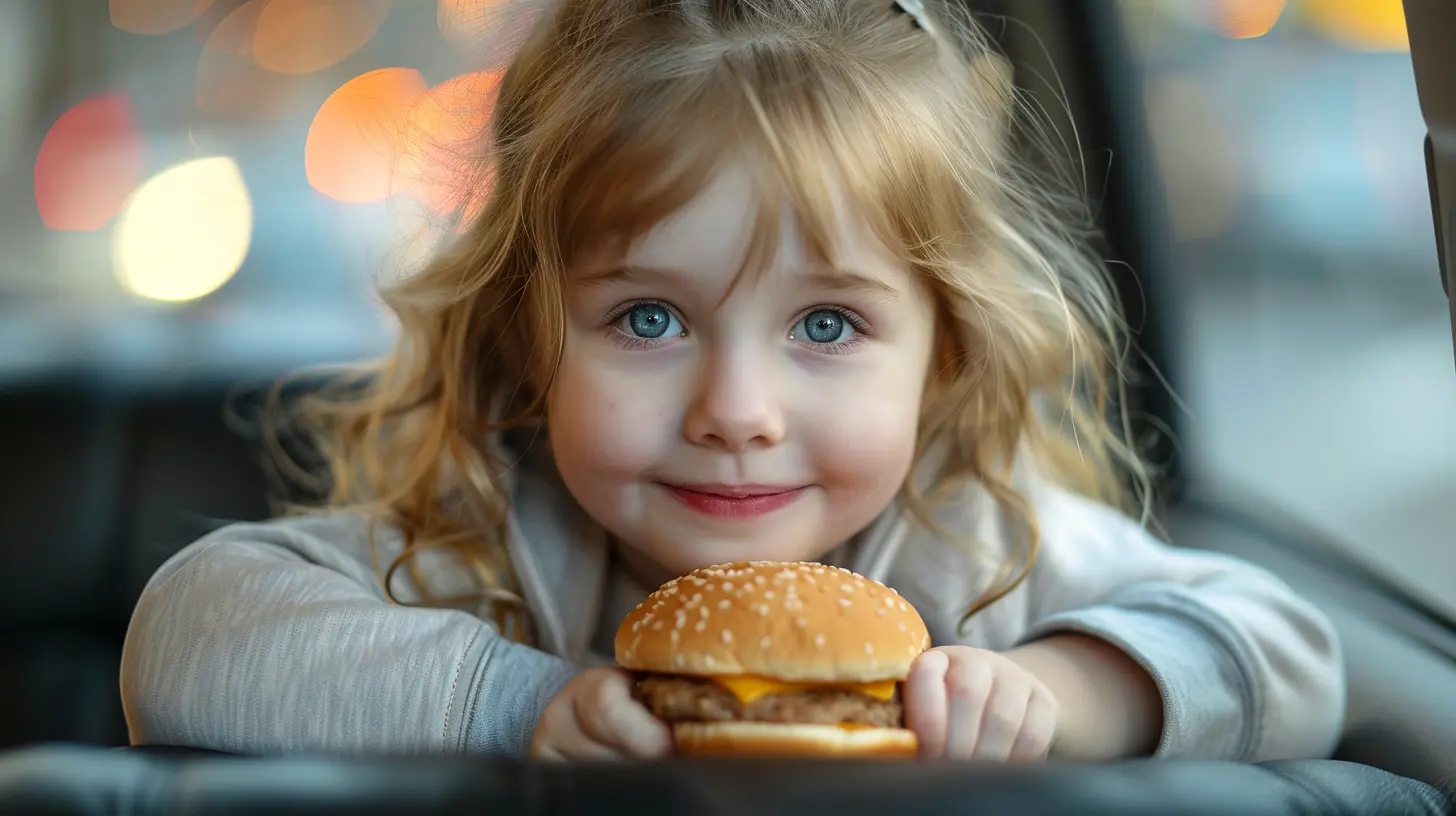
Most parents know what they want to feed their kids. The difficulty is that the drive-thru is designed to work against deliberate thinking. Menus are built around speed, value bundles, and visual cues that trigger appetite before reasoning kicks in. Your child sees a photo of a burger the size of their head. You see a line of cars behind you and a toddler starting to whine.Three forces collide in that moment:
Decision fatigue. By 6 p.m., you have already made hundreds of small choices. The drive-thru asks for several more, quickly, with a child advocating loudly for one option.
Menu architecture. Combos exist because they increase spending and simplify ordering, not because they match a child's nutritional needs. A kids meal at many chains pairs a main item with a side and a drink, and the default side is often fries.
Emotional load. Food is tangled up with love, comfort, and reward. Saying no to a specific item can feel like saying no to your child's happiness, even when you know better.
Understanding these forces matters because it changes the target. You are not trying to win a debate about chicken nuggets. You are trying to make one good decision under pressure, repeatedly, without turning every meal into a power struggle.
What "Better" Actually Means Here
Better does not mean a perfectly balanced meal. It means a marginal improvement that you can sustain. A meal that is slightly higher in protein, slightly lower in added sugar, or slightly more satisfying so that nobody is hungry an hour later is a genuine win.This framing matters because all-or-nothing thinking backfires. Parents who insist on the ideal option at every visit tend to either burn out and abandon the effort, or create anxiety around food that follows their kids for years. The research on feeding behavior consistently points toward a middle path: structure, repetition, and a relaxed attitude toward any single meal.
So the standard is not "Is this the healthiest possible meal?" The standard is "Is this a reasonable choice given the night we are having?"
Reading a Kids Menu Like a Parent, Not a Customer
Kids menus are marketing documents. They are built around what children reliably accept, which usually means breaded, fried, mild, and sweet. That does not make them useless, but it does mean you should scan them strategically.Here is what to look for, in order:
Protein first. Nuggets, grilled chicken strips, burgers, yogurt, beans, and cheese are all workable. Protein is what keeps a child full past bedtime.
Then the side. Many chains now offer apple slices, yogurt, fruit cups, or a side salad alongside fries. Some let you swap at no charge. Ask. The answer is often yes even when the menu does not say so.
Then the drink. This is the single easiest place to cut sugar. Milk and water are usually available. Juice, lemonade, and soda are the defaults at many locations, and a child who drinks a 12-ounce sweet beverage has consumed a meaningful share of their added sugar for the day before the food arrives.
Then the main item itself. A grilled option is usually better than a fried one, but not always by as much as people assume. A fried chicken sandwich with a whole grain bun and a side of fruit can beat a grilled item paired with fries and a soda. The combination matters more than any single component.
The Swap That Changes Everything
If you take one habit from this article, make it this: swap the drink and the side before you consider changing the main item. Children are far more attached to the nuggets than to the beverage. You can usually keep the food they want and still improve the meal substantially by changing what comes with it.
The Ordering Script That Reduces Friction
The reason many parents default to the combo is that it is fast. A short script removes the speed advantage of the default.Before you reach the speaker, decide three things:
1. Which main item each child is getting
2. Which side you will request
3. Which drink you will request
Then order in a fixed pattern. For example: "One kids meal with nuggets, apple slices instead of fries, and milk." Saying the swap immediately after the main item, in one breath, avoids the back-and-forth that gives a child time to object.
This sounds mechanical, and it is. Mechanical is the point. The drive-thru is not the place for improvisation. Save your creative energy for the meals where you have time.
When Your Child Objects
They will, sometimes. The response that works best is calm and final: "Tonight it is apples. You can have fries another time." Then stop talking. Every additional sentence is an invitation to negotiate.If the objection escalates, you have two reasonable options. You can hold the line and accept a few minutes of protest, which is normal and not harmful. Or, on a night when everyone is already at the edge, you can let the fries go and pick a different battle. Both are legitimate. What undermines the strategy is alternating unpredictably, because children learn quickly whether protesting works.
Portion Sizes and the Combo Trap
Combos are priced so that upgrading feels almost free. A slightly larger sandwich, a larger fry, a larger drink, for a small additional charge. The economics are real, but the nutrition is not.For younger children, a standard kids meal is often more food than they need, especially if they had a snack after school. For older children and teenagers, a kids meal may not be enough, and an adult combo may be too much.
Practical approaches:
- For a child under eight, a kids meal plus a shared side is usually sufficient.
- For a child between eight and twelve, a kids meal plus an extra protein item often works better than an adult combo.
- For teenagers, an adult sandwich without the combo, plus a side chosen deliberately, frequently beats the bundled version.
The common mistake is ordering for the child you think you have rather than the one in the car seat. Appetite varies wildly by day, growth spurt, and activity level.
Sodium, Sugar, and the Things Nobody Warns You About
Two nutrients deserve special attention at the drive-thru, and neither is fat.Sodium. Fast food is salty by design. It improves flavor, extends shelf life, and drives thirst, which conveniently increases drink sales. A single kids meal can contain a substantial portion of a child's daily recommended sodium. You cannot eliminate this at the drive-thru, but you can reduce it by choosing grilled items, skipping the pickles and sauces, and not adding a salty side on top of a salty main.
Added sugar. The drink is the main offender, but sauces and flavored yogurts contribute too. Barbecue sauce and honey mustard are often sweeter than parents expect. Asking for sauce on the side and using half of it is a small change with a real effect.
Fat is less of a concern than it is often made out to be, particularly for growing children who need energy. The type of fat matters somewhat, but the bigger levers are sodium, added sugar, and overall portion size.
The Frequency Question
How often is too often? There is no universal number, and anyone who gives you one is guessing. What matters more is the pattern across a week or a month.A useful way to think about it: the drive-thru should be a supporting character, not the main plot. If it appears once or twice in a typical week, it is unlikely to shape your child's long-term eating habits on its own. If it appears five or six times, the cumulative effect on preferences, portion expectations, and sodium intake becomes harder to offset.
This is not a moral judgment. It is arithmetic. And it is worth saying plainly that for families in certain situations, including those working multiple jobs or living in areas with limited food access, the drive-thru may be the most reliable option available. The goal in those cases is still the same: make the best choice you can within the constraints you have.
Teaching Kids to Order for Themselves
Around age seven or eight, children can start participating in the decision. This is where the drive-thru becomes an unexpected classroom.Give them a simple framework: pick a protein, pick a side, pick a drink, and tell me why. Then let them order. You will be surprised how often they choose well when the choice is genuinely theirs and the options have been framed in advance.
Two guardrails make this work:
- Set the options before you arrive. "You can pick between the grilled chicken wrap and the nuggets" is a choice. "What do you want?" is an invitation to chaos.
- Do not correct a reasonable choice. If they pick nuggets and apples, that is a win. Do not push for the grilled item. The point is to build the skill, not to optimize this particular meal.
Over time, children who practice this at eight make better choices at sixteen, when they are ordering without you.
Common Mistakes and Misconceptions
"Kids meals are healthier than adult meals." Not reliably. A kids meal with fries and a soda can be worse than a small adult sandwich with water. The portion is smaller, but the composition is not automatically better."Grilled is always better than fried." Usually, but not always. A grilled chicken sandwich with a heavy sauce and a large bun can carry more sodium and calories than a small fried item. Look at the whole order.
"If I let them have the fries, I have failed." This is the thinking that leads to food anxiety. One order of fries is not the issue. The pattern is.
"They will not eat the apple slices." Sometimes true. But repeated exposure matters. Children who see fruit offered alongside food they like, without pressure, tend to accept it more often over time. Offer it, do not force it, and let the uneaten slices go.
"Ordering water is punishment." Only if it is framed that way. If water is the normal default and sweet drinks are an occasional treat, children accept it without drama.
A Realistic Default Order
If you want a single template to fall back on, this one works across most chains:- Kids meal with a grilled or breaded protein
- Apple slices, yogurt, or fruit cup instead of fries
- Milk or water instead of soda or juice
- Sauce on the side
It is not perfect. It is better than the default combo, it is fast to order, and it is repeatable. Repeatable is what matters, because the drive-thru is not a one-time event. It is a recurring feature of family life, and the habits you build around it will outlast any single meal.
The point is not to feel guilty at the window. It is to feel like you are still the one making the decision, even when you are tired, even when the line is long, and even when the menu is working against you. That is a skill, and like any skill, it gets easier with practice.
all images in this post were generated using AI tools
Category:
Nutrition For KidsAuthor:

Maya Underwood