How to Read Food Labels with Your Kids
31 August 2026
Teaching kids to read food labels is one of those parenting tasks that sounds simple in theory and turns into a completely different beast in practice. You stand in the cereal aisle, your seven-year-old is tugging at your sleeve asking for the one with the cartoon tiger, and you are trying to decipher whether "whole grain" actually means anything. It is messy, it is loud, and it is absolutely worth doing.
The grocery store is a classroom. The food label is the textbook. And you, the parent, are the teacher who has to make the material interesting enough that your kid actually wants to pay attention. The good news is that you do not need a nutrition degree to do this well. You just need a few solid strategies, a willingness to slow down, and a sense of humor.
This guide is not about turning your kids into obsessive label-readers who panic over every gram of sugar. It is about giving them the tools to make informed choices without turning food into a source of anxiety. There is a balance to strike, and we are going to find it together.
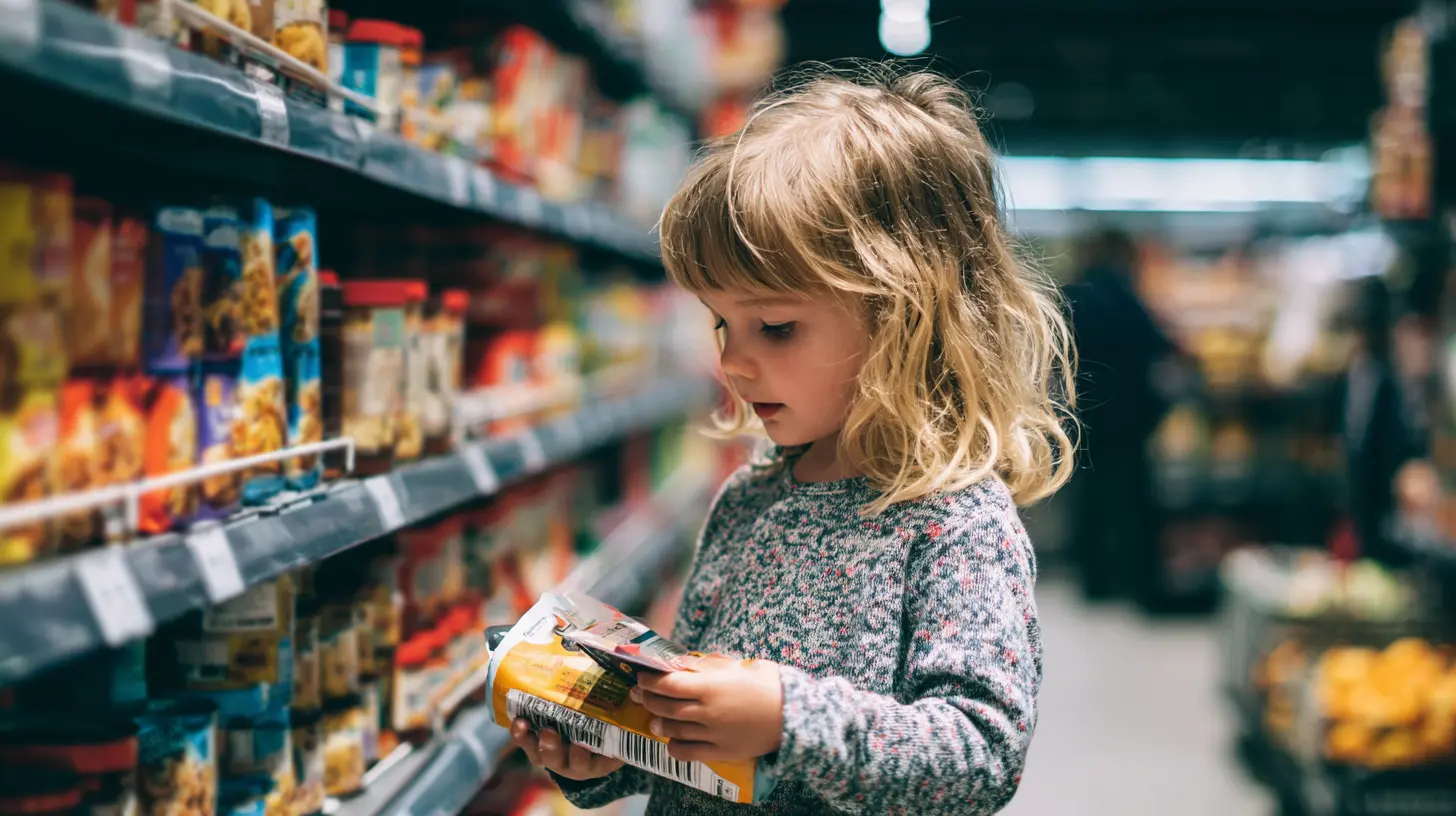
Why Bother Teaching Kids to Read Labels at All?
Before we dive into the mechanics, let us address the obvious question. Why not just make the healthy choices for your kids and let them worry about this when they are older? That approach works for a while, but it has a shelf life.Kids grow up. They go to birthday parties, sleepovers, school events, and eventually college cafeterias. At some point, they will be making food decisions without you standing next to them. If they have never learned how to evaluate a food product, they will be at the mercy of clever marketing, flashy packaging, and peer pressure.
Reading labels is a life skill, like budgeting or doing laundry. It is not about being perfect. It is about being capable. When a teenager picks up a sports drink and can actually look at the label and say, "Wait, this has more sugar than a candy bar," they have a tool that will serve them for decades.
There is also a practical benefit for you as the parent. When kids understand why you are saying no to certain products, they are far more likely to accept it. A child who knows that their favorite fruit snack has more sugar than a chocolate chip cookie is not necessarily going to stop wanting it, but they will understand the trade-off. That understanding is the foundation of healthy decision-making.
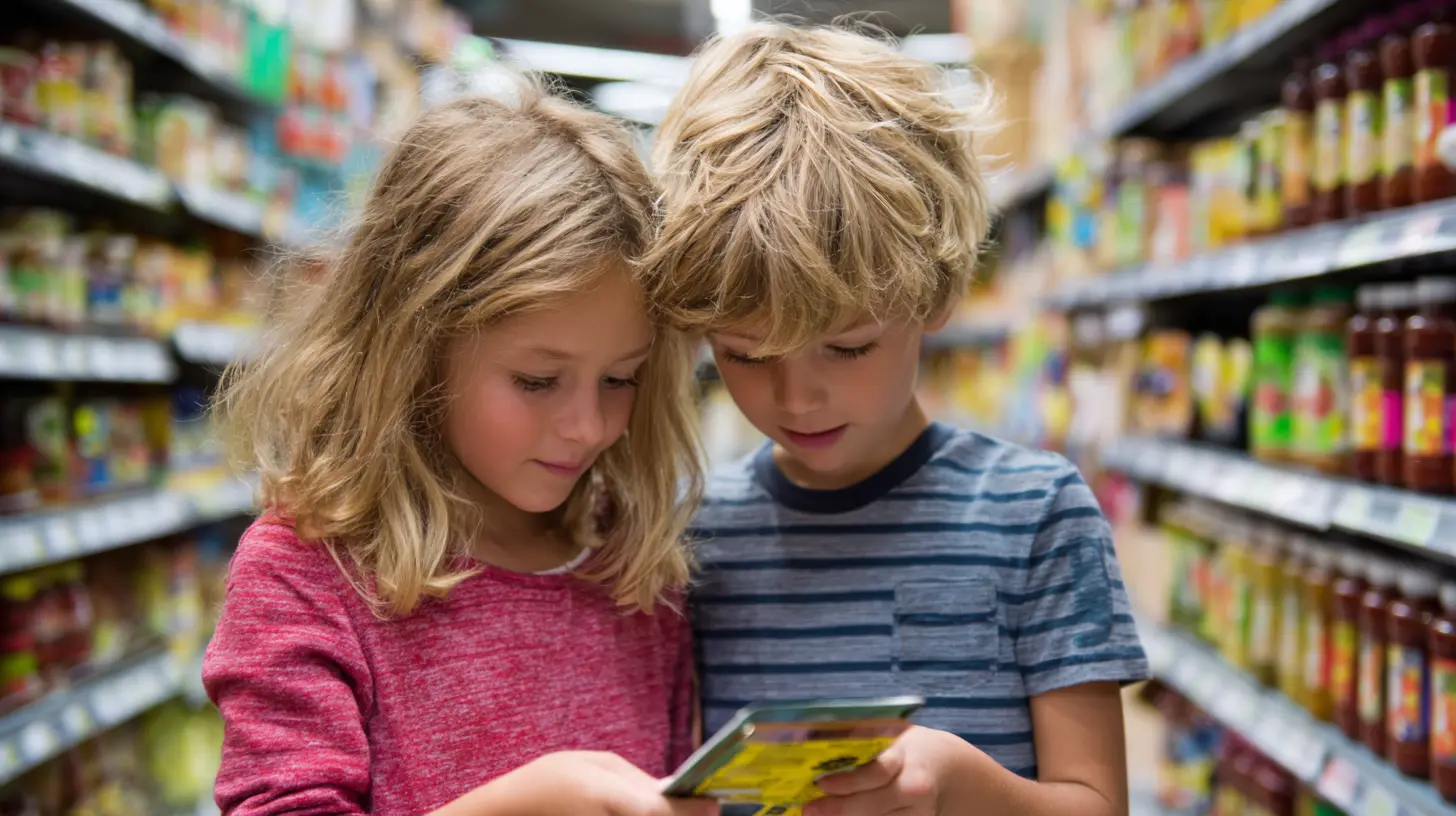
Start with the Serving Size, Not the Calories
Here is the mistake most adults make when they read labels, and it is the mistake your kids will copy if you are not careful. Everyone looks at the calories first. That is a trap.The serving size is the most important number on the entire label, and it is the one that gets ignored most often. A bag of chips might say 150 calories per serving. That sounds reasonable. But if the bag contains three servings, and your kid eats the whole thing, they just consumed 450 calories. The label did not lie. It just did not tell you what you wanted to hear.
When you teach your kids about serving sizes, make it visual. Pull out a measuring cup. Show them what one serving of cereal actually looks like in their bowl. It is almost always less than they expect. This is not about restricting portions. It is about awareness.
A good exercise is to look at a packaged snack and guess how many servings are in the container. Then check the label. Kids love being right, and they love being wrong in a dramatic way. "You think this is one serving? Look, it is three and a half. That is a whole math problem in a snack bag."
The serving size also matters because every other number on the label is based on it. The calories, the fat, the sugar, the sodium. If you get the serving size wrong, you get everything wrong. It is the foundation of the entire label.
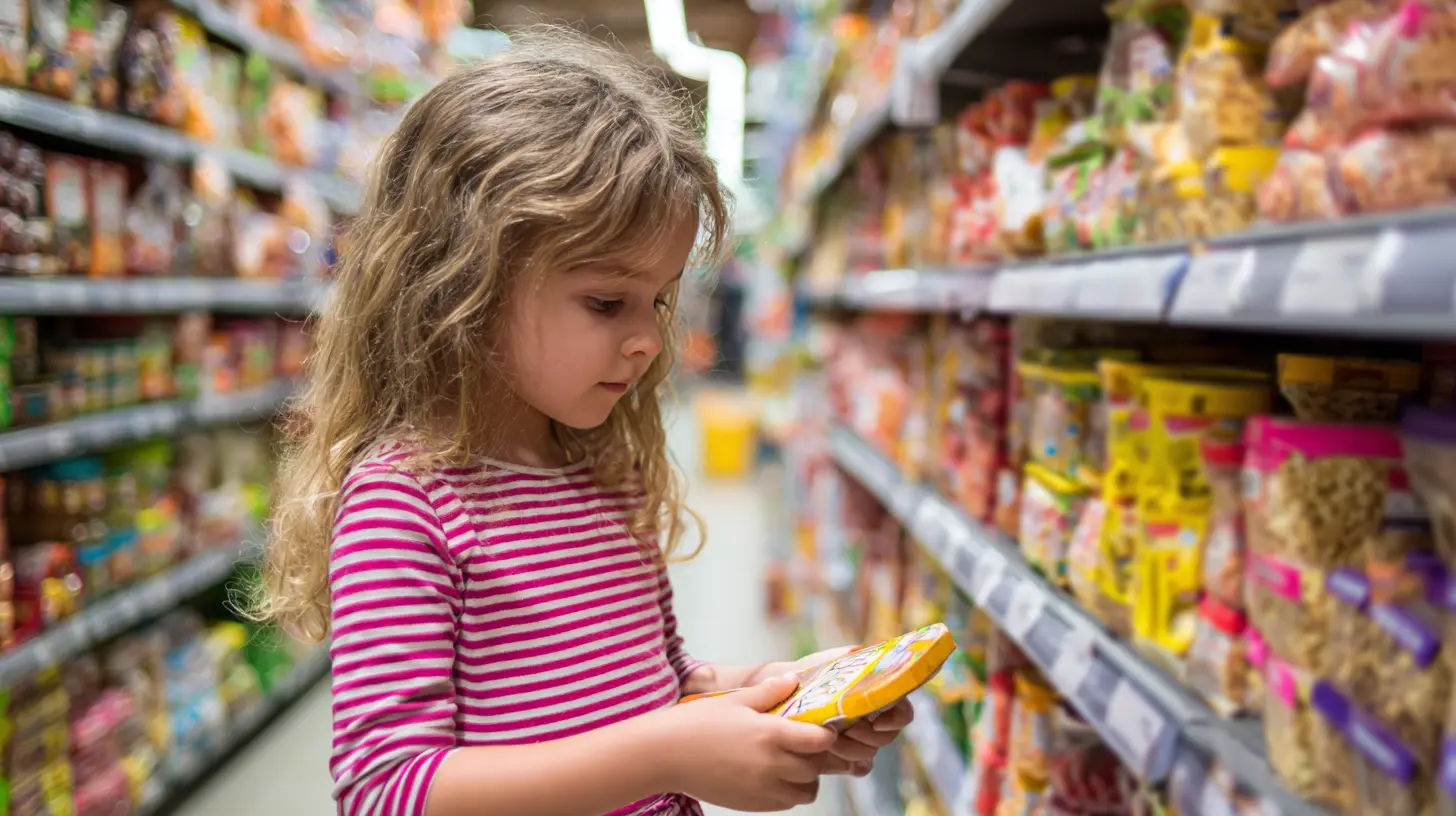
The Ingredient List Is the Real Story
The nutrition facts panel tells you the numbers, but the ingredient list tells you the truth. This is where you separate the real food from the science experiments.Ingredients are listed in order of weight, from most to least. The first ingredient is what the product contains the most of. If the first ingredient is sugar, then that product is mostly sugar, no matter what the front of the package claims.
Here is a trick that works wonders with kids. If you cannot pronounce an ingredient, look it up on your phone right there in the store. Make it a game. "What is maltodextrin?" "What is sodium benzoate?" Some of these ingredients are harmless. Others are worth avoiding. The point is not to scare your kids, but to show them that they should know what they are eating.
The shorter the ingredient list, the better. A product with five ingredients is usually closer to real food than a product with thirty. This is not a hard rule, but it is a useful heuristic for kids. "If it has more ingredients than your age, we should probably think twice."
There is a common misconception that all additives are bad. That is not true. Some additives, like vitamin D in milk or calcium in orange juice, are there for good reasons. Others, like artificial colors and preservatives, are more about shelf life and appearance than nutrition. The goal is not to demonize all additives, but to help kids understand why they are there and whether they are necessary.
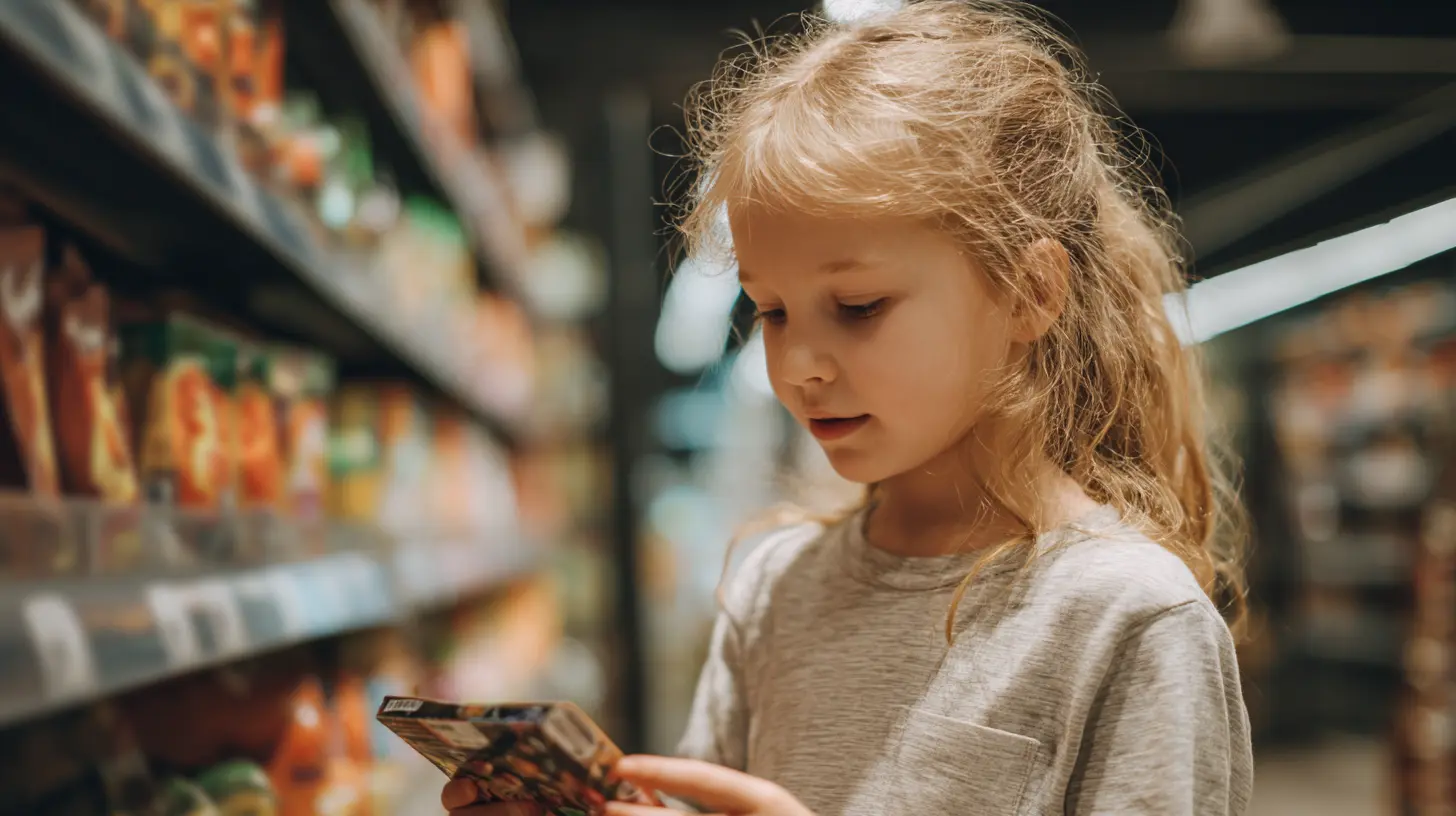
Sugar Has Many Names, and That Is on Purpose
Sugar is the trickiest part of food labels, and it is the one that will trip up your kids the most. Food manufacturers have gotten very good at hiding sugar by giving it different names.High fructose corn syrup, cane syrup, honey, molasses, agave nectar, dextrose, maltose, sucrose, fruit juice concentrate. These are all sugar. Some are more processed than others, but they all affect the body in similar ways.
When you teach your kids about sugar, do not just tell them to look for the word "sugar" on the label. Show them the list of names. Make a game of finding how many different sugar names they can spot in one product. It is like a scavenger hunt, and it is genuinely eye-opening.
The nutrition facts panel now lists "added sugars" separately from total sugars. That is helpful because it distinguishes between the sugar that occurs naturally in food, like the lactose in milk or the fructose in fruit, and the sugar that was added during processing. The added sugar is what you want to minimize.
Here is a practical tip. Instead of telling your kids to avoid sugar entirely, which is unrealistic and sets up an unhealthy relationship with food, teach them to compare. "This yogurt has 12 grams of added sugar. This plain yogurt has zero. What could we add to the plain yogurt to make it taste good?" The answer is fruit, honey, or cinnamon. Now the kid is making a choice, not just following a rule.
Fiber and Protein Are the Friends, Not the Foes
Kids tend to focus on what they should avoid. Fat, sugar, sodium. But a good label reader also knows what to look for. Fiber and protein are the positive markers that indicate a food is actually doing something for you.Fiber is the unsung hero of nutrition. It keeps you full, it helps digestion, and most kids do not get enough of it. A good rule of thumb is to look for foods with at least 3 grams of fiber per serving. That is not a magic number, but it is a decent baseline.
Protein is a bit more complicated. Kids need it for growth, but many packaged foods that tout their protein content are also loaded with sugar and artificial ingredients. Protein bars are a perfect example. Some of them are essentially candy bars with a protein halo. Teach your kids to check the sugar content before they get excited about the protein.
A good exercise is to compare two similar products. Take a granola bar and a chocolate bar. The granola bar might have more protein and fiber, but it might also have just as much sugar. The point is not to say that the granola bar is bad, but to show that "healthy" is a spectrum, not a binary.
Fat Is Not the Enemy, but Know the Difference
For decades, we told kids that fat was bad. Then we told them that carbs were bad. Then we told them that sugar was bad. The truth is more nuanced, and your kids deserve a more accurate picture.Fat is essential for brain development and hormone production. Kids need fat. The question is what kind of fat and how much.
Saturated fat and trans fat are the ones to limit. Trans fat is the worst, and food manufacturers have largely removed it from products, but it still appears in small amounts in some processed foods. Saturated fat, found in things like butter and fatty meats, is fine in moderation but should not be the main source of fat in a diet.
Unsaturated fats, found in nuts, avocados, olive oil, and fish, are the good ones. These are the fats that support heart health and brain function.
When you read labels with your kids, do not just look at the total fat number. Look at the breakdown. "This peanut butter has 16 grams of fat, but most of it is the good kind. This other peanut butter has the same amount of fat, but it also has added sugar and palm oil. Which one is the better choice?"
This kind of comparison teaches critical thinking, which is the real goal of label reading.
Sodium Is Sneaky, and Kids Need to Know It
Sodium is the easiest nutrient to overlook because it does not taste salty in the way you expect. A sweet cereal can have a surprising amount of sodium. A loaf of bread can have more sodium than a bag of chips.The daily recommended limit for sodium is around 2,300 milligrams for adults, and less for kids. Most processed foods are loaded with sodium because it is a cheap preservative and flavor enhancer.
When you teach your kids about sodium, focus on the concept of "hidden salt." "This muffin tastes sweet, but it has more salt than a small bag of pretzels. Why do you think that is?" The answer is that salt enhances sweetness and masks off-flavors. It is a trick, and kids love learning about tricks.
A practical approach is to look at the percent daily value for sodium. Anything over 20 percent is considered high. Anything under 5 percent is low. This is a simple rule that kids can apply without doing any math.
The Percent Daily Value Is a Cheat Code
Speaking of percent daily value, this is the most underutilized part of the nutrition label. It is also the easiest for kids to understand once you explain it.The percent daily value tells you how much of a nutrient one serving provides relative to a daily diet of 2,000 calories. It is not perfect, because kids need fewer calories than adults, but it is a useful benchmark.
The rule is simple. Five percent or less is low. Twenty percent or more is high. You want high percentages for fiber, protein, vitamins, and minerals. You want low percentages for saturated fat, sodium, and added sugar.
This rule turns label reading into a quick scan instead of a deep analysis. Your kid does not need to know how many milligrams of sodium are in a product. They just need to know if the percent daily value is high or low.
A fun way to practice is to have your kids sort products into two piles. The "mostly good" pile and the "mostly not so good" pile. Then discuss why each product ended up where it did. This is a judgment call, not a science, and that is okay. The goal is to build intuition.
Marketing Claims Are Not Nutrition Facts
This is the lesson that will save your kids the most money and the most confusion. The front of a package is advertising. The back of the package is information. They are not the same thing."All natural" does not mean healthy. Arsenic is natural. "Made with real fruit" does not mean the product is mostly fruit. It might mean there is a tiny amount of fruit powder in a sea of sugar. "Low fat" often means high sugar, because when manufacturers remove fat, they add sugar to make up for the loss of flavor.
Teach your kids to flip the package over. The front can say whatever it wants. The back has to follow the rules. The back is where the truth lives.
This is a hard lesson for adults too. We all want to believe that the granola bar with the pretty packaging is a healthy choice. But the label tells the real story. The more you practice flipping packages over, the more automatic it becomes.
Making It Fun: Games and Challenges
Reading labels does not have to be a chore. In fact, if you make it a chore, your kids will tune out faster than you can say "trans fat." Here are some ways to make it engaging.The Label Detective Game. Give your kid a specific thing to look for. "Find a product with less than 10 grams of sugar per serving." "Find a product with at least 5 grams of fiber." "Find a product where the first ingredient is a vegetable." This turns the grocery store into a scavenger hunt.
The Ingredient Pronunciation Challenge. Have your kid read the ingredient list out loud. Every time they stumble on a word, they get a point. The product with the most points is usually the most processed. This is a fun way to illustrate the difference between whole foods and processed foods.
The Sugar Cube Visual. One teaspoon of sugar is about 4 grams. So if a product has 20 grams of sugar, that is 5 teaspoons. You can bring a small container of sugar and a teaspoon to the store and physically measure out the sugar in a product. It is messy, but it is memorable. Kids will never look at a fruit drink the same way again.
The Two-Product Showdown. Pick two similar products, like two kinds of yogurt or two kinds of crackers. Have your kid compare the labels and decide which one is the better choice. Then discuss the trade-offs. One might have less sugar but more sodium. One might have more protein but also more calories. There is no perfect answer, and that is the point.
Common Mistakes Parents Make
Let us be honest about the ways this can go wrong, because we have all been there.The first mistake is being too strict. If you turn every label reading session into a lecture, your kids will start to resent it. They will tune out, and they will sneak the "bad" foods when you are not looking. The goal is education, not control.
The second mistake is being inconsistent. If you read labels for some products but not others, your kids will notice. They might think that label reading only matters for certain foods, or worse, that it is arbitrary. Try to be consistent, even if it means slowing down your shopping trip.
The third mistake is ignoring the context. A food that is "healthy" is not always the right choice. An apple is great, but if your kid is about to run a soccer game, a granola bar with some protein and sugar might be a better choice. Label reading is about making informed decisions, not about following a rigid set of rules.
The fourth mistake is using label reading as a weapon. "No, you cannot have that because the label says it is bad." That creates a negative association. Instead, try to use label reading as a tool for empowerment. "Look at this. You can see how much sugar is in this. What do you think?"
When to Relax the Rules
There is a time and a place for label reading, and there is also a time to just let it go.Birthday parties, holidays, special treats, and restaurant meals are not the time to pull out your label-reading skills. The goal is not to make your kids paranoid about everything they eat. The goal is to build a foundation of knowledge that they can use most of the time.
If your kid eats a cupcake at a party, that is fine. If they have a sugary cereal on a vacation morning, that is fine. The occasional indulgence is not going to derail their health, and making them feel guilty about it will do more harm than good.
The best approach is to be relaxed about the occasional treat and consistent about the everyday choices. That is a balanced approach that your kids can sustain for a lifetime.
The Big Picture: Building a Healthy Relationship with Food
At the end of the day, reading food labels is not about perfection. It is about awareness. It is about giving your kids the tools to make their own choices, and trusting them to use those tools wisely.The kids who grow up understanding food labels are the ones who can walk into any grocery store, any cafeteria, any restaurant, and make a reasonable decision. They are not fooled by marketing. They are not slaves to cravings. They are not anxious about every bite. They are simply informed.
That is the gift you are giving them. It is not a lecture. It is not a set of rules. It is a skill. And like any skill, it gets better with practice.
So the next time you are in the cereal aisle, and your kid is pulling at your sleeve, take a breath. Flip the box over. Ask them what they see. Let them be the detective. Let them make the call. And when they surprise you with a smart observation, tell them they did a good job. Because they did. And so did you.
all images in this post were generated using AI tools
Category:
Nutrition For KidsAuthor:

Maya Underwood
Discussion
rate this article
1 comments
Daphne Graham
Great tips for fun family grocery trips!
September 7, 2026 at 2:41 AM
Maya Underwood
Thanks! I'm glad you found the tips helpful. Happy grocery shopping with your family!