How Screen Time Affects Your Child's Social Skills
27 October 2026
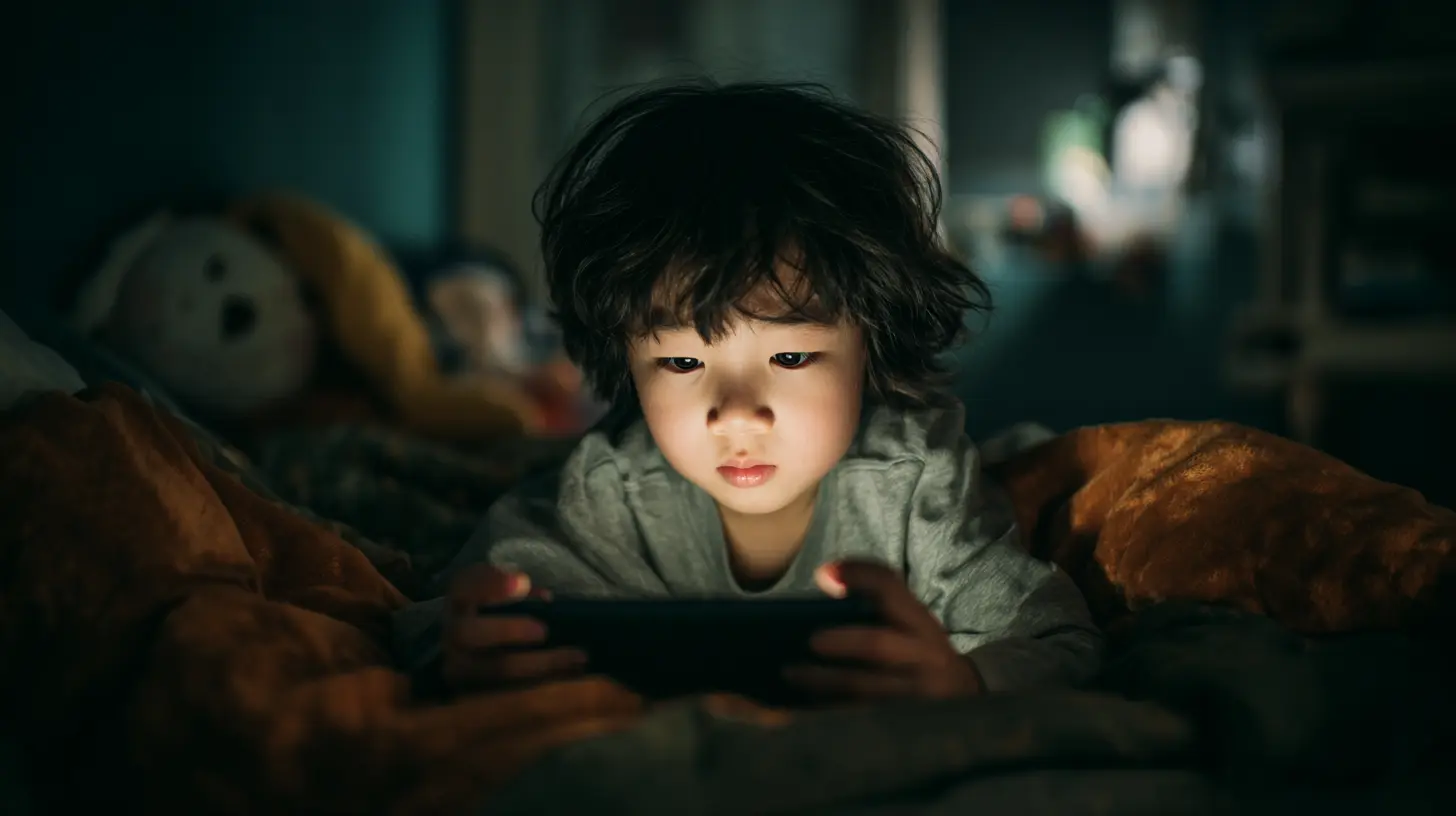
Walk into any family restaurant and you will see the same scene: a child hunched over a tablet while the adults talk, or a group of kids waiting for food with four faces lit by four separate screens. Most parents have a vague sense that this is not ideal, but the conversation around screens and children tends to focus on grades, sleep, or eyesight. Social skills get far less attention, even though they may be the area where screens leave the deepest mark.
That is because social skills are not a subject children learn in a lesson. They are built through thousands of small, messy, in-person exchanges: reading a face, waiting for a turn, misreading a joke, recovering from an awkward moment, negotiating who gets the ball. Screens do not simply take time away from these exchanges. They change the kind of exchanges a child has, and often they replace the hardest ones with easier alternatives. Understanding how that works, and where the real risks and limits lie, is what this article is about.

What Social Skills Actually Are, and Why Screens Interact With Them
Social skills are not a single ability. They are a cluster of related capacities that develop on different timelines. Roughly, they include:- Receptive skills: reading facial expressions, tone of voice, body language, and the emotional temperature of a room.
- Expressive skills: using your own face, voice, and posture to communicate clearly.
- Self-regulation: managing frustration, waiting, losing, and boredom without falling apart.
- Perspective-taking: understanding that other people have thoughts and feelings different from your own.
- Repair skills: apologizing, clarifying, and recovering when a conversation goes wrong.
Each of these grows through practice in real time, with real consequences. A child who interrupts a friend and gets a cold shoulder learns something no app can teach. A child who tells a joke that lands learns to read the room. Screens interact with this development in three main ways: they compete for time, they substitute for certain kinds of practice, and they shape the expectations a child brings to face-to-face interaction.
The key insight is that screens are not uniformly bad for social skills. Some screen use is genuinely social. Some is genuinely isolating. The difference lies in the type of use, the child's age and temperament, and what the screen is replacing. Treating all screen time as one thing is the first mistake most parents make.

The Displacement Effect: What Screens Push Out
The most straightforward way screens affect social skills is by taking time away from other things. This is the displacement effect, and it is easy to underestimate. A child who spends two hours a day on a tablet after school has two hours less for free play, chores, family conversation, or unstructured time with siblings.Why does this matter for social skills specifically? Because the time that builds social skills is often the time adults do not organize. Unstructured, child-led play is where most social learning happens. When kids invent a game, they have to agree on rules, handle disagreements, include or exclude each other, and manage frustration. None of that is scripted. A screen, by contrast, is designed to be engaging without requiring negotiation. It asks nothing of the child socially.
Consider two eight-year-olds on a rainy Saturday. One spends the afternoon building a fort with a neighbor, which involves arguing about whose blanket to use, compromising, and repairing a fight when someone gets bossy. The other spends the afternoon watching videos. Both are entertained. Only one is practicing the skills that will matter at a birthday party, a group project, or a first job. The comparison is not about morality. It is about what each activity demands of the child.
This does not mean every unstructured hour must be social. Solitary play and daydreaming matter too. But when screens fill most of the empty hours, the social practice that used to happen by default starts to disappear.

Passive Consumption vs. Active Social Use
The single most useful distinction for parents is between passive and active screen use, and between solitary and social screen use. These are not the same axis.Passive, solitary use includes watching short videos, scrolling feeds, and binge-watching shows alone. This is the type most strongly associated with displacement, because it is absorbing and requires nothing from the child.
Active, solitary use includes building in a sandbox game, coding, or creating digital art. This can build focus and creativity, but it is still largely solitary.
Social screen use includes video calls with grandparents, playing a cooperative online game with a friend while talking over voice chat, or collaborating on a shared project. This is where the picture gets complicated, because some of it genuinely builds social muscle.
A child who plays a multiplayer game with a close friend and negotiates strategy over voice chat is practicing turn-taking, communication, and teamwork. That is real. But it is not a full substitute for being in the same room. Online interaction strips out most body language, makes silence comfortable in a way it is not in person, and allows a child to leave any interaction instantly. These differences matter, and they matter more for younger children whose in-person skills are still forming.
The practical takeaway: before judging a screen session, ask what the child is actually doing and who they are doing it with. An hour of video calling a cousin is not the same as an hour of autoplay videos, even though both are "screen time."
The Face-to-Face Deficit: What Screens Cannot Teach
There is a reason pediatric and developmental guidance tends to favor in-person interaction for young children. Face-to-face communication carries information that screens compress or remove: micro-expressions that last a fraction of a second, the timing of a pause, the way a voice tightens, the physical cues of boredom or discomfort. Children learn to read these cues by being exposed to them, repeatedly, and by suffering small consequences when they miss them.Video calls are better than nothing, and for separated families they are a genuine lifeline. But even the best video call flattens the experience. You cannot make eye contact in the same way, you cannot read a room, and the technology encourages a kind of performance rather than a shared presence.
Online text and chat add another layer of removal. A child who mostly communicates through typed messages learns to express emotion through emojis and capital letters rather than through tone and face. That is a real skill in its own context, but it does not transfer cleanly to a conversation with a teacher or a new classmate.
This is why the age of the child matters so much. A teenager with a solid foundation of in-person skills can use digital communication as an extension. A four-year-old whose main social experience is a tablet is building the foundation itself out of the wrong material.
The Expectation Gap: How Screens Rewire Patience and Feedback
Screens are engineered to respond instantly. Tap, and something happens. Swipe, and the content changes. Games reward quickly and adjust difficulty to keep the child engaged. This is not a conspiracy, but it is a design reality, and it shapes what children come to expect from interaction.Real people are slow. A friend takes a moment to understand a joke. A conversation has pauses. A game with peers involves waiting for your turn and losing sometimes. A child whose daily life is dominated by instant feedback can find the pace of real social interaction frustrating, boring, or confusing.
This shows up in subtle ways. Some children who spend heavy time in fast-paced games struggle with the slower rhythm of a classroom discussion or a family dinner. They interrupt, because waiting feels unnatural. They lose interest when they are not the center of attention. They expect praise for minimal effort, because games hand out rewards generously.
None of this is destiny. Children are adaptable, and most adjust quickly when they spend time in slower environments. But the pattern is worth watching, because the skills of patience and tolerating boredom are foundational to almost every social relationship a person will ever have.
The Confidence Trap: When Screens Become a Social Crutch
Here is a pattern that surprises many parents. A child who is shy or socially anxious may gravitate toward screens, and screens may make the shyness worse over time, not better. The mechanism is avoidance.If a child finds recess intimidating, retreating to a phone offers immediate relief. That relief reinforces the retreat. Over months, the child gets less practice at the very situations that cause anxiety, and the anxiety grows because the situations remain unfamiliar. The screen becomes a crutch that feels like a solution but quietly strengthens the problem.
This is not an argument for banning screens for shy children. It is an argument for paying attention to why a child is reaching for a screen. A child who uses screens to unwind after a socially demanding day is doing something reasonable. A child who uses screens to escape every social situation that feels hard is signaling that those situations need gentle, supported exposure, not more avoidance.
The same logic applies to the family level. A parent who hands over a phone every time a child is restless at a restaurant or on a plane is solving an immediate problem. But if that becomes the default, the child never learns to sit with boredom, make conversation with adults, or entertain themselves in a social setting. The trade-off is real, and it is worth making consciously rather than by habit.
What the Research Suggests, and What It Does Not
Parents often look for a single study that settles the question. The honest answer is that the research is more nuanced than headlines suggest. Studies on screen time and child development generally find associations, not simple cause and effect. Children who spend more time on screens may differ from those who spend less in many other ways, including family income, parental stress, and neighborhood safety, and those factors also shape social development.What the evidence does support reasonably well is that excessive, passive, solitary screen use, especially in early childhood, is associated with poorer social outcomes and more difficulty with attention and emotional regulation. It also supports the idea that context matters enormously: co-viewing with a parent, choosing high-quality content, and balancing screens with active play all change the picture.
What the evidence does not support is panic. A child who watches a show after school and plays a game on weekends is not on a path to social failure. The concern is about patterns and proportions, not individual minutes. Parents who fixate on exact time limits while ignoring what the child is doing and what it replaces are measuring the wrong thing.
A useful rule of thumb: worry less about the clock and more about the balance. Is the child getting regular, unstructured, in-person time with peers? Is there a screen-free zone around meals and bedtime? Are screens crowding out sleep, physical activity, and face-to-face conversation? Those questions are more predictive than a stopwatch.
Age Matters: A Developmental Lens
The impact of screens on social skills is not uniform across childhood. A developmental lens helps parents set expectations that match the child.Toddlers and preschoolers are in the earliest stage of learning to share, take turns, and read emotions. Their social learning happens almost entirely through play and interaction with caregivers and peers. Screen use at this age should be limited, and when it happens, it works best when an adult is present to talk about what is on the screen. A show watched alone teaches little. A show watched with a parent who asks questions becomes a conversation.
Early elementary children are learning to navigate friendships, rules, and group play. This is the age when unstructured peer play is most valuable, and when screens can most easily replace it. Limits and routines help here, along with a clear expectation that outdoor and friend time comes before solo screen time.
Tweens are entering a phase where peer relationships and social identity matter intensely. Digital communication becomes genuinely relevant, and banning it outright can backfire by cutting a child off from their social world. The goal shifts from restriction to coaching: helping the child navigate group chats, understand tone, and recognize when online interaction is replacing real connection.
Teenagers have more developed social skills and more complex social lives, much of which now happens online. The task for parents is less about control and more about ongoing conversation, modeling healthy use, and keeping the door open so a teen will talk about what they encounter.
Practical Strategies That Actually Work
Advice to "limit screen time" is easy to give and hard to follow. What works better is a set of concrete practices that fit real family life.Protect unstructured in-person time. Treat free play with friends and siblings as a priority, not a leftover. This may mean scheduling playdates, saying no to some activities, or simply leaving afternoons open. The goal is to make sure the default hours are not automatically screen hours.
Use screens as a tool, not a default. When a child is bored, resist the reflex to hand over a device. Offer alternatives, or better, let the boredom sit for a few minutes. Boredom is often the doorway to creative play and social interaction.
Co-view and co-play when you can. Watching or playing alongside your child turns passive use into an interactive one. Ask questions, comment on what you see, and connect it to real life. This is especially valuable for younger children.
Set screen-free zones and times. Meals, car rides, and the hour before bed are natural candidates. These are the times when conversation and connection happen. Protecting them costs little and pays off steadily.
Distinguish between connection and consumption. Ask what your child is doing online. A video call with a friend is different from scrolling. Reward the former, and be more cautious about the latter.
Model the behavior you want. Children notice when a parent checks a phone mid-conversation. If you want your child to value face-to-face interaction, demonstrate it. This is uncomfortable to hear, but it is one of the most powerful levers you have.
Watch for warning signs, not just hours. Withdrawal from friends, irritability when screens are removed, a decline in conversation, or a preference for screens over all other activities are more meaningful signals than a time count. If these appear, adjust the balance and, if needed, seek guidance from a pediatrician or child development professional.
Common Mistakes and Misconceptions
Several beliefs about screens and social skills are widespread but misleading."All screen time is equal." It is not. A video call with a grandparent, a cooperative game with a friend, and an hour of short videos are completely different experiences. Treating them the same leads to bad decisions.
"More time is always worse." The relationship is not linear. A small amount of high-quality, social screen use can be neutral or even positive. The problem is usually excessive passive use and displacement of in-person time.
"Screens cause social problems." The relationship is more complicated. Screens can amplify existing tendencies, like avoidance in a shy child, but they are rarely the sole cause of social difficulty. Family environment, temperament, and opportunity all play a role.
"Banning screens solves the problem." For some families and some ages, strict limits work. But blanket bans can isolate older children from their peer group and push use underground. The better goal is coaching and balance.
"Social skills are learned in classes." Some children benefit from explicit social skills groups, and they can be helpful. But the main classroom is everyday life. No program replaces regular, warm, in-person interaction.
A Balanced View: Trade-Offs and When to Relax
It would be dishonest to pretend screens are only a risk. They connect families across distances, give isolated children access to communities, support learning, and offer genuine rest. A child who video calls a deployed parent, plays a cooperative game with a cousin in another state, or finds a community of young artists online is gaining something real.The point is not to eliminate screens. It is to be intentional about the trade-offs. Every hour on a screen is an hour not spent somewhere else, and the question is whether that trade is worth it for your child, at this age, in this situation. Sometimes it clearly is. Sometimes it clearly is not. Most of the time it depends.
Parents who approach this with curiosity rather than fear tend to do better. Observe your child. Notice what kinds of screen use leave them energized and what leaves them flat. Notice whether their friendships are thriving. Notice whether they can hold a conversation, wait their turn, and recover from disappointment. Those observations will tell you more than any general rule.
The goal is not a perfectly screen-free childhood, which is neither realistic nor necessary. The goal is a childhood rich enough in real human contact that screens remain a tool rather than a substitute. That is a standard most families can actually meet.
all images in this post were generated using AI tools
Category:
Screen Time LimitsAuthor:

Maya Underwood

