Helping Kids Understand Time and Patience in the Years Ahead
6 September 2026
Time is a strange thing for children. They live in the present moment, where waiting five minutes for a snack can feel like an eternity, and the idea of "next summer" is almost as abstract as a distant galaxy. As parents, we often find ourselves caught between two impulses: shielding our kids from the frustration of waiting, and knowing that they desperately need to develop the skill of patience to thrive in the real world.
The challenge becomes even more pronounced as children grow. The "years ahead" are not just about surviving the toddler tantrum in the grocery line. They are about helping a six-year-old understand why they cannot have a phone yet, guiding a ten-year-old through the slow process of mastering a musical instrument, and supporting a teenager who must wait months for a college decision. This article is not about quick tricks to make kids behave in the moment. It is about building a mental framework that helps them comprehend the passage of time and the value of delayed gratification, so they can navigate the long arc of their own lives with resilience and clarity.

Why Time Feels Different to a Child
Before we can teach patience, we have to understand the neurological and psychological reality of how children perceive time. For an adult, a year is a measurable fraction of a life already lived. For a five-year-old, one year represents twenty percent of their entire existence. That is why a week before a birthday feels insufferably long, while a month of summer vacation can feel like a lifetime.Children under the age of seven or eight primarily operate in what psychologists call "subjective time." They understand sequences - first we eat, then we play, then we sleep - but they struggle with the concept of duration. They cannot look at a clock and intuitively grasp that forty-five minutes is shorter than an hour. This is not a discipline problem; it is a cognitive limitation. When we punish a child for being impatient, we are essentially punishing them for not having a fully developed prefrontal cortex.
The key insight here is that patience is not a switch that flips on. It is a skill built on a foundation of time awareness. A child who cannot estimate how long a task takes will always be frustrated. A child who has no sense of a future self will not see the point in saving money or practicing a skill. Therefore, the first step in helping kids understand time is to make it tangible and visible.
The Illusion of the "Fast" Generation
Many parents worry that modern children are more impatient than previous generations. There is some truth to this, but it is not because kids are fundamentally different. It is because the environment has changed. We live in a world of instant streaming, one-click purchases, and immediate text responses. When a show buffers for three seconds, we feel annoyed. Children absorb this cultural impatience from us, not from their own biology.The danger here is that we assume our children need to be "fixed" or forced into patience through strict schedules or deprivation. The opposite is often true. If a child grows up in a home where waiting is always framed as an inconvenience, they will internalize that anxiety. Instead, we need to model a different relationship with time - one that sees waiting not as an empty void, but as an active space for reflection, observation, or simply being.

The Building Blocks of Time Awareness
You cannot teach a child to be patient in the abstract. You have to teach them to read the passage of time in concrete ways. This starts in early childhood and evolves as they grow.Using Visual Timers and Physical Markers
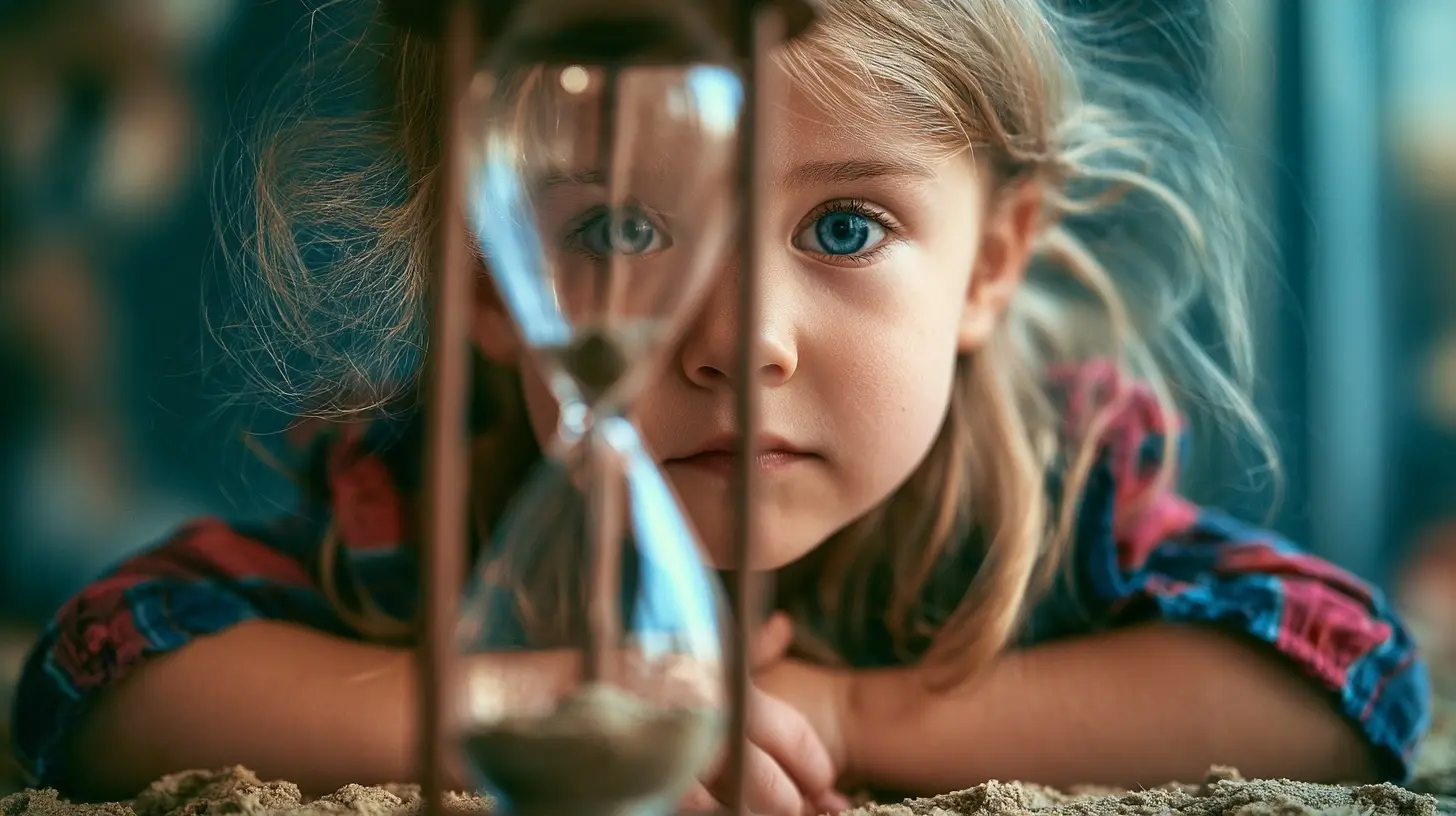
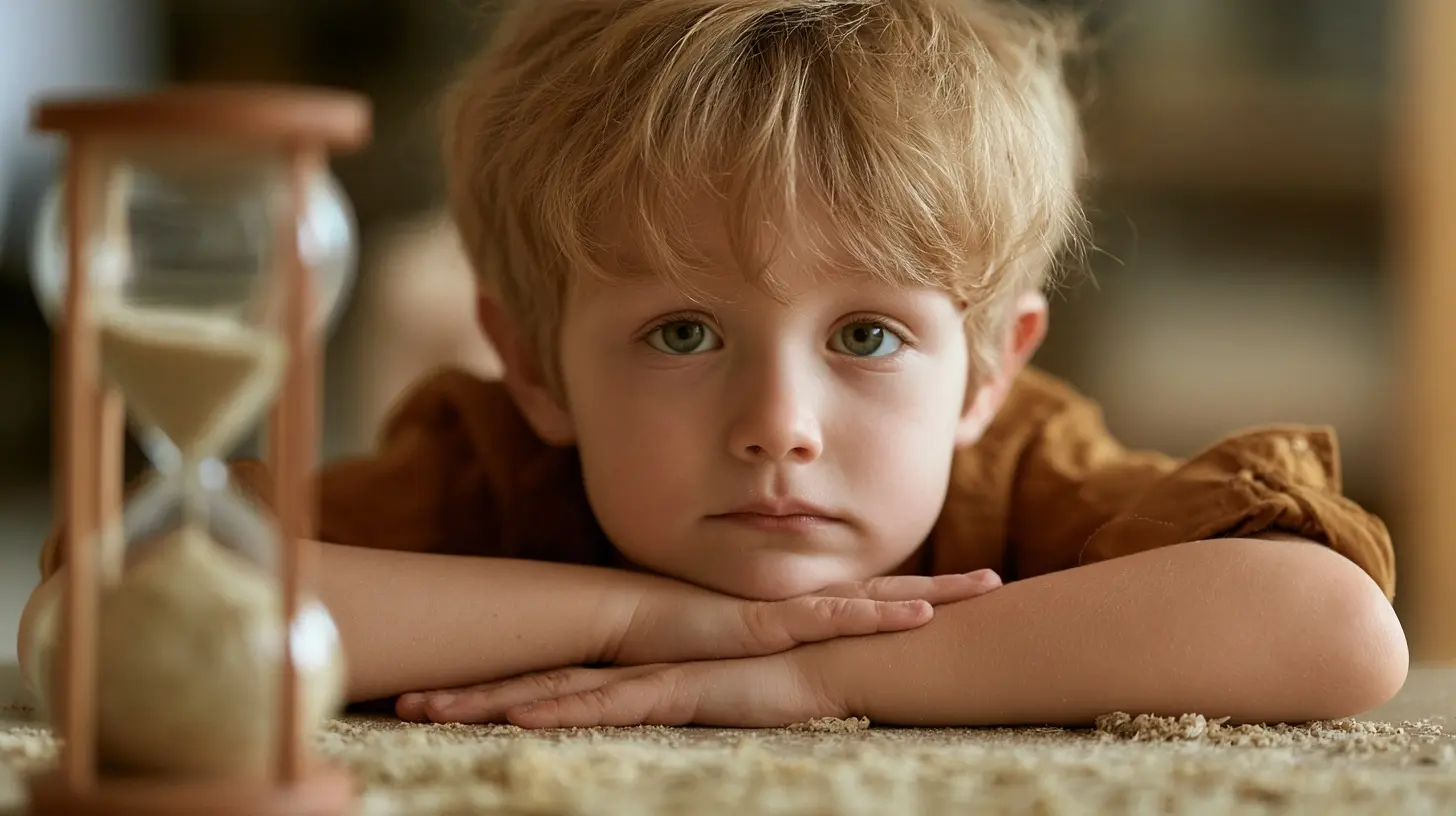
For young children, time must be seen to be believed. A digital clock showing "5:47" means nothing to a four-year-old. But a visual timer - like a color-changing hourglass or a disk that shrinks as time passes - gives them a physical representation of something ending. When you say "We are leaving in ten minutes," and they can literally watch the red area disappear, they begin to connect the abstract number to a felt experience.Similarly, physical markers help with longer spans. A paper chain where each link represents one day until a special event works wonders for a child who is counting down to a holiday. A jar of marbles where one marble is removed each night before a grandparent visits gives them a sense of control over the wait. These tools do not just distract the child; they teach them that time is measurable and finite.
The Language of Time
The words we use matter. Instead of saying "Soon" or "In a while," which are vague and often misleading, try to be specific in developmentally appropriate ways. For a toddler, "After we put away the blocks" is better than "In five minutes." For a school-aged child, "We will go to the park at 3:30, which is after your nap" helps them anchor the event to a sequence they understand.As children get older, introduce the concept of "time windows" rather than exact moments. Say, "The movie starts between 7:00 and 7:15, so we need to be in our seats by then." This teaches them that the world operates on schedules, but also that flexibility is a part of life. This nuance is critical, because many children who are rigid about time become anxious when things run late. By showing them that a five-minute delay is not a catastrophe, you build their tolerance for minor disruptions.
The Real Work of Teaching Patience
Once a child has a basic grasp of time's passage, the real work begins. Patience is not just about enduring a delay; it is about managing the emotional response to that delay. This is where most parents struggle, because we often try to eliminate frustration rather than help children process it.Patience is Not Passive Waiting
A common misconception is that patience means sitting still and doing nothing. In reality, active patience - engaging in a different task while waiting - is far more effective and less painful for children. When a child is waiting for their turn on a swing, they can be taught to watch the other child and count their pushes. When they are waiting for a baked cake to cool, they can help clean up the mixing bowls.This is not about bribery or distraction. It is about teaching them that waiting is a part of the process, not an obstacle to it. The baker waits for the bread to rise. The gardener waits for the seed to sprout. The musician waits for their fingers to build strength. By framing waiting as an integral part of achieving something worthwhile, we shift the child's perspective from "I am being prevented from having fun" to "I am participating in a process."
The Power of "Wishful" Thinking vs. Realistic Planning
When a child says "I wish it was Christmas tomorrow," it is tempting to say "It will come soon enough." But this dismisses their feeling. A more powerful response is to acknowledge the wish while redirecting the energy: "I wish it was Christmas tomorrow too. What is the first thing you want to do when it gets here? Let us make a list of the things we want to bake so we are ready."This technique, often used in cognitive behavioral therapy, is called "future visualization." It allows the child to experience a small taste of the pleasure of the future event while remaining grounded in the present. It also gives them a task, which occupies their mind in a productive way. Over time, they learn that planning for the future is a way to manage the impatience of the present.
Practical Strategies for Different Age Groups
Patience looks different at every stage. A strategy that works for a kindergartener will fail miserably with a teenager. Here is a breakdown of what is developmentally appropriate and effective.Ages 3 to 6: The Age of Concrete Consequences
For this age group, patience is measured in minutes, not days. The most effective tool is the "waiting game." When you are in line at the store, play "I Spy." When you are waiting for food at a restaurant, play "Rock, Paper, Scissors" or count how many red cars pass by. The goal is not to make the wait enjoyable, but to make it survivable without a meltdown.It is equally important to avoid creating unnecessary waiting situations. If you know your child is hungry, do not run errands before lunch. If you know they are tired, do not schedule a long car ride. This is not coddling. It is recognizing that a young child's ability to regulate their emotions is directly tied to their physical state. Setting them up for success by minimizing triggers is a form of good parenting, not avoidance.
One common mistake at this age is using time-outs as punishment for impatience. This sends a mixed message: you are telling them that being alone and still is a punishment, but you also want them to learn to be alone and still. Instead, use a "calm down corner" with books or a stuffed animal. Frame it as a place to reset, not a place of exile.
Ages 7 to 11: The Age of Delayed Gratification
This is the golden age for teaching delayed gratification because children start to understand cause and effect on a longer timeline. The famous "marshmallow test" has been criticized for its methodology, but the underlying principle holds: children who can tolerate waiting for a larger reward tend to develop better self-regulation skills.You can apply this at home with a "savings jar." If your child wants a toy that costs twenty dollars, and they receive five dollars a week in allowance, help them map out that it will take four weeks. Each week, they physically put the money in the jar and see it accumulate. This is a powerful lesson in the relationship between time, effort, and reward.
However, be careful not to overuse this tactic. If every single request is met with "You have to save for it," the child may become discouraged or resentful. Balance is key. Allow for some spontaneous purchases or treats, so that patience is not seen as the only path to happiness, but rather a tool for bigger goals.
At this age, also introduce the concept of "practice over time." When they want to give up on piano or soccer because they are not immediately good, show them a video of themselves from a year ago. Point out how much they have improved without noticing it. This external evidence helps them trust the process of incremental progress, which is the foundation of long-term patience.
Ages 12 and Up: The Age of Abstract Thought
Teenagers can understand complex concepts like opportunity cost and future rewards, but they are also biologically wired to prioritize short-term pleasure due to their developing limbic system. This is a constant battle between the "rational" prefrontal cortex and the "emotional" brain.For teenagers, patience is less about waiting for a treat and more about managing long-term goals. This is where you can introduce the idea of "compound interest" - not just in money, but in skills. Learning a language, training for a sport, or studying for a difficult exam all require months of effort before results become visible.
The best thing you can do for a teenager is to avoid lecturing about patience. Instead, ask questions. "What do you think you will be doing in five years?" "What steps can you take this month that will make that more likely?" This Socratic approach forces them to connect present actions to future outcomes, which is a higher-order thinking skill.
It is also crucial to allow teenagers to fail at patience. If they spend their entire allowance on junk and then cannot buy something they really want, do not rescue them. Let them sit with the discomfort of that choice. This is the only way they will internalize the lesson that patience is not a moral virtue imposed by adults, but a practical strategy for getting what they want in life.
The Role of Technology and Boredom
We cannot talk about time and patience in the modern era without addressing screens. The constant availability of digital entertainment is the single biggest obstacle to developing patience in children. When a child is bored, the immediate solution is a tablet or a video. This teaches them that every empty moment must be filled with stimulation.This is a problem because patience is often exercised during periods of boredom. When a child has to wait without a screen, they are forced to use their imagination, observe their surroundings, or simply tolerate discomfort. These are essential life skills that are being atrophied by constant digital input.
Creating "Unstructured Waiting" Time
I am not suggesting you ban all screens. That is unrealistic and potentially counterproductive. But you should intentionally create periods where screens are not an option. Car rides without a DVD player. Restaurant meals where phones are placed in a basket on the table. Waiting rooms where you do not automatically hand over your phone.The first time you do this, expect resistance. A child who is used to constant stimulation will find five minutes without it unbearable. But over time, they will learn to entertain themselves. They will start looking out the window. They will ask questions. They will daydream. Daydreaming is not a waste of time; it is a crucial cognitive process for problem-solving and creativity.
A useful rule of thumb is the "one-minute per year" rule. For a six-year-old, they can reasonably manage six minutes of waiting without a screen. For a ten-year-old, ten minutes. This is not a hard science, but it is a useful benchmark. When you exceed that limit, offering a screen is not a failure; it is a pragmatic choice.
Common Mistakes and Misconceptions
There are several well-intentioned but misguided approaches that parents often take when trying to teach patience.Mistake One: Confusing Patience with Compliance
Many parents think a patient child is a quiet child who does not complain. But there is a difference between patience and passive submission. A child who is afraid to ask for something because they will be told to "wait" is not learning patience; they are learning helplessness. True patience involves an awareness of one's desires and a decision to defer them. It is an active choice, not a suppression of will.Encourage your child to express their impatience verbally. Let them say "I am really frustrated that we have to wait." Acknowledge that feeling. Then, help them figure out what to do with it. This validates their internal experience while still holding the boundary.
Mistake Two: Using Empty Phrases
"Patience is a virtue." "Good things come to those who wait." "Just be patient." These phrases are not only unhelpful; they are actively confusing. They imply that patience is a magical quality that some children have and others do not. They offer no strategy. Instead, use specific instructions: "Let us count the number of blue cars until we get to the exit." "Let us practice the spelling words one more time while we wait for the bus."Mistake Three: Being Impatient with Impatience
This is the most common trap. We are in a hurry, our child is dawdling, and we snap at them to "hurry up." Then later, we wonder why they are impatient. Children learn more from our behavior than our words. If they see us honking the car horn at a slow traffic light, or sighing heavily when a website takes two extra seconds to load, they absorb that anxiety.Model the behavior you want to see. When you are stuck in traffic, say "Well, we have some extra time. Let us listen to the rest of this song." When you are waiting in line, say "This is a good time to plan our grocery list." This does not mean you have to be a zen master. It means you should be aware that you are always teaching, whether you intend to or not.
Misconception: Patience Means Never Being Frustrated
This is a dangerous myth. Patience does not eliminate frustration; it manages it. A child who never shows frustration is not necessarily patient; they may be suppressing their emotions, which will surface later in unhealthy ways. The goal is not to raise a child who never complains. The goal is to raise a child who can experience frustration, name it, and choose a productive response.The Long View: Patience as a Life Skill
As the years ahead unfold, the ability to wait and work toward distant goals will become one of the most valuable skills your child possesses. It will affect their academic success, their career trajectory, their financial stability, and their personal relationships. The ability to delay gratification in favor of long-term satisfaction is a predictor of overall well-being.But this is not about forcing your child to be a miniature adult. It is about giving them the tools to understand that time is on their side. A child who understands that they have years ahead of them to learn, grow, and improve is less likely to feel desperate about immediate failures. A child who knows that waiting can lead to something better is less likely to make impulsive, regrettable decisions.
The most profound gift you can give your child is not to remove all obstacles from their path, but to teach them how to walk the path at a sustainable pace. That means allowing them to experience the discomfort of waiting, so they can learn that they can survive it. It means showing them that time is not an enemy to be defeated, but a companion that, when respected, brings rich rewards.
A Final Note on the Parent's Own Patience
Finally, remember that you are not perfect. There will be days when you lose your cool, when you give in to a whining child just to end the noise, or when you snap at them to hurry up. This does not undo all your good work. Children are resilient, and they learn from repair. When you make a mistake, apologize. Say "I was impatient just now, and I am sorry. I should have taken a deep breath." This models something even more important than patience: self-awareness and the willingness to grow.The years ahead are long, but they are also finite. Before you know it, the child who could not wait five minutes for a snack will be an adult making decisions about careers and mortgages. The foundation you lay now, in the small moments of waiting, will shape how they handle those big moments. Make the waiting count.
all images in this post were generated using AI tools
Category:
Parenting And PatienceAuthor:

Maya Underwood
Discussion
rate this article
2 comments
Viviana Carr
Time is the best teacher; patience is the lesson we share.
September 10, 2026 at 2:37 AM
Maya Underwood
Absolutely, teaching kids about time and patience is essential for their growth. It's a valuable life lesson.
Jinx McNeal
Teaching kids about time cultivates patience, fostering resilience and understanding for their future.
September 6, 2026 at 4:32 AM
Maya Underwood
Absolutely! Teaching kids about time is a valuable life skill that helps them grow in so many ways. It builds patience and prepares them for future challenges.